Get Full Government Meeting Transcripts, Videos, & Alerts Forever!
Get email alerts on the Committee Legislation Roundup topic
No spam. Unsubscribe anytime.
Labor, Commerce and Industry committee recommits hearing‑aid bill and approves social‑work compact, firefighter protections, delivery‑device rules and coastal‑p
Summary
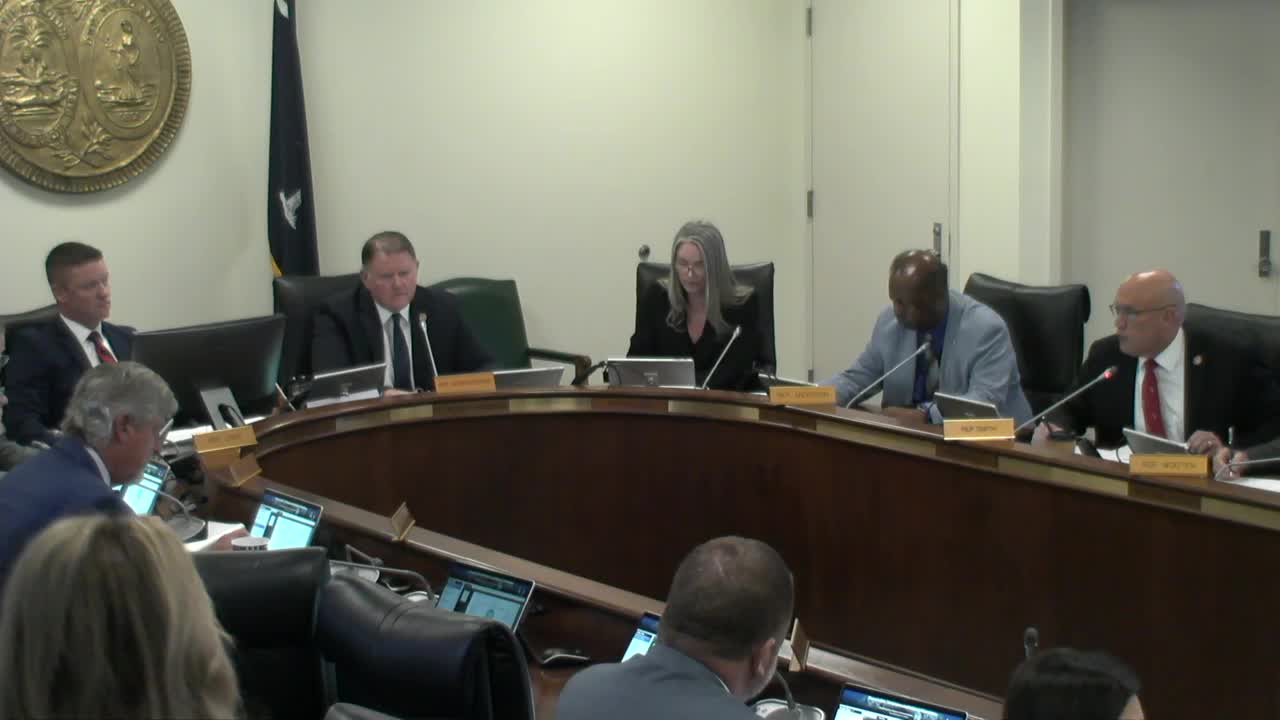
At a full meeting of the House Labor, Commerce and Industry Committee, members recommitted House Bill 3162 on hearing‑aid licensing for further input and approved legislation on a social‑work interstate compact, firefighters' workers‑compensation presumption, limits for personal delivery devices and a 90‑day coastal permitting timeline.
At a full meeting of the South Carolina House Labor, Commerce and Industry Committee, members recommitted House Bill 3162 on hearing‑aid licensing and approved several other bills affecting professional licensure, emergency responders, autonomous delivery devices and coastal permitting.
The committee recommitted House Bill 3162 after Representative Smith said the South Carolina Commission on Hearing Aid Specialists and a private practitioner who could not attend the subcommittee hearing needed an opportunity to offer amendments. “This is an incredible piece of legislation … rather than not affording her the opportunity to be completely heard,” Representative Smith said, and the committee carried a motion to recommit the bill for further committee consideration.
Committee members then advanced a package of bills. The committee approved House Bill 3752 to adopt a social‑work interstate compact that allows social workers to practice across member states. Representative Smith framed the measure as a way to reduce licensing “red tape” and to pair with the state’s broadband and telehealth investments. Representative Williams said telehealth is important to social workers, including in veterans’ care. Representative Gagnon asked how many states already participate; Representative Smith said he did not want to “misspeak” and did not provide a number during the hearing. Representative Anderson seconded the motion to approve HB 3752, and the bill passed by voice vote.
On firefighters’ workers‑compensation, the committee approved an amendment to House Bill 3163 that removes the phrase “on duty,” restores language referring specifically to “fighting a fire,” and extends the presumption to certain training exercises that involve “stressful and strenuous physical activity,” while specifying activities to which the presumption does not apply. Representative Smith described the amendment as a cleanup that resolved an ambiguity in the bill; the committee approved the amendment and then passed the bill.
The committee also approved House Bill 3129 regulating personal delivery devices — small autonomous units used to deliver goods. Representative Wooten described the device as “an electronically or electrically powered device weighing no more than 150 pounds, no more than 36 inches in length and 30 inches wide,” intended to transport cargo using automated driving technology. An amendment adopted at the hearing limits operation to sidewalks or crosswalks, and sets a maximum ordinary operating speed at 8 miles per hour, with up to 10 miles per hour allowed in an emergency. Representative Ligon explained the speed change, saying, “It will not be 10 miles an hour. We reduce that down to 8 miles an hour under normal operation or a speed no greater than 10 miles an hour for an emergency.” Committee members noted that such devices are already in limited use on a South Carolina campus.
Finally, the committee approved an amendment to the coastal permitting bill (03/1931) that sets predictable timelines for permit review. Representative Woodman said current timelines were creating burdens and that the Department of Health and Environmental Control (DHEC) agreed the amendment would bring predictability; the amendment establishes a 90‑day review timeline that DHEC indicated it could meet. The committee passed the amended bill.
Votes at a glance - House Bill 3162 (hearing‑aid licensing): motion to recommit carried; recommitted to committee for further input (no roll‑call tally recorded). - House Bill 3752 (social‑work compact): motion to approve carried by voice vote; mover Representative Smith; second Representative Anderson. - House Bill 3163 (firefighters workers’ compensation): amendment approved; bill passed by voice vote. - House Bill 3129 (personal delivery devices): amendment limiting operation to sidewalks/crosswalks and setting speeds approved; bill passed by voice vote. - Coastal permitting (03/1931): amendment standardizing timelines to 90 days approved; bill passed by voice vote.
The committee did not provide recorded roll‑call tallies for these items; approvals were taken by voice vote or show of hands. The meeting adjourned after the bills were considered.