Get Full Government Meeting Transcripts, Videos, & Alerts Forever!
Get email alerts on the Coastal Permitting topic
No spam. Unsubscribe anytime.
Subcommittee advances coastal permitting reform bill with implementation timeline and staff funding discussed
Summary
House Bill H.3931 was advanced to full committee after testimony from industry representatives and the Department of Environmental Services Bureau of Coastal Management about lengthy review times, recent staff increases and a proposed January 1, 2026 effective date to allow process improvements.
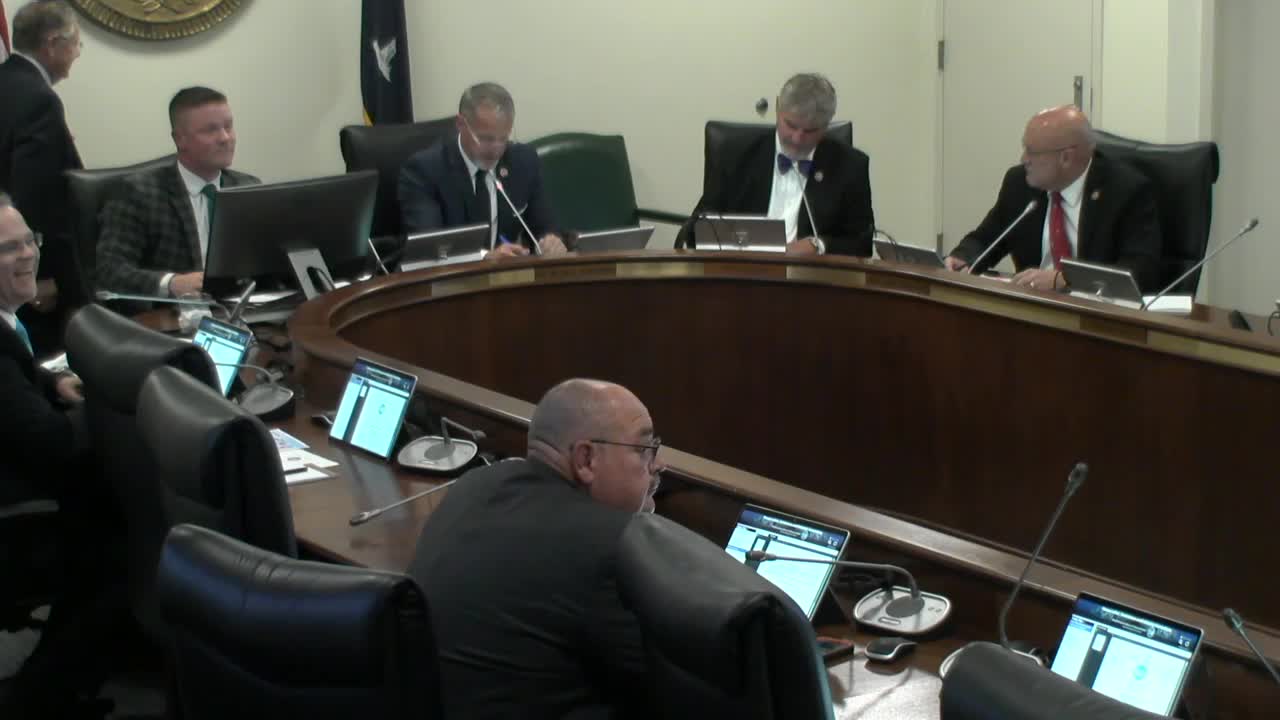
The Labor, Commerce and Industry Regulatory Review Subcommittee voted to advance House Bill H.3931, a coastal permitting measure sponsored by Representative Bailey and others, to the full committee. Committee members approved a motion and second to move the bill forward; the record shows the motion and second were made and the chair called for the vote, but the transcript does not include a roll‑call tally.
Wayne Beam, who represents clients seeking permits from the Department of Health and Environmental Control (DHEC) — now Department of Environmental Services (DES) — told the subcommittee the existing state coastal permitting statute "has not been changed in this area since 1977," and that applicants routinely face uncertain timelines. Beam said the proposed bill would codify review time frames and administrative milestones such as "administratively complete" and "technically complete" and proposed an effective date of Jan. 1, 2026 to give DES time to implement changes.
Chris Stout, chief of the DES Bureau of Coastal Management, told the committee staff turnover and a rising volume of applications have extended review times. He said DES has already added staff under recent budget actions: five new positions in coastal zone consistency and two new positions for critical area permitting. Stout said those hires and process improvements have reduced some review times — coastal zone consistency average reviews have fallen from much longer waits to about five months on average — and that DES aims to target a 45‑day state review average for some processes. He told members that current regulations do not contemplate using third‑party reviewers, though process changes may be possible in the future.
Representative Gary Brewer, appearing by unanimous consent though he is not on the subcommittee, urged lawmakers to preserve the option of third‑party review and fee adjustments should staffing or workload pressures return.
Action: The subcommittee moved H.3931 to full committee for further consideration. The motion and second are recorded in the transcript; the transcript does not include a roll‑call tally.