Get Full Government Meeting Transcripts, Videos, & Alerts Forever!
Get email alerts on the Personal Delivery Devices topic
No spam. Unsubscribe anytime.
Subcommittee advances bill to authorize personal delivery devices on sidewalks
Summary
The Labor, Commerce and Industry Regulatory Review Subcommittee advanced House bill H.3129 to full committee after testimony from Starship Technologies, University of South Carolina dining staff, and the Department of Transportation about safety, operations and municipal authority.
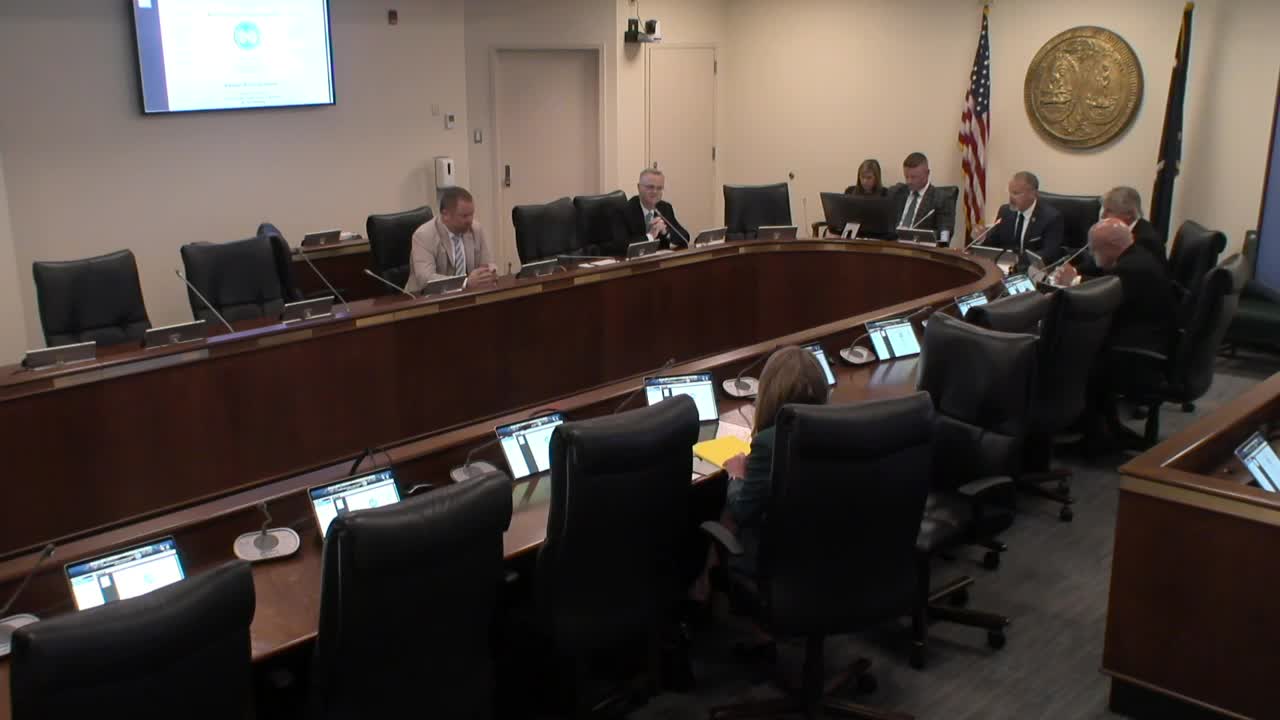
The Labor, Commerce and Industry Regulatory Review Subcommittee voted to advance House Bill H.3129, a measure on personal delivery devices (PDDs) sponsored by Representative Rutherford, to full committee consideration. The motion to move the bill was made by Representative Mark Smith and seconded by Representative Craig Gagnon; the committee chair announced that H.3129 "is moving" to full committee.
The bill would provide a statewide framework permitting PDDs to operate in pedestrian areas, including sidewalks and crosswalks, while preserving local jurisdictions’ authority to limit where operations occur. The draft includes requirements on maximum travel speeds, noninterference with pedestrians and traffic, and a minimum liability-insurance requirement.
Eileen Zong, director of government affairs at Starship Technologies, described the company’s campus operations and safety systems. "PDDs are all electric, low speed, low mass devices typically traveling at walking speeds and are approximately 80 in weight," Zong said, adding that Starship has completed more than 7,000,000 autonomous deliveries worldwide and that its devices are geo‑fenced and supported by remote human assistance. Zong said the robots are typically programmed to a maximum of 5 miles per hour but “they rarely travel that quickly” and often operate at about 2 miles per hour on crowded sidewalks.
Bridal Puccillo, a sophomore aerospace engineering major at the University of South Carolina and a Starship robot technician, said the work has given him repair experience relevant to future engineering jobs. Cleat Myers, who runs dining services at the University of South Carolina, told the committee the campus program has carried out about 12,000 successful deliveries and operated over 4,000 miles without incident; he said robots also deliver basic household items and help students who are sick.
Alan Hutto, chief of staff at the South Carolina Department of Transportation, told the committee DOT’s general counsel considers such devices likely to be treated as "vehicles" under state law, and he recommended limiting PDD speed to 5 miles per hour and keeping them out of vehicle travel lanes for now. Hutto also recommended a sunset review provision to revisit rules in three years.
Committee members asked about alcohol delivery, ownership and advertising. Zong said Starship does not deliver alcohol because that requires verification processes and that advertising on units would generally be subject to university approval on campuses where Starship operates. She said Starship is privately owned, with headquarters in San Francisco, and that the company’s U.S. operations have focused primarily on college campuses.
Action: The subcommittee voted to move H.3129 to full committee. The motion was made by Representative Mark Smith and seconded by Representative Craig Gagnon; the committee chair announced that the bill "is moving" to full committee. The transcript does not record a roll‑call tally.
The bill will receive further consideration and any proposed amendments in full committee.