Get Full Government Meeting Transcripts, Videos, & Alerts Forever!
Get email alerts on the Special Education Private Providers topic
No spam. Unsubscribe anytime.
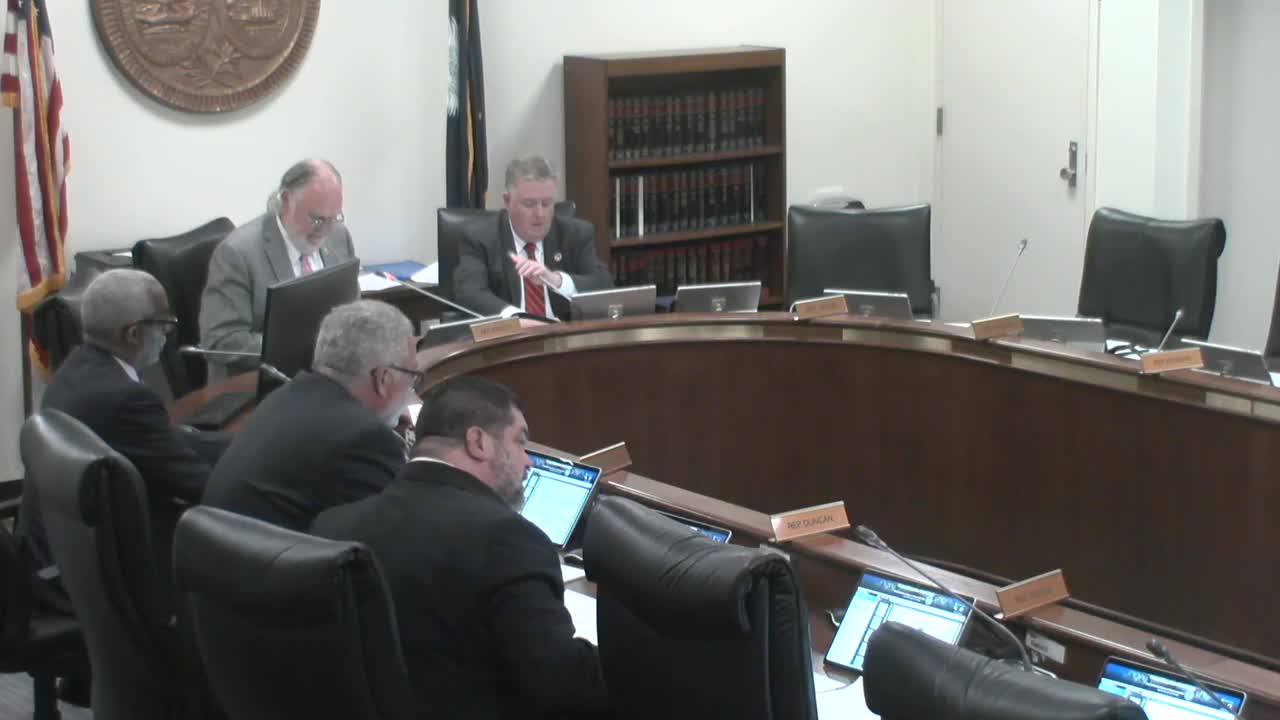
Subcommittee narrows bill allowing private ABA providers into schools, adopts amendment and adjourns debate
Summary
The K‑12 subcommittee adopted a compromise amendment to House Bill 3974 that limits private-provider access to schools to applied behavior analysis (ABA) providers and directs a state model policy; members adjourned debate on the amended bill and sent it toward full committee.
The K‑12 subcommittee of the Education and Public Works Committee on Wednesday adopted a compromise amendment to House Bill 3974 that narrows which private clinicians may come into public schools to provide medically necessary services and directed further work at the full‑committee level.
HB 3974, as amended, limits the statutory definition of “private provider” to those who render applied behavior analysis (ABA) therapy and asks the State Board of Education to develop a model policy and written‑agreement template that districts must use when reviewing parent requests for in‑school services.
Supporters said the change reflects implementation realities and insurer rules. Shealy Rybould, who staffs the Joint Committee on Children and guided stakeholder negotiations, said stakeholders asked to narrow the bill because several listed provider types reported they cannot bill when services are delivered in a school setting. “There are difficulties with billing in a school setting,” Rybould said. She described the amendment as the result of a consensus process that included school boards, administrators, providers, insurers and families.
The amendment requires district review of parent requests under an Americans with Disabilities Act framework, creates a model memorandum of understanding between district and provider and lists specific elements the agreement must include — who will deliver services, when and where, licensing and background‑check verification, liability allocation and a process for removal if a provider becomes a safety risk.
Several parents and clinicians urged broader language. Representative Tippel described her daughter’s need for therapies beyond ABA and said narrowing the bill “breaks my heart.” Parents and attorneys told the panel that ABA providers often must work across settings and that ABA can require many weekly hours of service, sometimes delivered in the classroom so instruction is not missed. Jackie Williams, president of the South Carolina Association for Behavior Analysis, said the profession supports broader diagnostic language tied to DSM‑5 codes and urged the committee to avoid limiting access in ways that would exclude children whose diagnoses are not autism spectrum disorder (ASD).
School administrators described practical differences among therapies. Doctor Nicole Adams of Lexington School District One said her district has operated memoranda of understanding with external ABA providers for two years; over that period the district executed roughly 48 MOUs (not all concurrent), she said, and has built procedures to check credentials and limit providers’ interaction with other students. An S.C. Department of Education official told the panel that medically necessary behavior services are often delivered differently from pull‑out therapies such as occupational or physical therapy and that the ABA services’ cross‑setting nature made behavioral services the predominant concern raised in stakeholder meetings.
A common theme in testimony was insurance reimbursement: witnesses said many commercial and Medicaid policies do not reimburse for services coded as delivered in a school setting, which discourages some providers from entering schools. Panelists urged continued work with DHHS and insurers on billing approaches that would enable in‑school delivery of medically necessary care.
After extended discussion, the subcommittee adopted the compromise amendment by voice and roll call. The roll call on the amendment recorded unanimous support from the subcommittee membership present. The committee then voted to adjourn debate on the amended bill; that motion carried on a unanimous recorded vote, and members said the bill would return for full‑committee consideration where additional amendments could be offered.
What changed: the amendment removes many provider types from the bill’s original list and restricts statutory coverage to board‑certified behavior analysts, assistant behavior analysts, doctoral BCBA candidates and registered behavior technicians delivering ABA therapy for medically necessary treatment related to ASD and functional limitations, with additional language allowing the State Board of Education to issue a model policy.
Next steps: the bill as amended was adjourned and remains live at the subcommittee level; members said the amendment could be reconsidered at full committee and that further amendments could be drafted to broaden provider types or change diagnostic language.
Votes at a glance: the subcommittee adopted the compromise amendment and then adjourned debate on the bill; both actions passed on unanimous recorded votes.
The discussion highlighted implementation questions — billing, classroom space and provider supply — and parents and providers asked lawmakers to continue negotiating language that preserves parental choice and ensures access to medically necessary services.