Get Full Government Meeting Transcripts, Videos, & Alerts Forever!
Get email alerts on the Curriculum Personal Finance topic
No spam. Unsubscribe anytime.
Hatboro-Horsham to develop half‑credit personal finance course under new Pennsylvania mandate
Summary
The district’s curriculum review of the high school business program recommends creating a half‑credit personal finance course to comply with Act 35 of 2023, revising the existing one‑credit financial literacy class, and exploring new electives for younger students; implementation planning will continue through the curriculum committee.
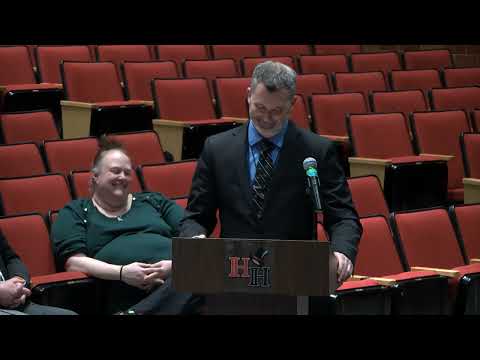
The Hatboro‑Horsham School District will develop a half‑credit personal finance course to comply with Pennsylvania’s new requirement that high schools offer personal finance instruction, district curriculum staff told the board during the April 7 work session.
David Weber, the district’s director of curriculum, said Act 35 of 2023 requires all Pennsylvania high schools to offer a personal finance course equivalent to a half credit. He told the board the district’s existing one‑credit Financial Literacy course already covers most of the required topics but that the administration will write a half‑credit course and revise the one‑credit option so students can choose the fuller option if desired.
The recommendation came as part of a broader review of the high school business and computer information technology (BCIT) offerings. Weber said the BCIT review focused on traditional business electives (accounting, financial literacy) while a separate STEAM review will cover computer science and related technology courses.
Why it matters: the personal finance requirement will “impact every student at the high school starting 2026‑27,” Weber said, and the district must decide how the new half‑credit integrates with existing graduation requirements. The state allows districts flexibility: the half credit can be taught by teachers holding BCIT certificates or by teachers in other certifications, such as math, social studies or family and consumer sciences, a flexibility Weber said the district will likely use when staffing the course.
Weber summarized three specific curriculum recommendations arising from the review: 1) write and adopt a half‑credit personal finance course and revise the current one‑credit Financial Literacy offering so students and counselors understand the differences between the two options; 2) explore a new elective better suited for freshmen and sophomores who currently enroll in the Introduction to Business or the junior/senior Pathways course; and 3) update or replace the long‑standing Retail Management half‑credit course, which failed to run this year and whose hands‑on elements (such as managing the school store) have diminished.
Weber said the business/computer information department at the high school includes five teachers and that curriculum revision will occur next year as part of the district’s six‑year department review cycle. He said the full report and supporting data will be posted on BoardDocs and on the curriculum department webpage.
Board members asked about graduation credit impacts and K‑8 coverage of financial concepts. Weber said personal finance topics are currently taught in several places across K‑8 — elementary math, social studies, middle‑school family and consumer sciences, and career education lessons — and added that counselors will publicize course offerings during December course selection once the curriculum decisions are finalized.
The curriculum committee will continue work on course writing, staffing plans (including using teachers with other certified backgrounds), and the timing of implementation before the 2026‑27 school year.