Get Full Government Meeting Transcripts, Videos, & Alerts Forever!
Get email alerts on the Solid Waste topic
No spam. Unsubscribe anytime.
Fruit Heights debates consolidated fee schedule and proposed citywide recycling program; staff lays out costs and pilot details
Summary
At a public hearing the council reviewed a proposed consolidated fee schedule that would bundle a city recycling program into solid-waste fees. Staff presented cost estimates, cart purchase costs and program design; residents expressed both support and concern for the mandatory, bundled approach.
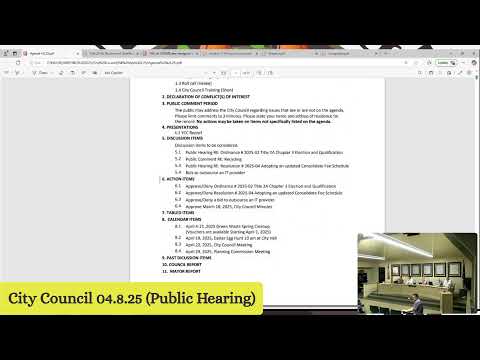
Fruit Heights City Council held a public hearing on updates to the consolidated fee schedule that would bundle a citywide curbside recycling program into the municipal solid-waste service.
City staff and district representatives described the proposed program, its costs and operational details. The proposed fee model would add $5 to the current first-can garbage fee, raising that service to $20.50 per billing period; the fee would cover one regular garbage can and one recycling cart. Staff described the bundled model as “all-or-nothing” (no opt-out after adoption) and said participation rates affect per-household unit costs: higher participation lowers unit cost.
Key program details presented to the council and public: - Cart and startup costs: Staff estimated purchase of 2,000 recycling carts would cost about $120,000; integrated planning or bundling discounts could reduce the city’s net cart purchase cost by roughly $30,000 in negotiated terms with the district/hauler. - Pricing model: The proposed first-can fee would increase by $5 to $20.50; a second regular garbage can would increase by about $2; a second recycling cart would cost $5 each. - Hauler guarantees and credits: City staff reported negotiations with the city’s current hauler (identified in meeting materials as Robinson/Robson Waste) to guarantee a fee for multiple years to limit increases. The district also offers diversion credits for green waste and recyclable material that reduce net landfill transport costs. - Collection and material handling: District representatives explained the program would use a single-stream cart; material recovery facility sorting would separate recyclables after collection. Glass is handled separately in some facilities and is not always collected curbside due to safety and market value concerns. - Education and rollout: The district described an outreach package that would include mailed notices, FAQs, stickers on carts explaining acceptable materials, a landing page, and facility tours for residents. Staff said the district would provide educational materials when carts are delivered.
Public reaction: Several residents spoke in favor of recycling as a worthwhile quality-of-life service; others questioned the mandatory, bundled approach and whether low-income households or older residents should receive discounted or opt-out options. Council members asked whether the fees would affect other city taxes or require additional budget adjustments; staff said the fee is designed to cover solid-waste program costs and not to change tax rates.
Council direction and votes: The council conducted the public hearing and closed it at the end of public comment. During the meeting the council later considered and adopted a separate resolution (Resolution 2025-04) related to solid-waste updates (roll-call recorded) — see votes summary. Staff said council would consider public input prior to final adoption of any ordinance changes required to implement a recycling program.