Get Full Government Meeting Transcripts, Videos, & Alerts Forever!
Get email alerts on the Automated Traffic Cameras topic
No spam. Unsubscribe anytime.
Milton adopts automated traffic-safety camera ordinance; city aims to begin enforcement by school year
Summary
Council passed Ordinance 2107-25 to authorize automated safety cameras for schools, parks and traffic signals, with staff saying cameras should be operational by the start of the school year and a planned 30-day amnesty period.
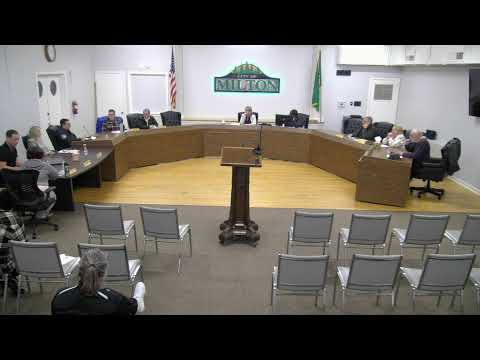
The Milton City Council on April 7 adopted Ordinance 2107-25, updating local code to authorize automated traffic-safety cameras at locations such as school zones, parks and signalized intersections.
City officials and council members framed the ordinance as a traffic-safety and traffic-calming tool that will fund pedestrian and bicycle safety improvements. Chief Hernandez and staff said state legislation (House Bill 2384 and related RCW provisions) required a clearer local code and set conditions for how cities may use camera revenue.
Chief Hernandez told the council the city has been building infrastructure for cameras since 2023 and that the updated ordinance reflects the state’s revised limits on allowable uses of camera revenue. “We hope by the beginning of school year next year…August or September,” Hernandez said, referencing a target to have cameras operating for the school year. Staff also said they would aim to have a 30-day grace or amnesty period during which violations would be notices rather than enforceable fines.
Council members asked how cameras would operate. Staff explained that school-zone cameras would be active only during school hours, park cameras would follow park hours, and one intersection camera on Milton Way would operate 24 hours because that location is tied to signal enforcement. The council also discussed displacement (drivers diverting to other streets) and parallel physical traffic-calming work on Taylor and Emerald streets, which the city’s traffic consultant Transpo is assessing.
The ordinance includes reporting and equity provisions. Finance staff explained that after four years of camera operation the city must remit 25% of revenues to a regional account (Cooper Jones active transportation safety account) that supports pedestrian and bicycle safety projects chosen by the regional traffic-safety commission. Council members also discussed a requirement to use the Department of Health’s environmental health disparities map when planning use of camera revenue; staff said Milton’s uniform ranking across the city gives the city latitude to place enforcement and improvements without prioritizing a single neighborhood.
Council Member Whelan moved adoption; Council Member Hall seconded. The motion passed (yes: 5, no: 0). Council asked staff to publicize the program, provide a 30-day notice/amnesty period before fines begin, and return updates as equipment becomes operational.