Get Full Government Meeting Transcripts, Videos, & Alerts Forever!
Get email alerts on the Water Infrastructure topic
No spam. Unsubscribe anytime.
Glendora council approves emergency repair, awards $572,000 contract for Lone Hill water main relining
Summary
The Glendora City Council voted 5-0 to declare an emergency and award a $572,000 contract to reline a failing 16‑inch transmission main that supplies eastern neighborhoods and supports fire flows.
The Glendora City Council on a 5-0 vote approved an emergency repair and awarded an agreement to Big Ben Inc. to reline a failing 16‑inch Lone Hill transmission water main for $572,000.
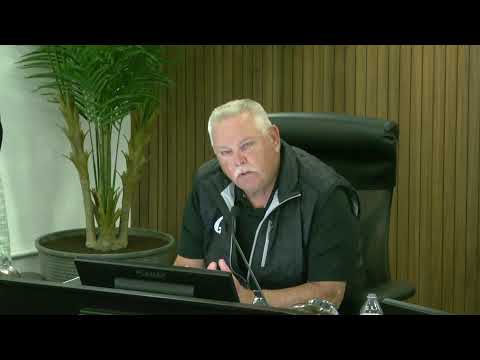
The project will reline about 600 linear feet of the original 1930 transmission main, replace roughly 10–12 feet of adjacent ductile‑iron pipe, install a new 16‑inch valve and a fire hydrant, and restore service to affected homes. William Witkoff, director of public works, told the council the line delivers water to booster stations, the Morgan Ranch area, Foothill Boulevard and local reservoirs and that a loss of the line would hinder fire response and normal service.
Witkoff said crews first received complaints about surfacing water on Dec. 30 and identified the leak on Jan. 29 after using inspection cameras and newer leak‑detection equipment. He described long-standing mortar failure and corroded abandoned service valves inside the old pipe as the cause of repeated leaks. “We ran a video camera through that water line,” Witkoff said. “The lining had failed, the line started to decompress, it had cracks in it.”
Because the pipe runs under homes, garages and trees, staff recommended a cured‑in‑place relining technique rather than open trench replacement. Witkoff described the liner as a multi‑layer product with a Kevlar component and said it should provide at least 50 years of service after installation. He outlined the contractor’s installation method — pulling the flat liner through the existing pipe, inflating it, curing it under pressure and then performing hydrostatic testing and chlorination — and said crews hoped to begin testing the day after the meeting and return the line to service in about one to two weeks if tests succeed.
Council members asked technical questions about the cure process, the amount of new pipe required and how staff located the leak. Witkoff said a recent equipment purchase helped staff trace the leak under deep overburden and that excavation revealed a usable clean section of ductile‑iron pipe, reducing the new‑pipe length from the originally estimated 100 feet to about 10–12 feet. Council Member Shauna Thompson called the project “like the stent of the water world.”
The council’s formal action covered five recommendations in the agenda packet, including declaring the repair an emergency and authorizing the contract. Council Member Michael Merrick moved the set of items and Council Member Mendel seconded; the clerk recorded the vote as 5-0 in favor.
The council packet lists the contractor and the $572,000 amount; the agenda did not specify a contract number or detailed phasing dates beyond the testing timetable Witkoff gave. Staff said temporary aboveground “highline” service was provided to impacted residents during repairs and that those services have been restored.
The city plans to monitor the relined section and preserve the option to install a conventional replacement in the future if needed. The council did not add conditions to the contract award beyond the items in staff’s recommendations.