Get Full Government Meeting Transcripts, Videos, & Alerts Forever!
Get email alerts on the Tax Policy Tcja Small Business topic
No spam. Unsubscribe anytime.
Lawmakers, small-business owners press Congress to make 2017 tax cuts permanent to avoid 'massive tax hike'
Summary
A joint House–Senate hearing heard business owners and analysts say expiring Tax Cuts and Jobs Act provisions — including the pass-through deduction, bonus depreciation and R&D expensing — would raise taxes on small firms and slow investment; Democrats and some witnesses urged reforms and targeting rather than a straight extension.
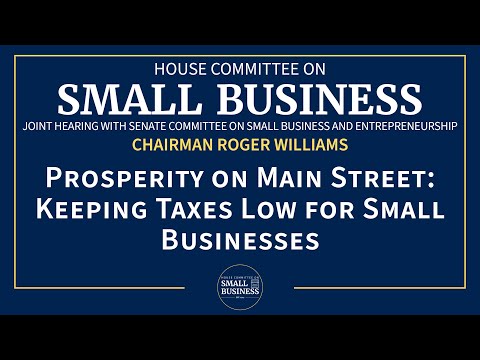
A joint hearing of the House and Senate small-business committees on Thursday centered on calls to make the Tax Cuts and Jobs Act of 2017 permanent so small businesses would not face what witnesses and Republican lawmakers called a “massive tax hike.” Chairman Williams said, “Extending small business tax cuts will drive growth on Main Street America.”
The hearing featured small-business owners and tax experts who told lawmakers that several TCJA provisions that benefit pass-through businesses and capital-intensive firms are set to expire and that expiration would reduce investment and could mean higher taxes for workers. The stakes were framed in broad terms by Chairwoman Ernst: “If we let the TCJA expire now, Americans and small business owners will be forced to shoulder another $4,000,000,000,000 in new taxes.”
Tom Click, president and chief executive officer of Patriot Industries, told the committees his company invested nearly $4,000,000 in advanced manufacturing equipment since 2017 and now operates three U.S. factories totaling about 40,000 square feet and employs nearly 100 people. “If Congress does not act this year, both our business and our employees will be hit with a massive tax hike,” Click said, adding that immediate expensing and a 20% pass-through deduction allowed Patriot to accelerate investment.
Preston Brashears, a research fellow at the Heritage Foundation, urged Congress to lock in full and immediate expensing and to restore immediate R&D expensing. “One of Congress’s top priorities should be to lock in full and immediate expensing, not just for another few years, but permanently,” Brashears said, arguing that amortization of research costs and the gradual sunsetting of bonus depreciation are “especially harmful to small businesses.”
Democratic members and some witnesses urged changes to target benefits to smaller firms. Anne Zimmerman, founder of Zimmerman & Company CPAs and co-chair of Small Business for America’s Future, said many true Main Street businesses receive little from the pass-through deduction. She told the committees her firm had a restaurant client with 11 employees who received $700 in tax savings, while a high‑income investor received thousands from the same deduction. Zimmerman recommended reforms including a small-business standard deduction, a first-employee hiring credit and closing corporate loopholes that favor large firms.
Committee members also asked witnesses about the estate-tax changes in TCJA. Click and franchise owner Jerry Akers described estate-tax and liquidity concerns for family-owned, capital-intensive businesses. Click said the estate or “survivor’s tax” could require family firms to divert funds away from hiring and equipment toward attorneys and insurance.
What happened next: lawmakers used the hearing to collect testimony for possible legislation. The panels closed by noting members may submit written questions and additional materials; no formal votes or committee actions were taken during the hearing.
Ending: Lawmakers on both sides said they want to avoid sudden expiration of provisions while continuing to debate whether reforms should make the current benefits permanent as written or be redesigned to more narrowly help micro and Main Street firms.