Get Full Government Meeting Transcripts, Videos, & Alerts Forever!
Get email alerts on the Us China Relations topic
No spam. Unsubscribe anytime.
Senate Foreign Relations Committee questions David Perdue on China policy, fentanyl and reciprocity
Summary
At a Senate Foreign Relations Committee hearing, President Trump's nominee for ambassador to China, David Perdue, told senators he would press Beijing on fentanyl precursors, human rights and trade reciprocity while several senators pressed him on supply chains, Taiwan and Chinese influence operations.
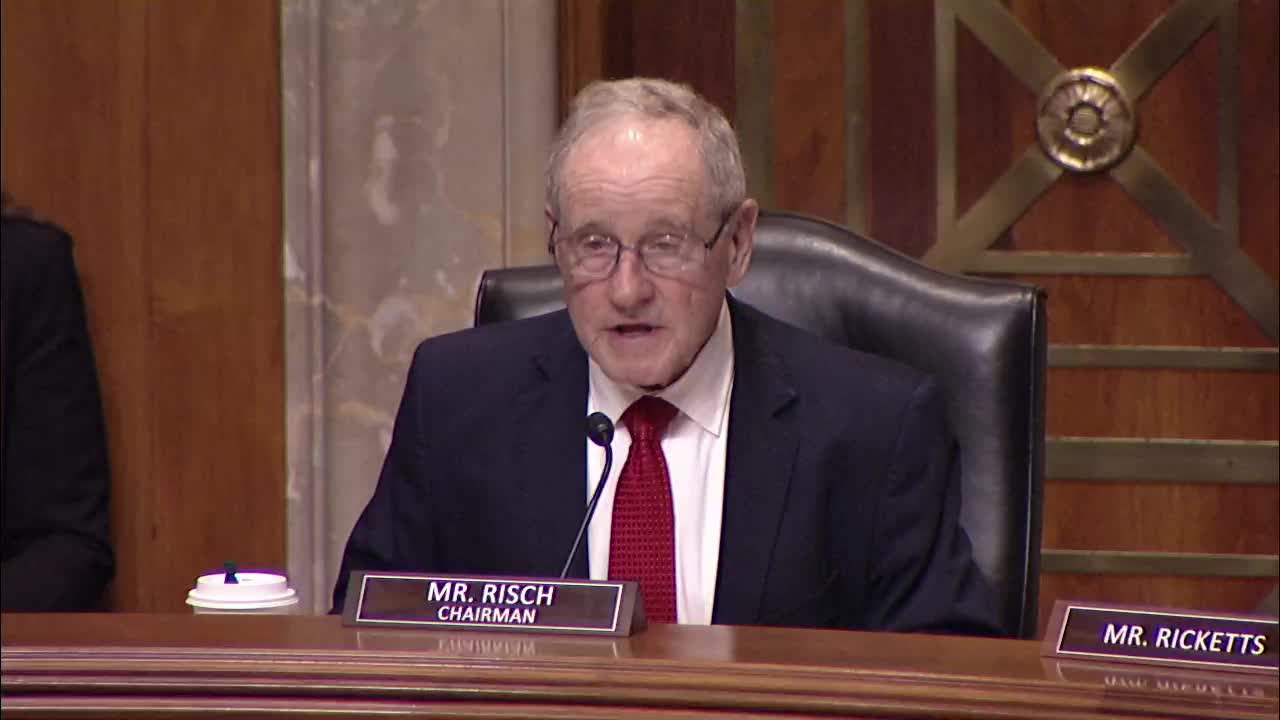
Senate Foreign Relations Committee Chairman Mike Risch opened a confirmation hearing on April 3 for President Trump's nominee to be ambassador to the People's Republic of China, David Perdue, urging the nominee to explain how he would address economic, security and human-rights challenges posed by Beijing.
Perdue told the committee he would “remain committed to promoting democratic ideals in an open, free, and fair international system” and pledged to execute administration policy in Beijing, including support for the one-China policy guided by the Taiwan Relations Act, the three joint communiques and the six assurances.
The hearing focused on three recurring themes: the flow of fentanyl precursors from China to drug cartels in North America, the need for reciprocity in trade and diplomatic treatment, and the security implications of Chinese access to U.S. supply chains and infrastructure. Senator Jeanne Shaheen, the committee's ranking member, opened the questioning by warning that "China is stepping in as we are stepping back, sadly," and urged robust tools to counter Chinese propaganda and influence abroad.
Perdue, a former senator and businessman who served as chair of the panel's State Department oversight subcommittee, described his experience living and working in Asia and said he would press Chinese officials on fentanyl precursors and human-rights issues. "We have got to get China out of our power grid, our ports, and our personal lives," Perdue said, arguing that China's influence in critical supply chains and technology transfer posed national-security risks.
Senators pressed Perdue on specifics. Questions ranged from whether U.S. diplomats should continue to attend events organized by the Chinese Communist Party's United Front Work Department, to requests that the nominee explain how he would coordinate with allies on emerging-technology competition and on preserving Taiwan's security. Perdue said he would emphasize alliances and rebuild strategic supply chains for items such as rare earths, semiconductors and pharmaceuticals.
On Taiwan, Perdue reiterated support for a peaceful resolution and cited the Taiwan Relations Act and longstanding diplomatic understandings. He told the committee that China was accelerating a “bifurcation” between authoritarian and democratic states and that a unified allied response was essential to deter coercive behavior.
Perdue also argued for an education campaign at home about Chinese influence and for increased diplomatic pressure abroad. He criticized recent reductions to U.S. information programs that he said previously helped counter foreign propaganda, and he told senators he would work with allies and Washington agencies to restore messaging and engagement where needed.
Several senators pressed Perdue on human-rights matters, including Xinjiang and Hong Kong, and on concerns about Chinese purchases of strategic assets abroad. Perdue said those issues would be priorities if he is confirmed and pledged to raise them with Chinese counterparts.
The hearing concluded with an agreement that written questions for the record would be submitted; no committee confirmation vote on Perdue occurred during the session.