
Council debates beaver control, tree maintenance and larger stormwater fixes after weekend flooding
Get AI-powered insights, summaries, and transcripts
Sign Up Free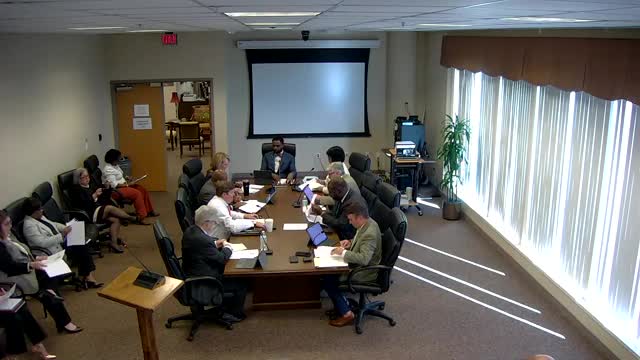
Summary
Mobile City Council members spent the meeting’s discussion time debating beaver removal limits, repeated leaf-clogging of drains and the need for large-scale stormwater investments after heavy weekend rains flooded parts of the city.
At a Mobile City Council meeting, council members and staff described heavy weekend rainfall that left streets and properties flooded and discussed short-term responses — leaf and inlet cleaning, beaver-control options — and longer-term, expensive infrastructure investments to reduce future flood impacts.
Council members said the city received hundreds of emails about beavers and asked staff to prepare a plain-language explanation of state rabies and wildlife-transport rules and cost estimates for nonlethal beaver devices. A staff member said state rules prohibit transporting live beavers within the state and described an engineered “beaver deceiver” culvert solution that has worked in other states and would cost about $1,500–$3,000 per installation. The staff member said 21 sites are currently on the city’s beaver contract.
Council members also emphasized recurring problems with leaves, yard clippings and tree roots that clog inlets and underground pipes. Several council members said the city’s annual cleaning schedule is insufficient in neighborhoods with many oak trees and asked the administration to increase vacuum-cleaning and enforcement of ordinances that prohibit blowing leaves into streets. One council member asked that the administration and staff produce a two-paragraph explainer on state law, rabies-control rules and the costs of alternatives so councilmembers can share it in newsletters.
Multiple speakers stressed the limits of local infrastructure given Mobile’s low elevation and tidal influences: speakers noted that some downtown outfalls sit below bay/tide level during high water, which can cause backup during heavy rain; one council member said municipal systems cannot fully prevent flooding in extreme events without very large investments. Speakers offered examples of targeted neighborhood drainage projects (Canal Drive/Canal Circle) that worked after design and repairs, but warned that doing the same citywide would cost millions or hundreds of millions of dollars.
Council members asked the administration to return with clearer cost estimates and a short-term plan for increased inlet cleaning and targeted repairs. The discussion closed with requests to coordinate with the tree commission on planting and root-management practices and to prepare materials for public education about the city’s drainage limitations and legal constraints on wildlife relocation.
"Right now, I believe we have 21 sites that are on the contract," a staff member said when asked how many sites were included in existing work on beaver-related complaints. Another council member summarized the trade-offs: "We could spend hundreds of millions of dollars on drainage in this city, and with the rains we get 4 or 5 times a year, we would still have flooding."