Get Full Government Meeting Transcripts, Videos, & Alerts Forever!
Get email alerts on the Sba Fraud Prevention topic
No spam. Unsubscribe anytime.
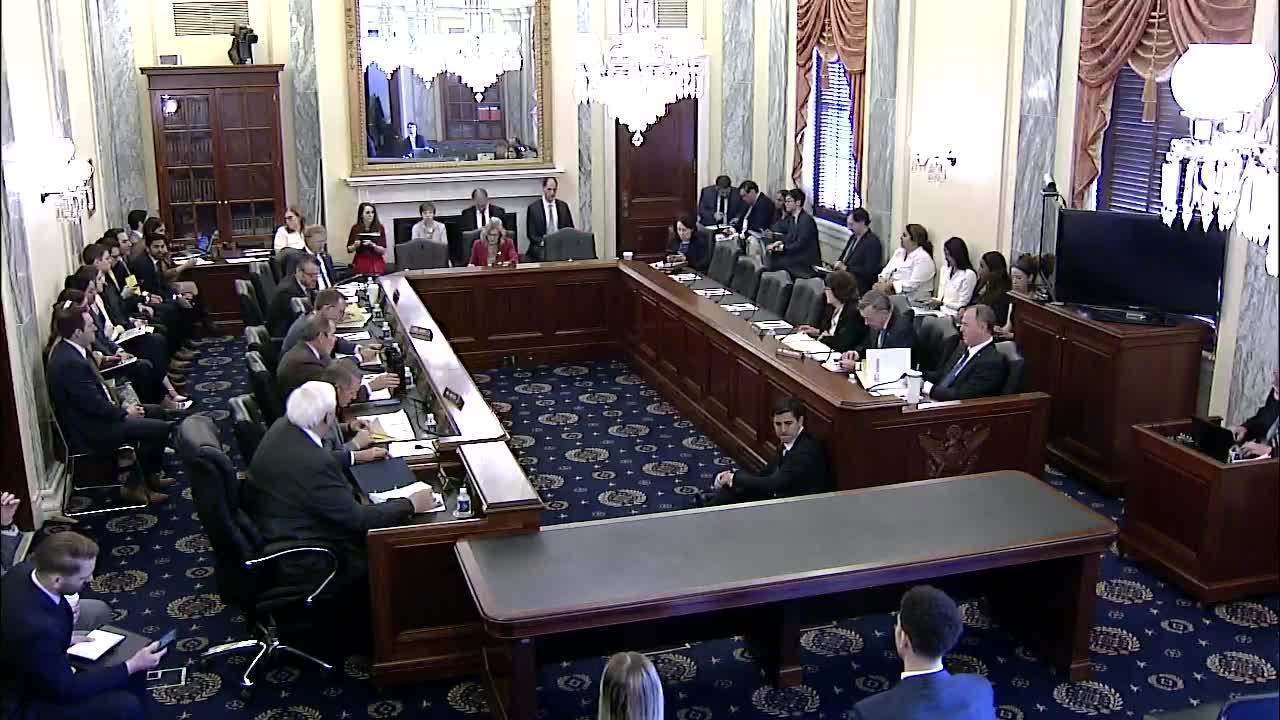
Senate committee advances bill to bar pandemic fraudsters from future SBA aid amid worries about ‘associate’ definition
Summary
The Senate Committee on Small Business and Entrepreneurship favorably reported S.1047, the Assisting Small Businesses, Not Fraudsters Act, after sponsor Senator Young described the bill and Ranking Member Markey withdrew two amendments while flagging concerns about an overbroad definition of “associate” and lifetime bans on access to SBA aid.
The Senate Committee on Small Business and Entrepreneurship on a motion by the chair reported S.1047, the Assisting Small Businesses, Not Fraudsters Act, favorably out of committee. The bill would bar individuals or businesses associated with those convicted of financial misconduct tied to the Small Business Administration’s pandemic programs from receiving SBA assistance, with an exception for disaster loans.
Senator Young, the bill’s sponsor, told the committee the legislation is “commonsensical” and said the measure “prohibits an individual or a business that, that individual is associated with from receiving assistance from the Small Business Administration if they were convicted of financial misconduct in relation to the SBA's pandemic programs.” He added the bill includes carve-outs for disaster loans.
The bill drew objections from Ranking Member Markey, who offered two amendments challenging the bill’s language. Markey said the bill’s definition of “associate” could be “overly broad” and might apply to employees who manage daily operations without decision-making authority, potentially penalizing an entire business for the actions of one worker. He also criticized a provision that places a lifetime ban on SBA loans for implicated associates and urged the committee to “mirror current SBA regulations and uphold ban the box initiatives,” saying lifetime bans are “overly punitive.” Markey withdrew both amendments but said he planned to work with the chair and Senator Young to narrow the definition and address other concerns.
Markey also raised broader concerns about the SBA’s capacity, referencing recent administration actions that he said would cut roughly 43% of the SBA workforce while shifting the federal student loan portfolio to the agency—moves he argued would strain service to small businesses. Those remarks were offered as context for his effort to refine the bill’s language.
The chair moved to favorably report S.1047. The committee voice vote passed; the chair announced the measure was reported favorably with a quorum present and noted Senator Hirono would be recorded as a no. The committee did not take a recorded roll-call vote on the measure. The transcript notes a House companion, H.R.825, passed the House by recorded vote 405–0 on Feb. 24.
Supporters said the bill aims to protect taxpayer funds by limiting access to SBA assistance by those who committed pandemic-era fraud; critics urged more precise language to avoid unintended consequences for innocuous employees or small businesses that employed someone later convicted of fraud. Additional technical and conforming edits were cleared by the committee staff for measures reported that day.
The committee recessed after completing business; members said they would continue discussions to resolve language issues before floor consideration.