Citizen Portal
Sign In

Senate Judiciary Democrats press for public hearing on Ed Martin, chairman cites committee practice

2915012 · April 3, 2025

Loading...

AI-Generated Content: All content on this page was generated by AI to highlight key points from the meeting. For complete details and context, we recommend watching the full video. so we can fix them.

Summary

Senate Judiciary Committee Democrats asked for a public, sworn hearing for Ed Martin, the President’s nominee to be U.S. Attorney for the District of Columbia; the committee chair said he would follow long‑standing practice of handling U.S. Attorney nominees through written questions rather than a public hearing.

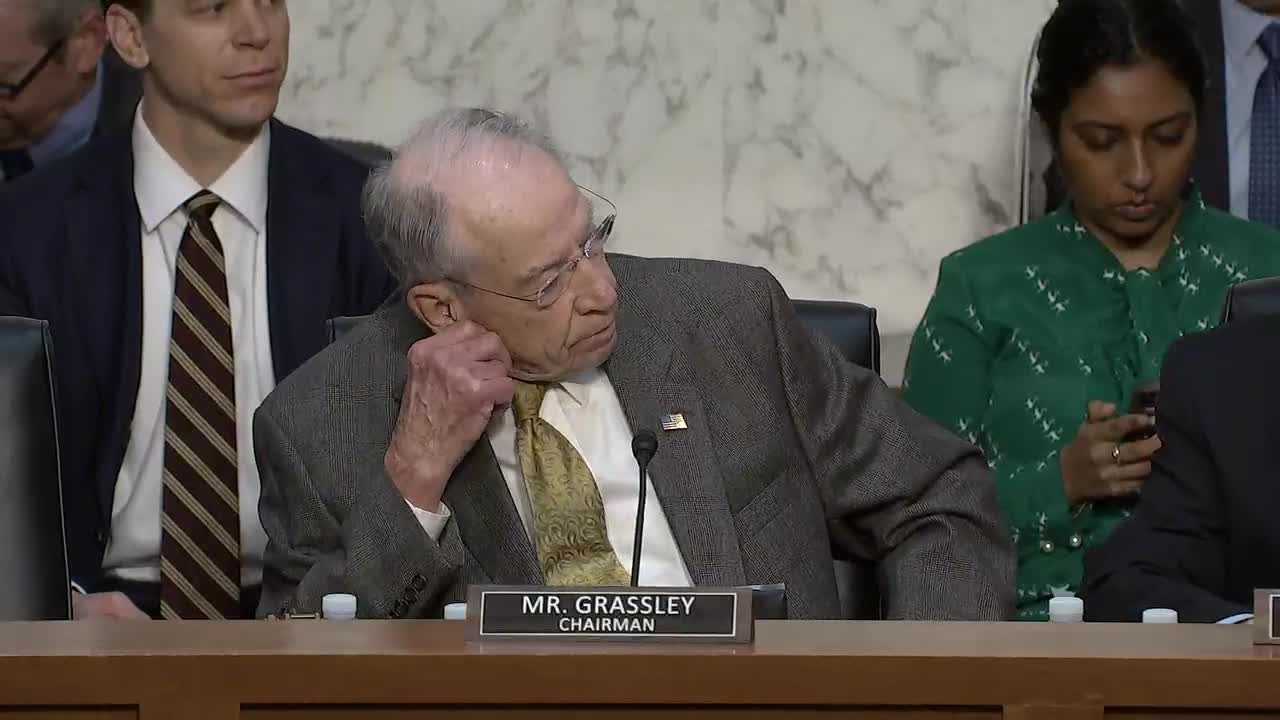
Senate Judiciary Committee Democrats urged the chairman to hold a public, sworn hearing for Ed Martin, the President’s nominee to be U.S. Attorney for the District of Columbia, citing Martin’s public statements about January 6 defendants, his praise for a January 6 offender, and other actions they said warrant fuller public scrutiny. Chairman Chuck Grassley responded that committee practice over recent decades has generally not included public hearings for U.S. Attorney nominees and that the committee will pursue written questions and disclosures instead.

Why it matters: The U.S. Attorney for the District of Columbia prosecutes some of the nation’s most significant federal matters in the capital. Democrats on the committee argued that Martin’s record — as described in public reporting and the committee record — raises questions about his fitness for the position and warrants testimony under oath.

Points raised by Democrats

- Senator Richard J. Durbin (D‑Ill.), speaking for Democrats on the committee, urged a public hearing and detailed several concerns. Durbin said Martin was present on the grounds of the U.S. Capitol on Jan. 6 and has publicly minimized the violence there; Durbin quoted a social‑media post he attributed to Martin that said, "like Mardi Gras in DC today, love, faith, and joy, ignore fake news," and said Martin had praised or given an award to Timothy Hale‑Cusanelli (a January 6 defendant) at a private event. Durbin said Martin had used his office to reassign or remove prosecutors handling Jan. 6 cases and that Martin had intervened in matters involving private parties and government entities.

- Democrats also presented a letter from nearly 100 former assistant U.S. attorneys urging additional scrutiny, and they said Martin has not provided requested disclosures; committee members said roughly "nearly 1,000 hours" of podcasts and other materials cited in his record are no longer available online, limiting the committee's ability to review his public statements.

Chairman’s response and committee process

- Chairman Chuck Grassley said he would follow the committee's longstanding practice, which he described as handling U.S. Attorney nominations without a public hearing and resolving concerns through written questions and documents. Grassley said staff are vetting the nominee and he would not change the committee's usual process that he said has operated for decades.

- Senator Durbin said he intended to try to persuade Republican colleagues to join a bipartisan request for a hearing and said that if no agreement is reached before the committee’s next meeting he would seek an official vote of committee members on whether to require a hearing.

Other remarks

Several senators outside the two leaders spoke in support of a hearing or expressed concern about Martin’s record. Senators cited public reporting and court findings in arguing for more scrutiny. Some members warned about the broader implications for the independence of prosecutors and the Department of Justice if political considerations were perceived to influence prosecutorial decisions.

Ending: The committee did not hold a public hearing for the nominee during the markup. Chairman Grassley announced the committee will continue vetting Martin through standard written‑question procedures; Democrats said they will press for a hearing and may seek a vote at the committee’s next meeting if bipartisan support can be assembled.