Citizen Portal
Sign In

Senate Judiciary Hearing Debates Limiting ‘Universal’ Nationwide Injunctions

2914941 · April 2, 2025

Loading...

AI-Generated Content: All content on this page was generated by AI to highlight key points from the meeting. For complete details and context, we recommend watching the full video. so we can fix them.

Summary

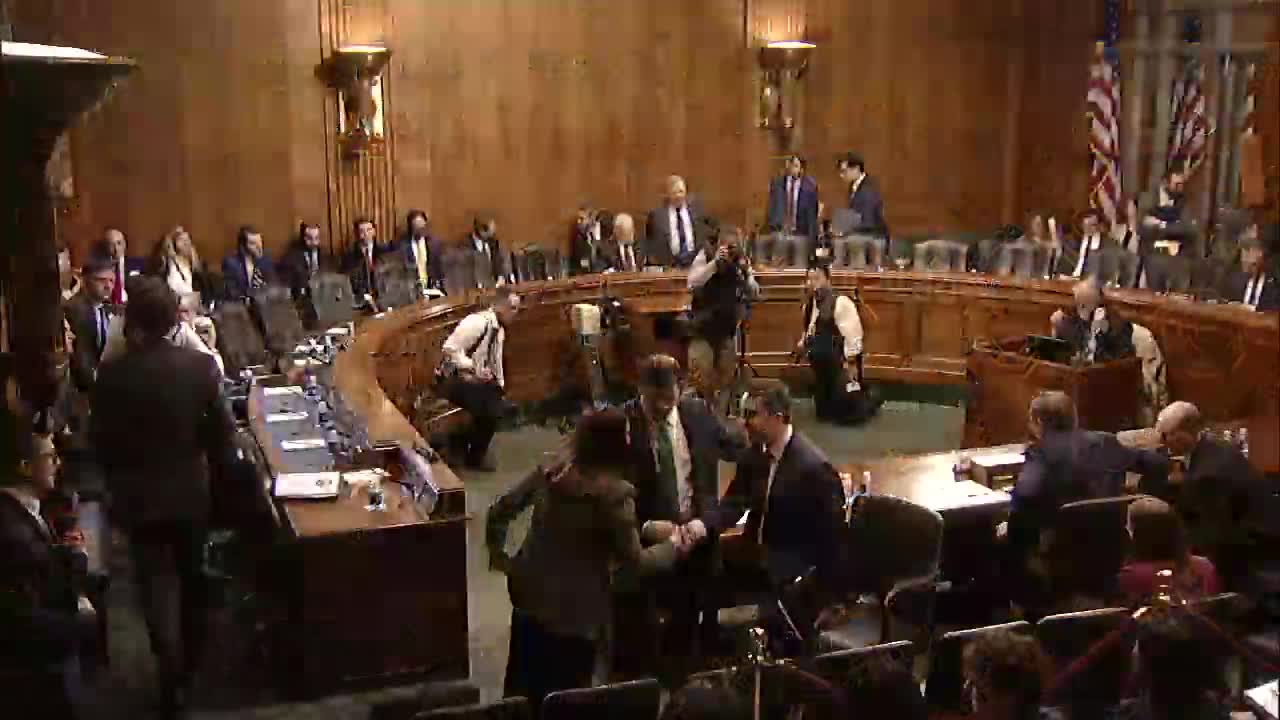
Sen. Chuck Grassley, chairman of the Senate Judiciary Committee, opened a hearing arguing that single district judges are issuing nationwide injunctions that in practice set national policy and asked Congress to consider legislation limiting such orders.

Sen. Chuck Grassley, chairman of the Senate Judiciary Committee, opened a committee hearing focused on what he and some colleagues called “universal injunctions” — district-court orders that bar federal policies nationwide. “It just can't be right that 1 district judge can stop a nationwide policy in its tracks and leave it stopped for years that it takes to go through the normal process,” Grassley quoted, citing Justice Elena Kagan, and said Congress should consider legislation to stop the practice.

Why it matters: lawmakers, former Justice Department officials and legal scholars said the frequency and scope of nationwide orders have introduced legal and practical tensions. Supporters of limits said such injunctions allow a single judge to dictate national policy and encourage forum shopping; opponents said eliminating them now could leave people and programs without timely relief and weaken courts’ ability to check unlawful executive action.

Grassley framed the hearing around his proposed legislative approach to “bury” universal injunctions and return the federal courts to what he described as the Constitution’s cases-or-controversies framework. He urged Congress to prohibit injunctions and similar nationwide relief and pointed to statistics and examples he said show the reach and consequences of the practice.

Ranking Member Sen. Dick Durbin warned that the hearing could not be separated from recent threats and attacks on judges. Durbin said partisan attacks on the bench have increased threats against federal judges and that the committee must speak with “1 bipartisan voice” to protect judicial security. He also cautioned that the number of injunctions reflects, in part, the volume of executive actions the president has issued.

Three witnesses gave contrasting assessments and recommendations. Professor Samuel Bray, John N. Matthews Professor of Law at Notre Dame, argued the practice is both historically rare and constitutionally unsupported. Bray said the ordinary federal process — litigation across circuits and appellate review — produces sounder, more deliberative outcomes and that class actions already offer a vehicle for comprehensive relief. “Once a federal court decides a case and gives a remedy to the parties and the people they represent, there is nothing left for it to do as a court,” Bray said.

Professor Steven Vladeck, Agnes Williams Sesquicentennial Professor of Federal Courts at Georgetown University Law Center, acknowledged problems with the rise in nationwide injunctions and with forum shopping but warned against a legislative ban that would remove a tool that, in his view, can prevent immediate, irreparable harms for broad groups. Vladeck said eliminating nationwide relief without strengthening alternatives could “leave three years of harm” in some contexts (for example, adjudication of rule changes affecting children, immigration status or public benefits).

Jesse Panuccio, a partner and former Justice Department official, described nationwide injunctions and newer uses of temporary restraining orders (TROs) as an acute operational problem that strains appellate dockets and alters long-standing practice. Panuccio recommended procedural fixes including making TROs immediately appealable and requiring courts to follow existing rules on injunction bonds.

Lawmakers and witnesses discussed concrete examples cited during testimony: a district-court order that a witness said required $2,000,000,000 in USAID funding to be disbursed within 36 hours; a California district-court order that a witness said affected roughly 350,000 Venezuelans under Temporary Protected Status; litigation over the administration’s attempts to alter birthright-citizenship policy; litigation over mifepristone; and a challenged freeze of federal grant funding (including NIH) that committee members said could affect thousands of grantees and programs nationwide. Witnesses and senators repeatedly said that how courts craft remedies — not only whether they issue nationwide relief — matters for people and programs who rely on federal funding or status determinations.

On reforms, senators and witnesses outlined several potential legislative and procedural actions under consideration: (1) statutory limits on relief to the parties before the court (the approach advanced by Chairman Grassley and supported by Professor Bray); (2) making TROs and other short-term orders immediately appealable; (3) strengthening the availability of nationwide class actions as a substitute vehicle for comprehensive relief; (4) requiring or enforcing injunction bonds when courts issue relief against the federal government; (5) increased transparency or reform of case-assignment mechanics to reduce forum shopping and single-judge divisions; and (6) proposals to delay the effective date of any reform (for example, one witness and several senators suggested an implementation date after the next presidential transition) to avoid immediate effects on current litigation.

Several senators pressed witnesses about the real-world harms or benefits of nationwide relief. Sen. Josh Hawley and others emphasized the historical rarity of nationwide injunctions and the growth in recent years; Sen. Dick Durbin, Sen. Sheldon Whitehouse and Sen. Amy Klobuchar pressed witnesses on the harms that plaintiffs and grant recipients could face absent nationwide relief; and Sen. Mazie Hirono and others sought to limit judge-shopping and single-judge divisions. Witnesses generally agreed that reducing forum shopping would help but disagreed on how far legislation should go in limiting courts’ remedial power.

The committee did not vote on legislation at the hearing. Chairman Grassley invited continued discussion and said he would seek written testimony; the hearing record was left open and committee staff announced that written questions for the record could be submitted until April at 5 p.m., and members asked for written responses from some witnesses.

Ending: The hearing made clear that the Judiciary Committee is considering a mix of statutory and procedural reforms to address nationwide relief, but committee members and witnesses remain sharply divided on the timing and scope of any change. Some senators urged immediate statutory limitation of nationwide injunctions; others urged caution and complementary reforms (for example, strengthening class actions and appealing TROs) to ensure broad groups and time‑sensitive harms remain protected while discouraging forum shopping and overbroad remedies.