Citizen Portal

Senate Judiciary subcommittee hears sharply divided testimony on alleged "censorship industrial complex"

2914600 · March 25, 2025

Get AI-powered insights, summaries, and transcripts

Subscribe
AI-Generated Content: All content on this page was generated by AI to highlight key points from the meeting. For complete details and context, we recommend watching the full video. so we can fix them.

Summary

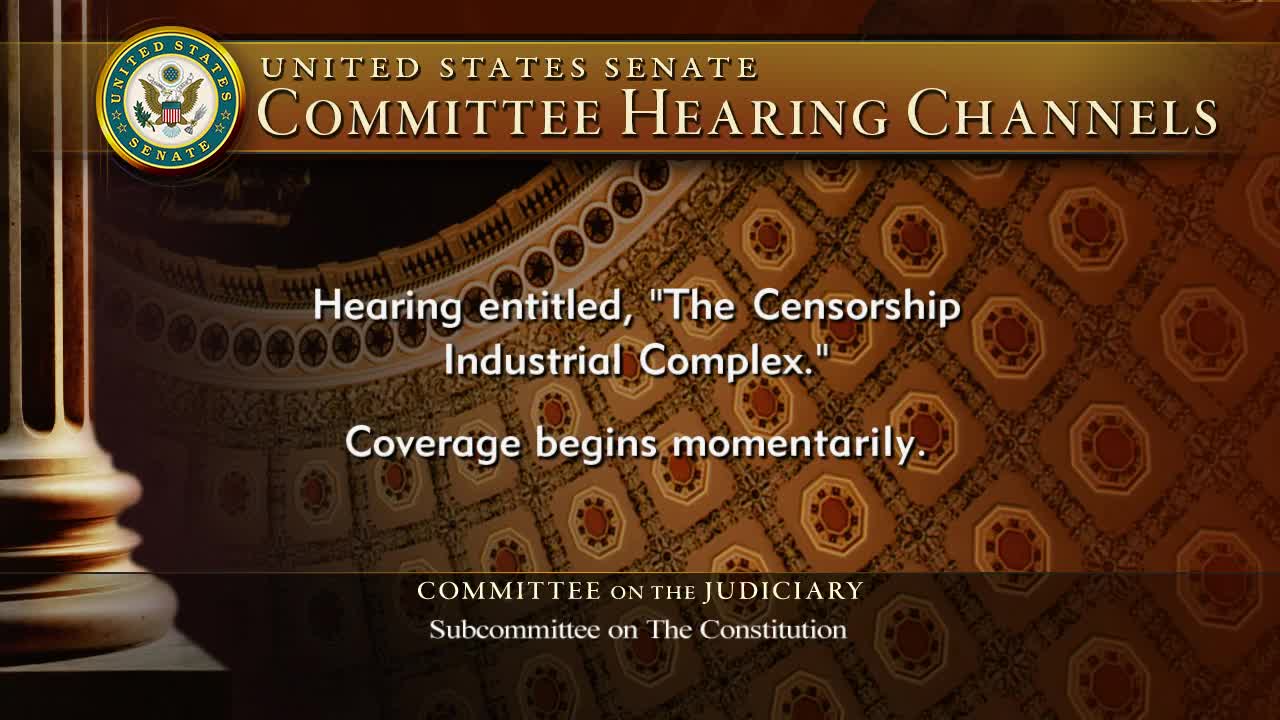
The Senate Judiciary Committee’s Subcommittee on the Constitution held a hearing to examine allegations that federal agencies, nongovernmental organizations and large technology companies coordinated to suppress speech, a phenomenon several witnesses and senators described as a "censorship industrial complex."

The Senate Judiciary Committee’s Subcommittee on the Constitution held a hearing to examine allegations that federal agencies, nongovernmental organizations and large technology companies coordinated to suppress speech, a phenomenon several witnesses and senators described as a "censorship industrial complex." Chairman Schmidt called the session the subcommittee’s "first hearing" on the subject and framed it as a defense of fundamental rights. Senator Peter Welch, the ranking member, warned that he disagreed with parts of the allegation and said the facts do not support a finding of government-directed censorship.

Why it matters: Senators and witnesses said the issue goes to the heart of the First Amendment and could affect public trust in government, journalism and technology platforms. Witnesses who described coordinated action urged congressional oversight and, in some cases, defunding or restricting programs they said enabled suppression. Other witnesses said the law limits government action and that private actors retain broad editorial authority.

Republican senators and several witnesses described a multi-layered system involving federal grants, academic projects and nonprofit "fact-checkers" that they say flagged or blacklisted content for platforms. Molly Ziegler Hemingway, editor in chief of The Federalist, told the panel her outlet and others were targeted and cited what she called government links to tools that demonetized or blacklisted conservative publications. "Attacking free speech and debate has become a massive industry, much of it government funded," Hemingway said in her opening statement.

Witnesses who disputed the conspiracy narrative warned the committee not to conflate private moderation decisions with unconstitutional government coercion. Dr. Mary Anne Franks, Eugene and Barbara Bernard Professor in Intellectual Property, Technology and Civil Rights at George Washington University Law School, emphasized constitutional limits: "The First Amendment constrains the government from interfering with freedom of speech. That includes the president, members of Congress, state officials, U.S. attorneys, special government employees," she said. Gabe Rotman of the Reporters Committee for Freedom of the Press described a legal framework for distinguishing improper coercion from lawful government speech and cited Bantam Books v. Sullivan and recent Supreme Court precedent as guardrails.

Other witnesses offered specific figures and examples discussed at the hearing. Senator Schmidt and others pointed to the Missouri v. Biden litigation, which the chairman said produced "20,000 pages of evidence, emails, slack messages, meeting notes and other internal communications" showing coordination; witnesses also referenced the so-called "Twitter files" and reports that only 2,980 tweets were reported to Twitter for violating its terms, a figure cited by Senator Welch in questioning. Panelists also discussed academic projects, blacklists such as those compiled by NewsGuard and the Global Disinformation Index, and private funding for election-related groups.

Partisan divisions were evident during questioning. Senator Dick Durbin and other Democrats condemned what they described as threats or actions by the current administration that could chill speech, including removal of White House access for news organizations and aggressive rhetoric toward critics. Republican senators emphasized alleged government funding and operational ties between agencies and third-party groups and pressed witnesses on what concrete policy steps Congress could take to "starve" government support for such networks.

No formal votes or committee actions were taken during the hearing. Senators said they expect further oversight and follow-up testimony. Several witnesses urged legislative or administrative remedies: proposals ranged from stricter firewalls between agencies and outside groups, clearer limits on grants for content-moderation projects, to careful judicial review of coercive government action.

The hearing gathered a wide range of testimony but left significant questions contested. Some witnesses and senators recommended additional fact-finding and possible legislative steps; others warned against overbroad responses that could chill legitimate government speech and public-private collaboration on cybersecurity or election integrity. The subcommittee recessed at the end of the session with plans for further work on First Amendment and separation-of-powers issues.

Ending note: Senators and witnesses from across the ideological spectrum said they considered the First Amendment central; they differed sharply on whether current evidence shows unconstitutional coercion by government actors or instead reflects lawful, if controversial, private moderation and government persuasion.