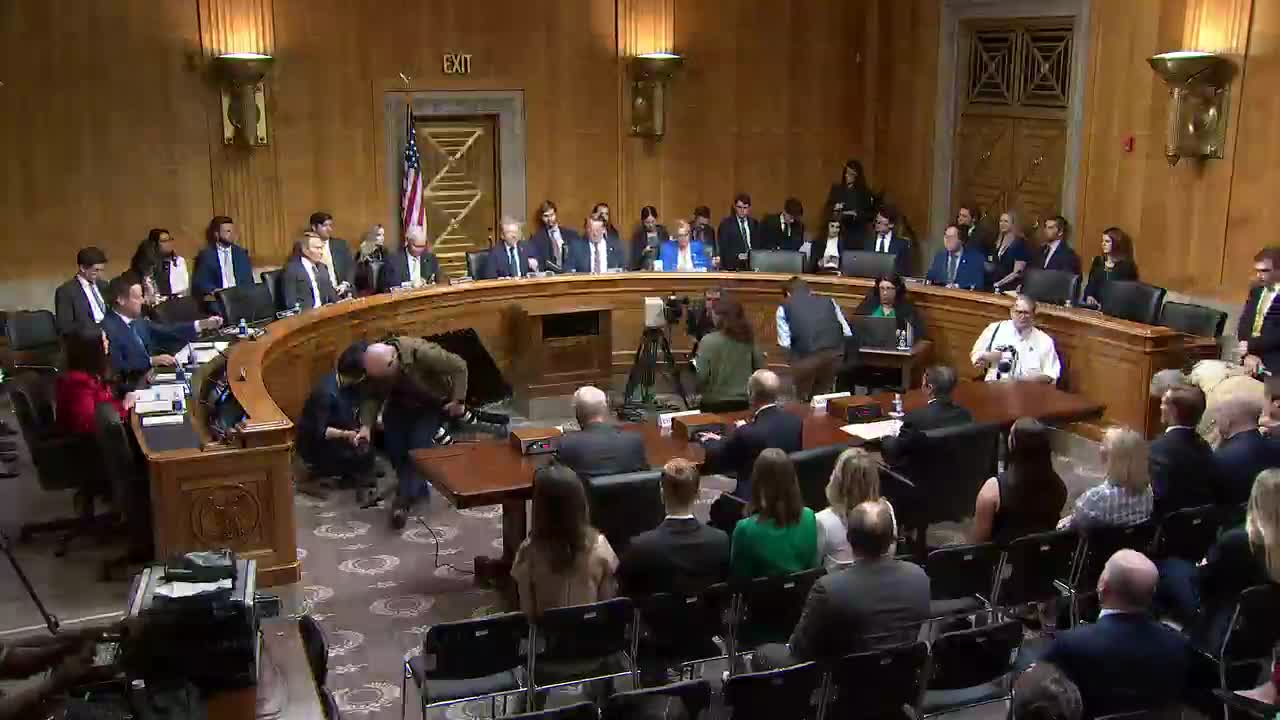
Senate Homeland Security committee hears nominees for OPM director and OMB deputy director for management
Get AI-powered insights, summaries, and transcripts
SubscribeSummary
The Homeland Security and Governmental Affairs Committee met to consider the nominations of Scott Cooper to be Director of the Office of Personnel Management and Eric Ueland to be Deputy Director for Management at the Office of Management and Budget, hearing opening statements and extended questioning from senators.
Why it matters: OPM and OMB oversee hiring policy, performance management, federal procurement and financial management across the civil service. Senators framed the hearing around reforms proposed by the administration, the pace and transparency of personnel reductions, data-security concerns and the federal budget trajectory.
Scott Cooper, the OPM nominee, described a private‑sector career in technology and venture capital and said the federal government must be placed on “a sustainable fiscal path.” He told the committee, “I will work with the president, congress, and the agencies to help write our financial footing.” Cooper said he would emphasize transparent communication during restructurings and a performance management system that distinguishes high performers from others.
Eric Ueland, introduced by former Senator Don Nichols, outlined the DDM’s responsibilities—federal financial management, procurement policy, personnel management, cybersecurity and federal IT—and pledged to “wear out this committee and any interested members in congress to solicit input and share our course.” He said the DDM office can lead efforts to assess and reform processes that have made government “too large and too inefficient.”
Committee members pressed nominees on several recurring subjects: the administration’s elimination of collective bargaining coverage for roughly 1.5 million employees via recent executive action; large‑scale reductions in force and their effects on services such as LIHEAP and veteran support; protection of employee and taxpayer data after prior OPM breaches and contractor access; and a broader plan to reduce federal spending given deficits and growing interest payments.
Nominees’ commitments and limits: Both Cooper and Ueland said they would follow applicable laws and cooperate with congressional oversight requests. Cooper repeatedly noted OPM’s limited authority to fire employees directly—agencies generally implement personnel actions—while promising to review hiring, reduction‑in‑force rules and data‑protection practices if confirmed. Ueland declined to commit to specific measurement programs before confirmation but said he would seek transparency and collaboration with Congress if confirmed.
No committee vote was taken at the hearing. The record will remain open for additional statements and questions for the record.
The hearing included extended questioning by senators including Johnson, Peters, Hassan, Lankford, Moreno, Gallego, Slotkin, Ernst and others about specific program impacts and statutory constraints; nominees answered with commitments to follow law and to pursue reviews if confirmed.
Looking ahead: If confirmed, both nominees said they would engage with the committee and agencies on workforce policy, data protection and budget‑related reviews. The committee indicated it will continue oversight, including separate requests for hearings on the administration’s use of commercial messaging apps and for production of program inventories and personnel data to support congressional review.