Senate HELP hearing spotlights campus antisemitism, calls for stronger Title VI enforcement and new laws

2914114 · March 27, 2025

Get AI-powered insights, summaries, and transcripts

Subscribe
AI-Generated Content: All content on this page was generated by AI to highlight key points from the meeting. For complete details and context, we recommend watching the full video. so we can fix them.

Summary

Witnesses and senators at a Senate Health, Education, Labor, and Pensions Committee hearing described a sharp rise in antisemitic incidents on U.S. college campuses, urged stronger enforcement of Title VI and endorsed pending bills including the Antisemitism Awareness Act and the Protecting Students on Campus Act.

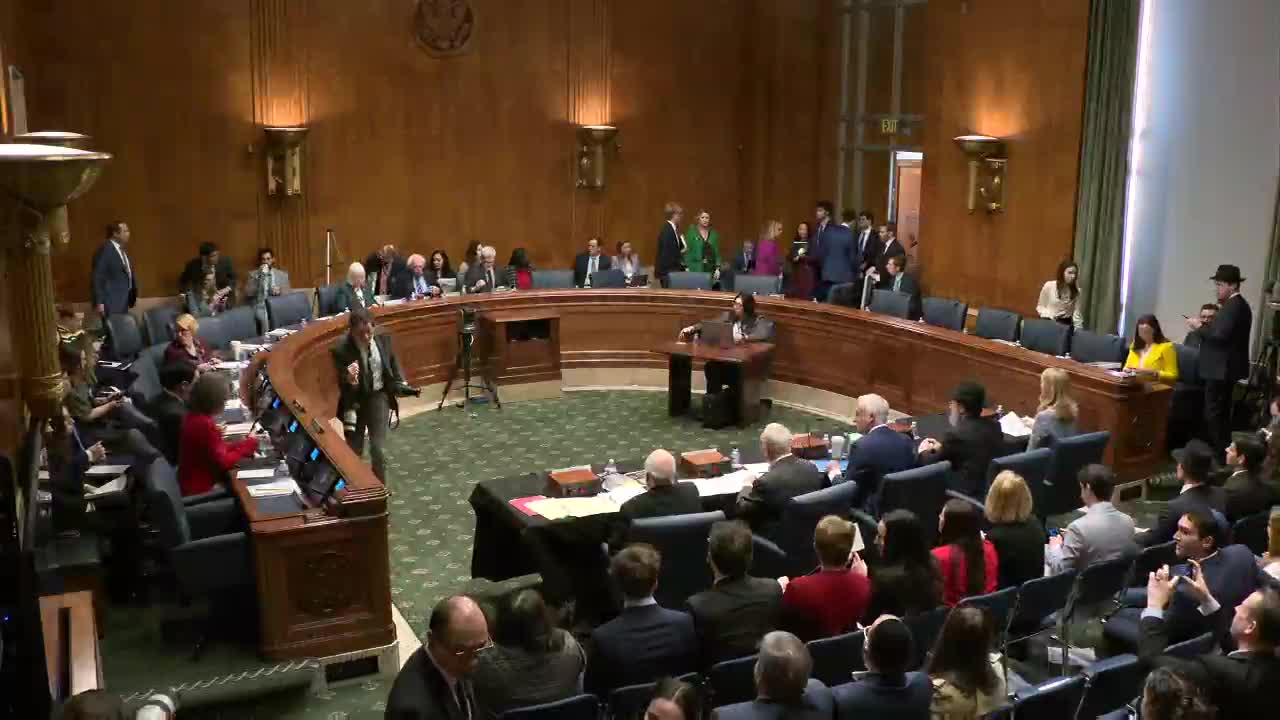
The Senate Health, Education, Labor and Pensions Committee on Thursday heard testimony that Jewish students are facing rising harassment on college campuses and that federal enforcement and new laws are needed to protect them.

Committee Chairman Sen. Bill Cassidy, R-La., opened the hearing by describing the October 2023 Hamas attacks on Israel and the resulting uptick in campus incidents, saying, "On October 2023, the world watched in horror as Hamas terrorists invaded Israel, slaughtered 1,200 innocent men, women, and children." He said the committee would focus on enforcement of federal civil-rights law for students.

The hearing featured five witnesses who described patterns of intimidation, harassment and exclusion that they say have left many Jewish students afraid to attend classes or participate in campus life. Carla Grama, director of legal policy for Stand With Us, told the committee, "Jewish students continue to find virtually every aspect of US campus life increasingly hostile." Grama urged Congress to pass the Antisemitism Awareness Act, require campus coordinators trained to address Title VI claims, and to condition federal funding on clear campus policies about times, places and manners of expressive activity.

Rabbi Levi Shemtov of American Friends of Lubavitch Chabad and Rabbi David Saperstein, director emeritus of the Religious Action Center of Reform Judaism, also testified that administrators have at times failed to enforce policies that protect students. Kenneth Stern, director of the Bard Center for the Study of Hate and the lead drafter of the International Holocaust Remembrance Alliance (IHRA) working definition of antisemitism, warned that overbroad enforcement measures could chill legitimate speech and urged careful use of any definition in disciplinary or legal contexts, saying, "We cannot burn down the house in order to save it." Dr. Charles Asher Small, executive director of the Institute for the Study of Global Antisemitism and Policy (ISGAP), emphasized research linking foreign funding to campus dynamics and urged investigations (see separate article).

Much of the committee's discussion centered on Title VI of the Civil Rights Act, which prohibits discrimination on the basis of race, color or national origin at institutions that receive federal funds. Witnesses and several senators pressed the Department of Education's Office for Civil Rights (OCR) staffing and enforcement record. Multiple senators, including Sen. Patty Murray and Sen. Maggie Hassan, said cuts to OCR's regional offices and staff would impair investigators' ability to resolve complaints and keep students safe. Rabbi Saperstein and others described OCR as a front-line enforcement tool that should be adequately resourced.

On legislation, several witnesses urged Congress to adopt the Antisemitism Awareness Act, which would direct OCR to consider the IHRA working definition of antisemitism when investigating alleged discrimination against Jewish students under Title VI. Witnesses also backed the Protecting Students on Campus Act, a proposal to improve students' awareness of civil-rights complaint procedures and campus enforcement. Witnesses proposed that campuses employ qualified Title VI coordinators and maintain clear, enforced policies on permitted protest activity.

Senators from both parties emphasized that condemning antisemitism should not mean silencing protected speech. Ranking Member Sen. Bernie Sanders said that "antisemitism on college campuses or any place else must be condemned in the strongest possible terms," while also urging attention to other forms of bigotry. Kenneth Stern and others cautioned that codifying any single definition into enforceable rules requires careful drafting and attention to First Amendment limits.

The committee left the record open for 10 business days for additional submissions and questions for the record. No formal votes or binding committee actions were taken during the hearing; senators and witnesses announced and discussed investigations and pending legislation.

Why this matters: The hearing brought together civil-rights advocates, religious leaders and researchers to press the federal government and colleges for clearer rules, better enforcement, and more resources to protect students while preserving free-speech rights.