Get Full Government Meeting Transcripts, Videos, & Alerts Forever!
Get email alerts on the Ambassador Nomination Turkey topic
No spam. Unsubscribe anytime.
Tom Barrack defends nomination to be U.S. ambassador to Turkey amid questions on S-400s, rights and Syria
Summary
Tom Barrack, nominated to be U.S. ambassador to Turkey, told the Senate Foreign Relations Committee that Turkey’s strategic position makes the post sensitive and that he would pursue a structured, whole-of-government approach if confirmed.
Tom Barrack, nominated to be U.S. ambassador to Turkey, told the Senate Foreign Relations Committee that Turkey’s strategic position at the crossroads of Europe, Asia and the Middle East makes the post both sensitive and consequential, and that he would pursue an organized, whole-of-government approach if confirmed.
Barrack recounted personal and professional ties to the region, including family origins in the Levant and years working in the Middle East and Turkey in private-sector roles. He said his career — including time at Colony Capital and earlier government service — had taught him the value of building relationships across cultures.
"My goal would be that we create what our priorities are, what the message is, understand from the Turkiye government what their priorities and messages are, and we create a firm and structured process to actually get those things done," Barrack said.
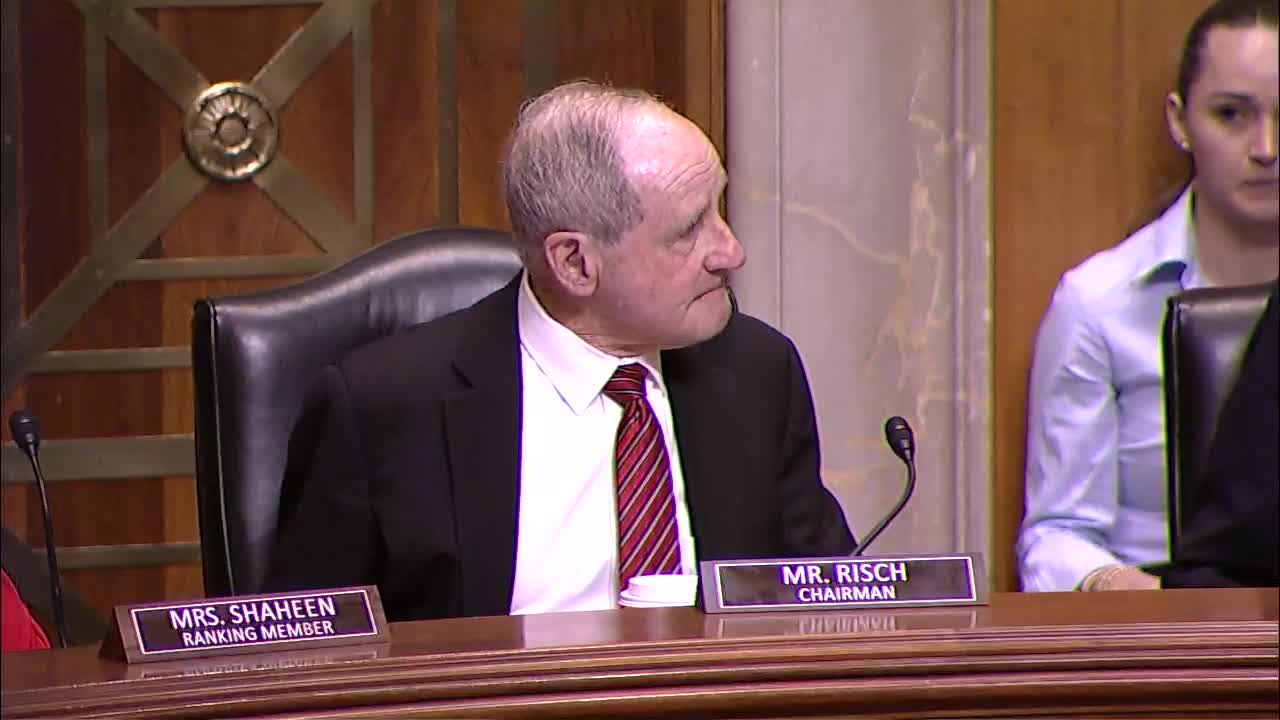
Senators tested his views on several contentious topics. Chairman Jim Risch, Senator Jeanne Shaheen and others raised concern about Turkey’s purchase of Russian S-400 missile systems, the long-standing U.S. decision to withhold F-35 deliveries, and the statutory sanctions framework in the Countering America’s Adversaries Through Sanctions Act (CAATSA). Barrack said CAATSA and related sanctions are matters of law and congressional direction and that he would be guided by the president and this body.
Human-rights and rule-of-law issues drew substantial attention. Several senators pressed Barrack about recent arrests of opposition figures in Turkey, the detention of journalists and protesters, and an incident cited by senators involving an American student reportedly taken into custody abroad. Barrack replied that if Americans' rights are violated abroad "it's just unacceptable," and said he would speak up for American citizens and for constitutional principles if confirmed.
On Syria, senators asked how the U.S. could leverage Turkey’s influence to reduce conflict and manage security risks posed by ISIS detainees, proxy forces and competing regional interests. Barrack described Syria as a complex, multilateral problem and said the U.S. needs a comprehensive policy to stabilize the country. "Out of chaos comes opportunity," he said, adding that he would seek an architecture for cooperative solutions among regional and international stakeholders.
Committee members also discussed Turkey’s relationship with Russia and Hamas, Turkey’s role in the Black Sea maritime regime and its contribution to NATO operations. Barrack said Turkey had been an important NATO partner in several respects — including as a supplier of Bayraktar drones to Ukraine and as a host of NATO infrastructure — and he described trade and energy as opportunities to deepen bilateral ties, citing a stated goal by U.S. and Turkish officials to reach $100 billion in annual bilateral trade from approximately $40 billion.
Barrack acknowledged the difficulty of the assignment and pledged to follow the directives of the president and Congress. The committee left the record open for additional material; no confirmation vote was taken at the hearing.