Get Full Government Meeting Transcripts, Videos, & Alerts Forever!
Get email alerts on the Budget topic
No spam. Unsubscribe anytime.
Anchorage School Board hears budget outlook, cautioned on May 15 layoff deadline
Summary
At a work session, Anchorage School District leaders told the school board that uncertainty over state school funding and local tax limits leave the district planning significant use of fund balance and pausing staffing decisions until the legislature acts; May 15 was identified as the statutory cutoff for layoff notices.
The Anchorage School Board met in a work session to discuss the Anchorage School District's preliminary budget and fiscal risks, with Chief Financial Officer Andy Ratliff and the superintendent answering board questions about state funding, fund balance use and deadlines.
Board members were told the district is planning conservatively amid uncertainty in Juneau. Andy Ratliff, chief financial officer, said the district has built its budget using the current statutory Base Student Allocation and that if expected state increases do not materialize the district would spend down its fund balance. “You know, and we are gonna spend out our fund balance,” Ratliff said.
The nut of the discussion was timing and risk: two different school‑funding proposals in the Legislature — House Bill 69 and a separate governor’s bill — could change the district’s revenue outlook, but neither is final. Ratliff cautioned that the distribution rules in a passed bill may not align with how districts developed budgets; that mismatch, or a late enactment, would constrain the district’s ability to respond without cutting staff or programs.
Board members asked whether it is easier to budget up for a possible BSA (Base Student Allocation) increase and later walk staffing back, or to budget conservatively and add staff later. Administration said adding positions now would be administratively simpler but risky: if projected state dollars do not arrive before statutory layoff deadlines, the district could be unable to rescind layoffs or refill positions. Administration identified May 15 as the critical statutory date for issuing layoff notices for positions the district cannot afford.
Ratcliffe and district leaders also discussed fund balance and board policy. In an illustrative scenario presented at a prior work session, administration showed that adding roughly $65 million back into next year’s spending would still leave the district drawing about $23 million from fund balance and likely put it near the board’s current 8% minimum; moving below a 5% threshold would require a board supermajority. Ratliff also noted a 10% cap on carryover that will again limit the district’s ability to hold large balances after next year.
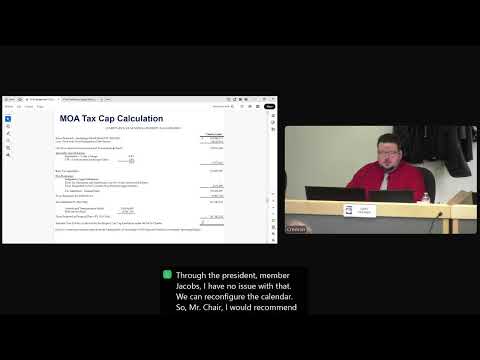
Members raised the district’s limited local taxing capacity: administration said Anchorage is effectively at a local tax cap under current municipal rules, and that the district has already calculated the maximum collective local contribution available for schools. The discussion included a suggestion to ask the municipal assembly about moving the board’s budget adoption date to give the Legislature more time; Ratliff said he would consult the city budget office about feasibility.
The meeting closed with a reminder of next steps. Administration said it has paused the internal staffing process while awaiting legislative outcomes, but warned that delays reduce the pool of outside hires and may raise the risk of losing staff who accept other offers. The board will consider adoption of the preliminary budget at its next scheduled meeting; administration said it can revise the budget later if the Legislature acts.
Ending: The board and administration emphasized the time sensitivity of staffing decisions and the limited local taxing authority; members asked administration to return with more modelling and to consult the city about possible changes to the municipal timeline.