Get Full Government Meeting Transcripts, Videos, & Alerts Forever!
Get email alerts on the Debt And Finance topic
No spam. Unsubscribe anytime.
Board hears options to defease $8M–$10M in state matching funds; no vote scheduled
Summary
DA Davidson explained options to use remaining School Construction Assistance Program funds to defease 2019 bond debt; board members asked for the long-range facilities plan before deciding and stressed community outreach and timing ahead of potential future ballots.
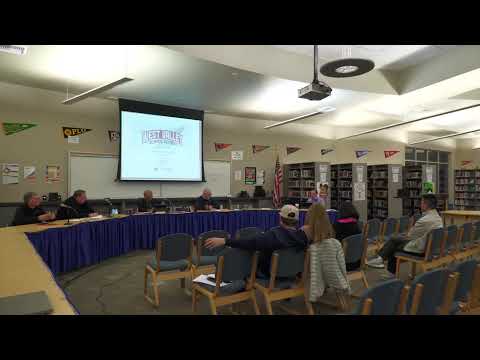
DA Davidson municipal advisor Corey Plager presented defeasement options to the West Valley School Board on April 8, laying out the mechanics and taxpayer impacts of using $8 million or $10 million of remaining state School Construction Assistance Program (SCAP) matching funds to defease a portion of the district’s outstanding 2019 bonds.
Plager said defeasement would place cash in an escrow of U.S. government securities that would be used to pay specified bond principal and interest when the bonds become callable; the approach does not refinance the bonds immediately but removes the debt from the district’s taxing requirement once the escrowed securities begin to pay the scheduled debt. He said the 2019 bond totaled about $59 million and was approved in 2019 at a projected taxpayer rate of $2.57 per $1,000 of assessed value; actual taxes for that measure have trended below the original estimate in recent years.
Plager presented two illustrative options: defeasing $8 million would reduce taxpayer burdens over the life of the debt and, in the model shown, produce roughly $9.9 million in nominal savings (about $8.5 million net present value). That option was estimated to lower the bond tax rate by roughly three to 13 cents per $1,000 over the term, with example homeowner savings of about $10–$621 over the remaining schedule for a $350,000 home (larger savings for higher-valued homes). A $10 million defeasement produced larger nominal savings and slightly higher annual reductions, but Plager and board members noted the marginal difference between the two options was modest relative to the district-level budget.
Board members discussed timing and tradeoffs. Several trustees said they want the updated long-range facilities plan due later this year to be finished before committing funds, and they emphasized public outreach — particularly because voters will face a February ballot timeline if the district decides to seek additional measures. Members also flagged opportunity cost: retaining the matching funds gives the district flexibility to cover roof, HVAC or other capital needs or to reduce future bond tax rates; conversely, acting now locks in a near-term taxpayer reduction. Plager cautioned that market interest-rate movements change the estimated savings; he said yields rose while the analysis was prepared, increasing the projected savings slightly, and that the escrowed securities would be held and managed through an authorized escrow agent.
Superintendent Dr. Finch and others noted the district’s current fund balance and that a portion of those funds are SCAP matching dollars held for allowable project uses; one board discussion point cited a roughly $11.2 million state-matching balance inside a larger fund-balance total. No board vote or formal action to defease funds occurred April 8; trustees directed additional planning and asked staff to coordinate public communication and to consider the defeasement question in light of the long-range facilities plan and near-term levy/bond timing.