Get Full Government Meeting Transcripts, Videos, & Alerts Forever!
Get email alerts on the Boards Commissions Planning Zoning topic
No spam. Unsubscribe anytime.
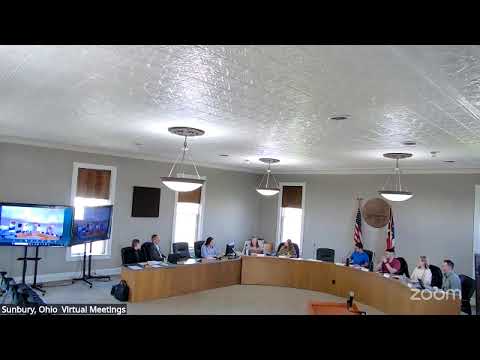
Commission affirms mayor's permanent seat, discusses planning and zoning terms and authority
Summary
Sunbury's Charter Commission reviewed Article VIII language keeping the mayor as a permanent member of the planning and zoning commission, discussed term lengths and staggered appointments for resident members, and clarified which zoning matters are final administrative determinations.
The Sunbury City Charter Commission reviewed Article VIII on boards and commissions on April 8, leaving in place a provision that makes the mayor a permanent member of the Planning and Zoning Commission while Council appoints one additional council member to serve on that body. Rebecca, staff member, summarized the current structure: a six-member planning and zoning commission composed of the mayor, one council designee, and four resident appointees who serve three-year staggered terms.
Commission staff and members discussed whether to alter the staggering of terms to reduce turnover; after analysis they recommended no change, noting that the mayor’s inclusion makes the effective rotation a 4-and-3 pattern rather than the previously perceived 4-and-2. Mr. Chair and other commissioners said changing the pattern would be complex and could take until 2037 to implement due to existing four-year council terms.
Members also debated whether resident appointments should include shorter initial terms to create staggered cycles, but staff said the charter already allows council flexibility to assign shorter terms when necessary and that residents can resign or be replaced for the balance of a term. Commissioners discussed outreach and application processes; staff said the city has increased public solicitation for board applicants in recent years.
The commission clarified the difference between the Planning and Zoning Commission and the Board of Zoning Appeals (BZA). Mr. Bridal and staff explained that the BZA is an appellate body tasked with hearing variances and appeals of administrative zoning determinations, while Planning and Zoning performs quasi‑legislative and administrative functions — including conditional-use approvals and minor lot splits — that can be final and need not go to council. The commission made no substantive changes to Article VIII at this meeting; staff will incorporate agreed wording into the next red-line draft.