Get Full Government Meeting Transcripts, Videos, & Alerts Forever!
Get email alerts on the State Department Legal Adviser topic
No spam. Unsubscribe anytime.
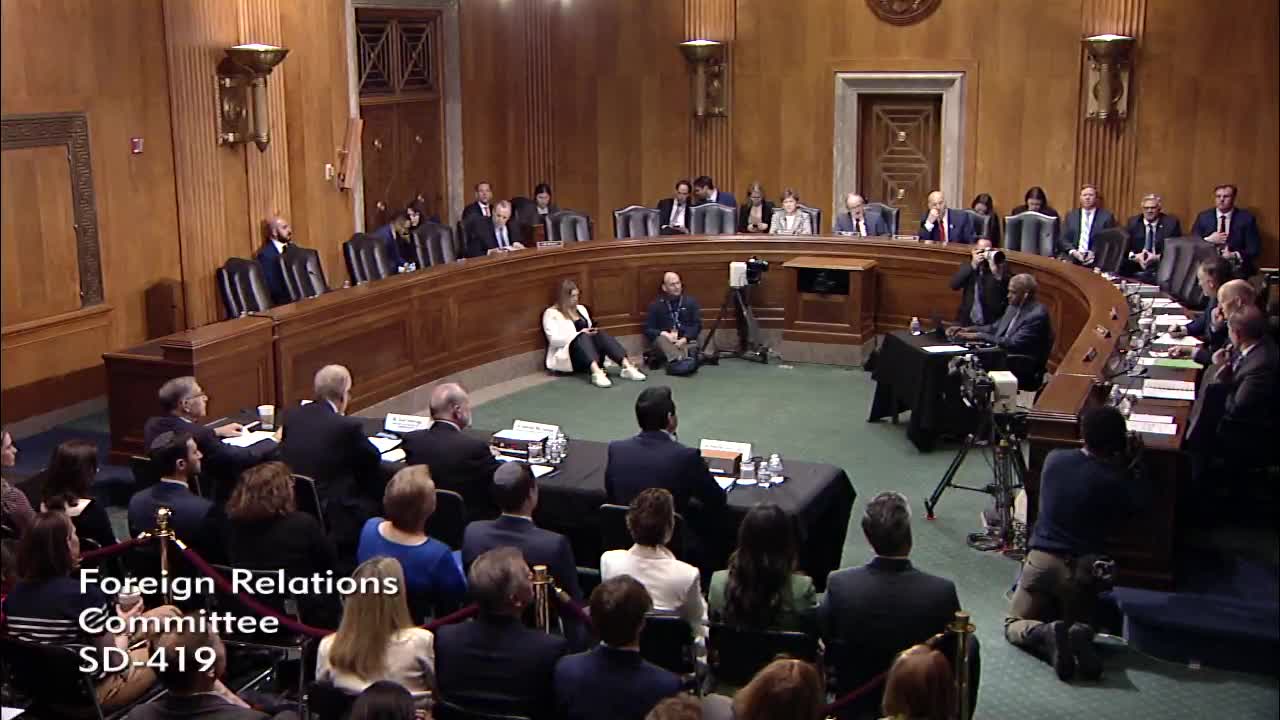
Senate hears Reid Rubinstein on role as State Department legal adviser; senators press on rule of law and prior statements
Summary
Reid Rubinstein, President Trump’s nominee to be legal adviser to the Department of State, told the Senate Foreign Relations Committee on March 25, 2025, he would apply the law and consult the Office of Legal Counsel and Department of Justice on complex legal questions if confirmed.
Reid Rubinstein, nominated to be legal adviser for the Department of State, told the Senate Foreign Relations Committee on March 25, 2025, he would "apply the law" and consult with the Office of Legal Counsel and other career lawyers before advising the secretary.
Rubinstein described the Office of the Legal Adviser as "widely acknowledged to be the best international lawyers in the world" and said his job would be to rigorously study facts, analyze authorities and provide options to decision-makers. He said he would "work with my career and political colleagues to provide the best possible legal advice" and pledged to communicate with Congress "appropriately and lawfully" on matters raised by senators.
Why it matters: The legal adviser shapes how the State Department interprets domestic and international law, which can affect visa policy, foreign assistance, treaty implementation and operational decisions. Senators sought clear answers about whether Rubinstein would advise against policies that violate federal law, and pressed him about prior public statements and social-media posts they said could indicate bias.
Ranking Member Jeanne Shaheen asked Rubinstein for a direct yes-or-no commitment to "advise against any policy or action that would violate Federal law." Rubinstein said he would "apply the law" and described legal analysis as sometimes turning on "gray area" separation-of-powers questions; he added that he would consult the Department of Justice and the Office of Legal Counsel on complex issues. He affirmed that the federal government’s job "is to follow the law" and said he would provide rigorous, documented advice.
Senators also questioned Rubinstein about public statements and social-media posts. He defended his prior advocacy as distinct from the narrow, deliberative legal counsel he said he would provide inside government. On a public allegation that a prior administration engaged in covert influence operations inside Israel, Rubinstein said he had read publicly available documents and believed there was a "good faith basis" for his statement but acknowledged reasonable alternative interpretations may exist.
Other subjects raised by senators: the handling and delivery of reports to Congress, past withholdings and alleged politicization of State Department reporting, and the nominee’s commitment to transparency with congressional oversight. Rubinstein pledged to consult with colleagues and "communicate with Congress appropriately and lawfully" if confirmed.
Ending: Senators left the hearing with differing views on Rubinstein’s prior advocacy and whether it bears on his capacity to offer impartial legal counsel; he committed to follow-up communication and to consult OLC and department lawyers on complex separation-of-powers and treaty-implementation questions. No committee vote was taken during the hearing.