Get Full Government Meeting Transcripts, Videos, & Alerts Forever!
Get email alerts on the Us Panama Relations topic
No spam. Unsubscribe anytime.
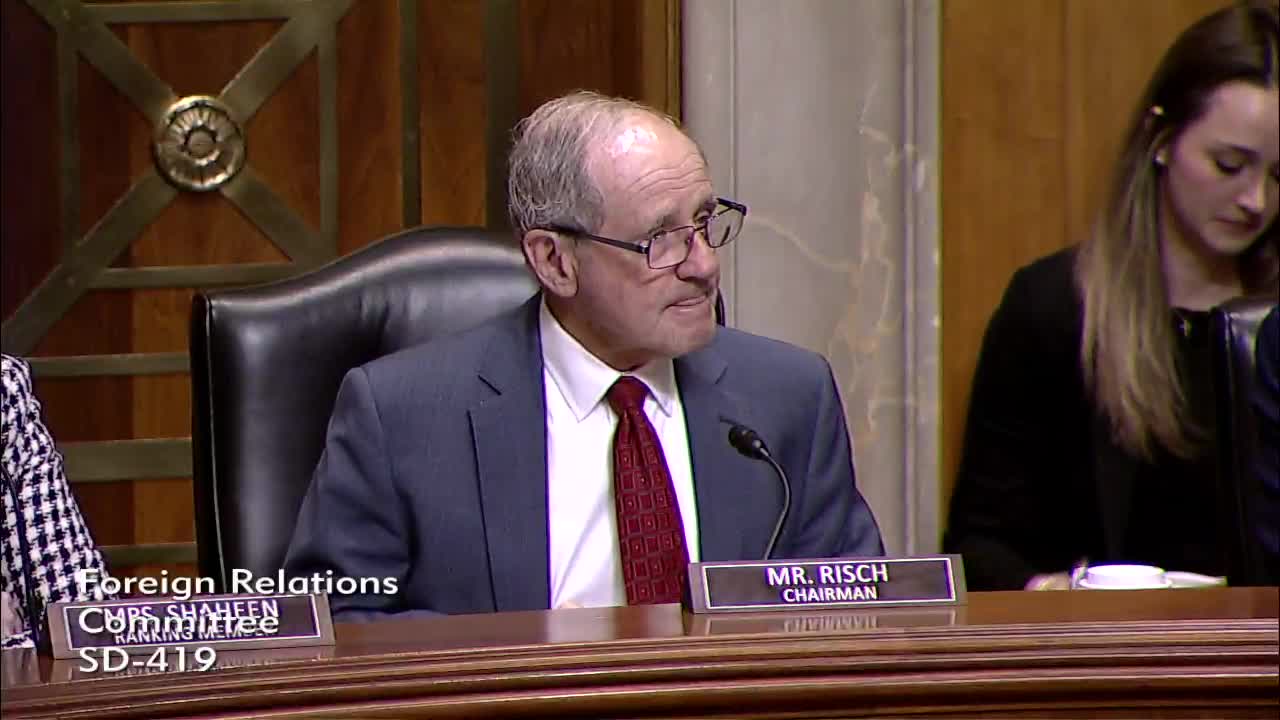
Senate committee probes Panama nominee on China influence, canal neutrality and drug trafficking
Summary
Kevin Marina Cabrera, President Trump’s nominee to be U.S. ambassador to Panama, told the Senate Foreign Relations Committee on March 25, 2025, he would prioritize strengthening cooperation on the Panama Canal, counternarcotics and migration while working to reduce Chinese influence in Panama if confirmed.
Kevin Marina Cabrera, President Trump’s nominee to be U.S. ambassador to Panama, told the Senate Foreign Relations Committee on March 25, 2025, he would prioritize strengthening bilateral cooperation on the Panama Canal, counternarcotics and migration while working to reduce Chinese influence in Panamanian infrastructure and technology.
Senators cited recent developments — Panama’s withdrawal from the Belt and Road Initiative and a pending audit and sale of port concessions — as evidence of progress but pressed Cabrera on continuing risks to canal neutrality and broader Chinese ties in Panama.
Why it matters: The security and operation of the Panama Canal and Panama’s financial systems have direct implications for global trade, U.S. economic security and regional stability. Senators emphasized how foreign investment, port operations, free trade zones and transnational criminal networks intersect with U.S. interests.
Cabrera highlighted recent diplomatic steps by Secretary of State Marco Rubio and the administration, saying "we've made great strides" in the past 60 days and expressing optimism about continued progress. He and senators discussed specific concerns raised during the hearing:
- Panama Canal neutrality and treaty issues: Cabrera said Secretary Rubio has raised questions about the treaty’s neutrality provisions (referred to in the hearing as Article 4) and that the administration is reviewing potential violations. He said all options remain on the table and emphasized diplomacy as a primary tool.
- Chinese-built infrastructure and data security: Senators noted Chinese-supplied port cranes, traffic and street cameras, and Confucius center ties to Panamanian universities. Cabrera raised cybersecurity and data-storage concerns, asking who would have access to camera or crane telemetry and the security of any associated cloud storage.
- Counternarcotics and migration: Cabrera cited recent declines in irregular migration through the Darién Gap (he referenced a 95% drop in January–February), and said Panama has led Central American counternarcotics efforts, seizing more than 100 metric tons of drugs in recent years and that about 40% of Colombian-produced cocaine transit through Panama, figures discussed during the hearing.
- Illicit finance concerns: Senators raised the Colón Free Zone's notoriety as a conduit for money laundering and narcotics proceeds; Cabrera said he would work with Panamanian authorities and U.S. law enforcement to strengthen safeguards and compliance if confirmed.
Cabrera described his background as a first-generation American and Miami-Dade county commissioner, and referenced bipartisan support from local Florida officials. He told the committee he would carry out the president’s policy and coordinate closely with Secretary Rubio and Congress if confirmed.
Ending: The committee asked for follow-up briefings and documents on treaty interpretations and counternarcotics cooperation. No committee vote was taken during the hearing; the nomination remains pending further action.