Get Full Government Meeting Transcripts, Videos, & Alerts Forever!
Get email alerts on the Economic Impact topic
No spam. Unsubscribe anytime.
Senators press USTR on immediate economic pain: 401(k) losses, small businesses, farmers and tourism sectors raise alarms
Summary
Multiple senators warned Ambassador Jason Greer that the administration's tariffs are imposing near-term costs on households, small businesses, farmers and the tourism sector, and pressed for relief and clearer exclusion processes.
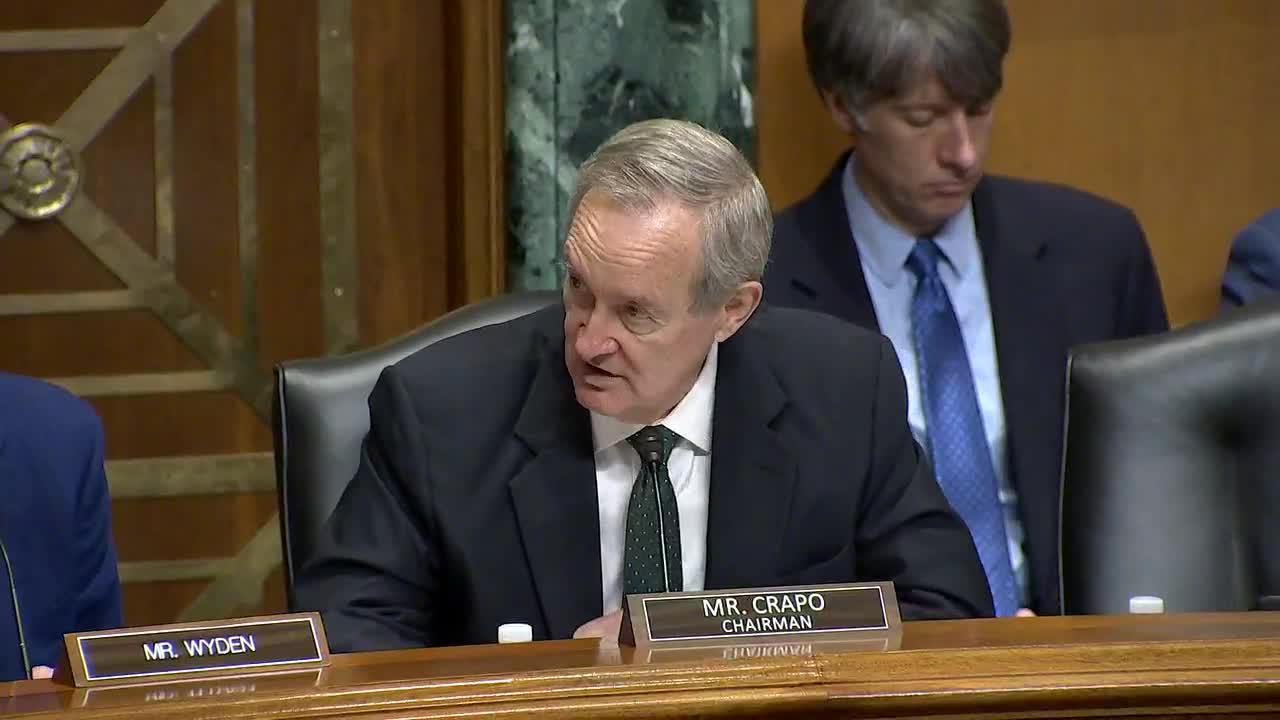
Senators from both parties used Wednesday’s Senate Finance Committee hearing to press Ambassador Jason Greer on the immediate economic consequences of the Trump administration's tariff measures, which multiple lawmakers said were already hurting constituents.
Ranking Member Ron Wyden (D-Ore.) opened the questioning by warning that American retirement accounts, investors and the economy were "in purgatory" because of the new tariffs and asked bluntly, "What is the plan?" Wyden and other Democrats cited near-term estimates of household cost increases and warned of job losses and retirement-account declines.
Senators described examples from their states: manufacturers with China or Vietnam supply chains facing higher input costs; fruit growers told they could lose export markets; tourism-dependent states reporting declines in inbound visitors; and small businesses that rely on imported inputs for niche products. Senator Sherrod Brown (D-Ohio) and Senator Tammy Baldwin (D-Wis.) raised small-business and manufacturing concerns; Senator Maggie Hassan (D-N.H.) and Senator Catherine Cortez Masto (D-Nev.) highlighted tourism declines and service-sector exposure.
Greer acknowledged varying sectoral impacts and said the allocation of costs between foreign producers and U.S. importers remains to be seen: "We haven't yet seen how those costs are gonna be allocated between the foreign producers and their importers here," he told the committee. He also said the administration has convened a small-business trade advisory council and reached out to the Small Business Administration to hear producers' concerns.
Several senators asked whether there is any exclusion or exemption process for firms that cannot source domestically. Greer said the administration's position at the hearing was that it did not intend to provide broad exemptions to the blanket approach and reiterated that certain sectors (semiconductors and pharmaceuticals) had been handled separately.
Senators repeatedly returned to the distributional question — who bears the cost — and to requests for rapid remedies for constituents reporting layoffs or rising consumer prices. Senator Elizabeth Warren (D-Mass.) called the tariffs "a regressive tax" and urged Congress to act. Several senators asked for written briefings and for the administration to meet directly with affected industry groups.