
Rockingham County Schools proposes $28.9M local request and new mental-health director in 2025–26 budget presentation
Get AI-powered insights, summaries, and transcripts
Subscribe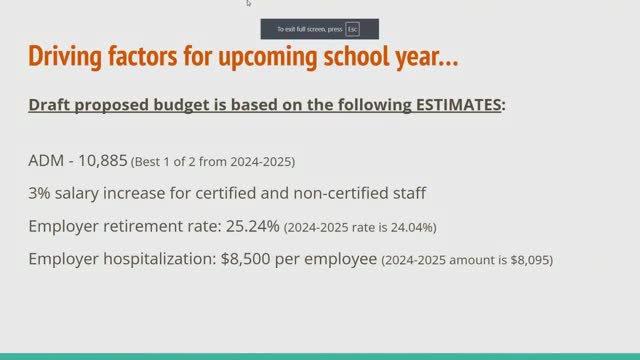
Summary
Finance staff presented a draft 2025–26 budget that increases the county appropriation request to $28.9 million, adding roughly $6.1 million in expansion items including a proposed mental health director, pay schedule changes and teacher supplements.
Annie Ellis, presenting the Rockingham County Schools draft budget on March 17, told the board the district will request $28.9 million in local funding for 2025–26 and identified $9.8 million in additional county-request items compared with the current year. The finance staff’s revision adds a proposed mental health director and other recurring and one-time expansion items.
Ellis said state funding is the district’s largest revenue source and that projected declines in average daily membership (ADM) — the basis for state allotments — make it difficult for the district to absorb cost increases. "Our student population drives our state funding. So when we experience declining student enrollment, we lose state funding and it's hard for the school system to absorb that loss," Ellis said.
Key additions in the revised draft include a recurring request to add a mental health director (salary estimate $94,000; benefits roughly $23,000), an estimated $565,000 to fund a $500 local teacher supplement added to each pay level, and a proposed classified salary schedule change with an estimated implementation cost of about $1.9 million. The overall expansion request increased to roughly $6.1 million after adding the mental health director.
Ellis warned that federal funding remains uncertain and that the district intentionally did not include certain positions funded by federal grants in its local request because those funds are typically expected to continue. She said the district would compare state planning allotments, expected later in the week, to the draft and refine the request before presenting a final proposal to the county.
Board members asked for more detail on implementation costs and alternative revenue sources. Philip Butler and other members discussed whether Medicaid billing could support some mental-health services but staff said Medicaid typically reimburses for direct clinical services and would not cover the full cost of a central administrative director position.
Other items highlighted included a bus-driver pay proposal that raises starting hourly pay and discussion of whether the district should reimburse or cover Commercial Driver’s License (CDL) training costs for substitute drivers; the board asked staff to analyze the number of active substitute drivers and the fiscal impact of paying licensure fees.
Ellis outlined the next steps: finance committee review once state planning allotments arrive, a final proposed budget posted March 28, a March 31 work session to finalize the board’s approval, and a presentation of the approved request to county commissioners on April 1.
The presentation framed most expansion dollars as recurring personnel costs and emphasized that the district will try to avoid layoffs by using attrition if spending reductions become necessary.
No formal vote on the budget request occurred at the March 17 meeting; staff said the figures are a draft pending state allotments and county discussion.