Lifetime Citizen Portal Access — AI Briefings, Alerts & Unlimited Follows
Senators press nominee on mid-band spectrum, feasibility studies and interagency coordination
Loading...
Summary
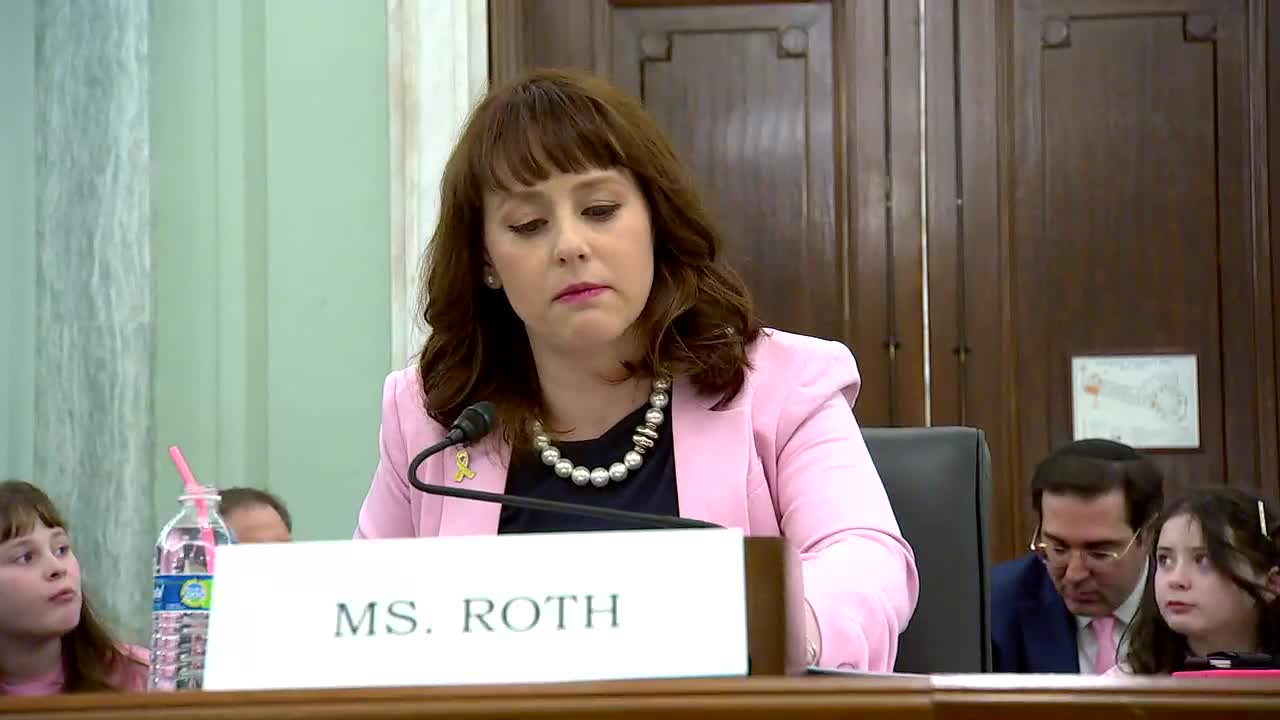
Committee members questioned Ariel Roth about NTIA's role in managing federal spectrum, the need for feasibility studies before reallocating bands for commercial use, the Spectrum Relocation Fund and potential conflicts with national-security and aviation systems.
Senators extensively questioned Ariel Roth about federal spectrum policy, emphasizing mid‑band access, interagency feasibility studies and coordination with national-security and aviation agencies.
Committee members urged that national security be paramount in any move to reallocate federal spectrum for commercial use. When asked whether the Defense Department could build an Iron Dome missile-defense system and coexist with commercial spectrum users, Roth said, "I would never do anything to jeopardize our ability to develop such a system here at home," and expressed optimism that feasibility studies and interagency work could identify a workable path forward.
A number of senators pressed for technical studies before reallocating bands. One senator asked Roth to commit that feasibility and interagency studies on low‑gigahertz bands (including references to 3 GHz and to 7–8 GHz discussions) be completed before allocations proceed; Roth said she would "look forward to learning more" from NTIA's technical staff and that "national security needs to be paramount in any effort to reallocate spectrum." Another senator raised the Spectrum Relocation Fund (SRF), noting that some agencies say SRF rules limit their ability to modernize systems because SRF reimburses only for comparable capability; Roth said she was "aware of debates over SRF and how to make it more effective" and offered to work with the senator's office.
Committee members also discussed NTIA-FCC coordination on spectrum policy and the World Radiocommunication Conference. Roth said NTIA has historically maintained a close relationship with the FCC and that, if confirmed, she would review and, where needed, update memoranda of understanding to improve coordination. Members stressed the need for unified, evidence-based international positions to protect U.S. equipment manufacturers and spectrum interests.
Finally, senators stressed the operational consequences of spectrum decisions for aviation and public safety, citing recent incidents and the need for careful interagency planning. Roth agreed that NTIA's role includes ensuring agency coordination so that national-security and public-safety systems remain protected while pursuing spectrum efficiencies.
The hearing produced no formal spectrum policy decisions; senators asked for written responses and technical commitments to be provided for the record.