Lifetime Citizen Portal Access — AI Briefings, Alerts & Unlimited Follows
Senate Armed Services Committee vets Lt. Gen. Dan Kane over civil‑military ties, classified chat, budget and acquisition reform
Loading...
Summary
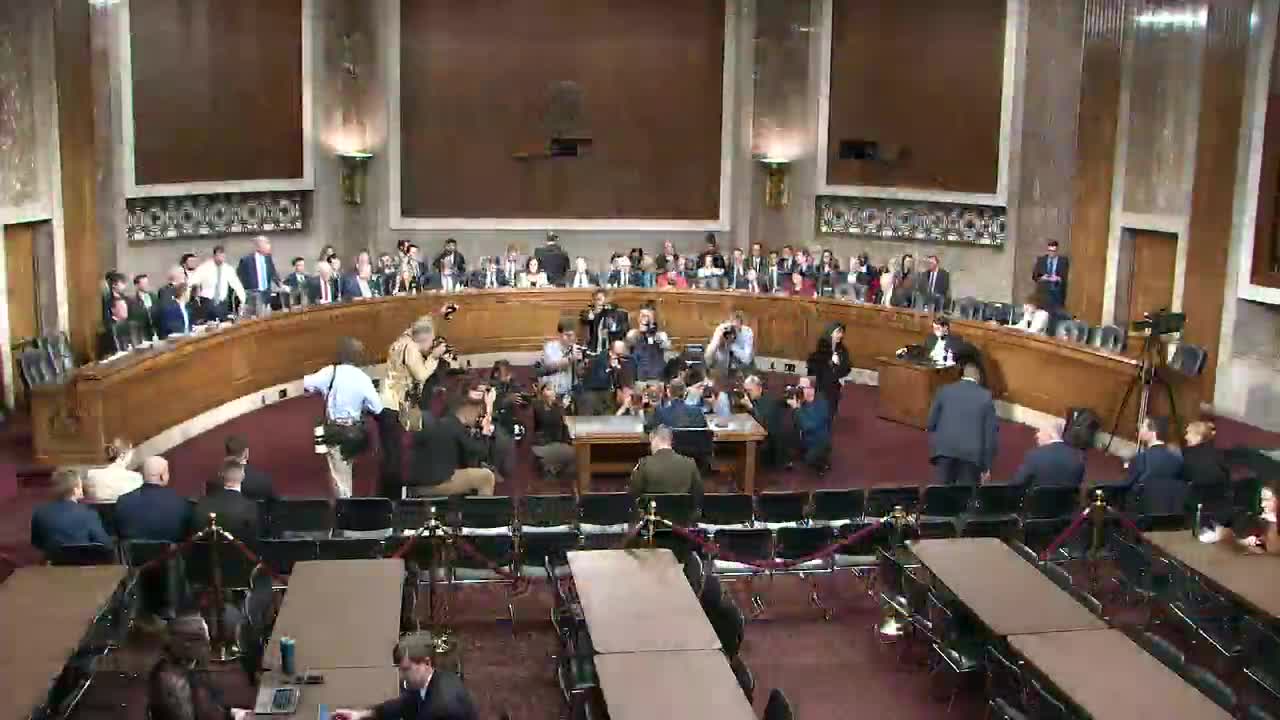
The Senate Armed Services Committee met to consider the nomination of retired Lieutenant General Dan Kane to be chairman of the Joint Chiefs of Staff, hearing testimony and questions that ranged from civil‑military relations and handling of classified information to defense budgeting, acquisition reform and readiness.
The Senate Armed Services Committee met to consider the nomination of retired Lieutenant General Dan Kane to be chairman of the Joint Chiefs of Staff, hearing testimony and questions that ranged from civil‑military relations and handling of classified information to defense budgeting, acquisition reform and readiness.
Chairman Wicker opened the hearing by praising the nominee's joint background, saying, “I believe President Trump has made an excellent choice in selecting him to meet the challenges.” Ranking Member Reid and other senators pressed Kane about the unusual circumstances of his nomination following recent dismissals of multiple senior officers.
Kane outlined his resume and pledged nonpartisan service. “For 34 years, I’ve upheld my oath of office and my commitment to my commission and I have never worn any political merchandise,” he said in response to questions about a widely reported anecdote. He told senators he would give “best military advice” with candor and would appear before congressional committees when requested.
The committee focused on several clustered issues:
- Civil‑military relations and politicization: Senators repeatedly raised concern about recent removals of senior officers and the broader risk of politicizing the armed forces. Senator Reid said, “To this day, no explanation has been given for the dismissal of these officers,” and urged Kane to preserve nonpartisan advice. Kane responded that he would “always speak truth to power.”
- Handling of classified information and the Signal chat: Multiple senators asked whether classified operational details were discussed on an unclassified messaging platform linked to planning for strikes in Yemen. Kane said he was not part of that chat, declined to comment on specifics while an inquiry was pending, and emphasized that the element of surprise must be preserved to protect forces.
- Requirements process, acquisition and industry: Senators pressed Kane on the slow and cumbersome requirements-to‑acquisition pipeline. Kane said the process needs speed and agility, adding that solutions likely lie between minor fixes and wholesale teardown: “I definitely agree that we need to improve the speed and agility of our requirements process.” He told members he favored a mixed approach that draws on primes and new entrants.
- Budget, modernization and readiness: Senators sought Kane’s views on whether the defense budget requires real growth to maintain deterrence. Kane said a sense of urgency is needed and proposed finding deployable capital through efficiencies, reprogramming or higher toplines. He also discussed the need to align acquisition and requirements to field capabilities more rapidly.
- Nuclear posture and force structure: Members probed Kane on the nuclear triad, strategic posture, and theater nuclear options including the sea‑launched cruise missile program referenced in committee questions. Kane said the deterrent must remain credible and pledged to work with STRATCOM and service leaders on identified gaps.
- Specific capability topics: Kane addressed congressional concerns about sustainment and force structure (shipbuilding and bomber force size), the Columbia‑class submarine, B‑21 bomber numbers, the role of special operations forces, and electromagnetic spectrum access for defense systems. He said some matters would be better discussed in closed session, particularly technical spectrum risks.
- Personnel, accountability and transition issues: Senators raised retention, transition support for veterans, and accountability for failures such as the Afghanistan withdrawal; Kane said leaders on the ground were operating under difficult policy constraints and reiterated the need for accountability where warranted.
Committee members asked a series of routine confirmation questions about conflicts of interest, cooperation with committee requests, and production of records; Kane answered affirmatively to those standard commitments. Several senators said they expected follow‑up briefings or closed‑session discussions on technical or highly classified topics.
No confirmation vote occurred during the hearing. The committee took testimony and posed questions; next steps for the nomination were not recorded in the hearing transcript.
The hearing brought to the foreground several recurring tensions for the chairman’s prospective role: preserving the apolitical character of the officer corps, modernizing acquisition and the requirements process to match adversary pacing, protecting operational security in an age of informal messaging, and ensuring the joint force is equipped and ready.
The committee did not reach a recorded decision on the nomination in this session; senators said they would pursue further technical briefings and oversight as the process continues.