Senate personnel subcommittee grills service academies on diversity policies, recruitment and mission
Get AI-powered insights, summaries, and transcripts
SubscribeSummary
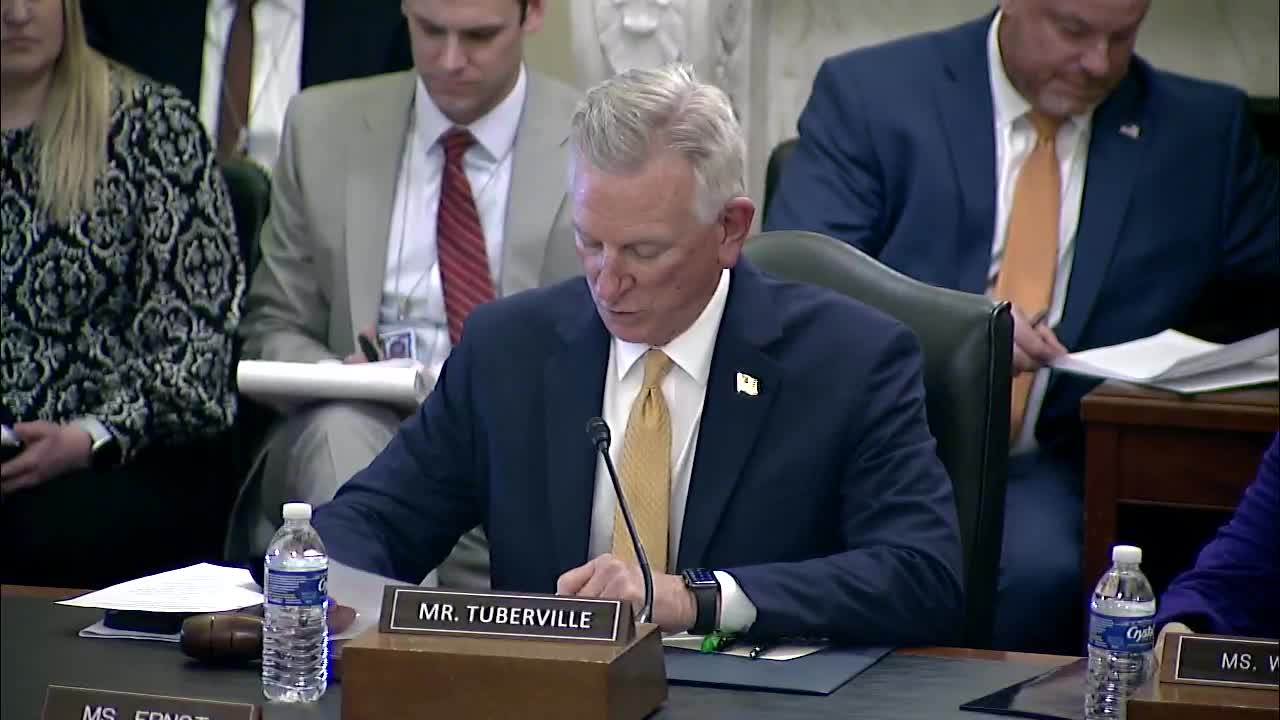
The Senate Armed Services Subcommittee on Personnel convened a hearing to examine the status and priorities of the United States service academies, with Chairman Tommy Tuberville and Ranking Member Elizabeth Warren leading a wide‑ranging review of diversity policies, recruitment and academy missions.
The Senate Armed Services Subcommittee on Personnel convened a hearing to examine the status and priorities of the United States service academies, with Chairman Tommy Tuberville and Ranking Member Elizabeth Warren leading a wide‑ranging review of diversity policies, recruitment and academy missions. The hearing featured testimony from Lieutenant General Stephen Gillen (United States Military Academy), Vice Admiral Yvette Davids (United States Naval Academy) and Lieutenant General Bauerfeind (United States Air Force Academy).
Why it matters: The three academies commission roughly one in five U.S. officers and are central to officer development, training and professional education. Lawmakers pressed leaders about recent executive orders, course reviews and recruiting trends that members said could affect the size and composition of future officer cohorts.
Chairman Tuberville opened by criticizing what he described as a shift away from the academies’ core mission. “Over the last several years, the academies have lost sight in some areas of the fundamental reason for their existence,” he said, adding that “diversity for the sake of diversity alone weakens us.” He also cited litigation over race‑based admissions and criticized faculty teachings he considered partisan. Senator Warren, the ranking member, framed the hearing differently, emphasizing recruiting and retention: “The competition for talent for tomorrow’s leaders is already fierce,” she said, and warned that policies that “shrink the pool of young Americans who will consider applying for military service will cause lasting damage to our military.”
Academy leaders defended their institutions’ focus on leader development and technical training. “West Point produces the best trained junior officers…ready to fight and win on the 21st century battlefield,” Lieutenant General Gillen told the panel. Vice Admiral Davids emphasized the Naval Academy’s combined military and civilian faculty and noted the academy commissions more than 1,000 officers a year and maintains an average graduation rate of 89 percent, compared with a DOD requirement of 75 percent. The Air Force superintendent described a curriculum redesign emphasizing “warfighter training” and said the academy seeks to forge leaders prepared for air, space and cyber competition.
Members also debated whether recent executive orders and policy changes — including restrictions on certain curriculum content and extracurricular clubs — have hampered recruitment or faculty effectiveness. Senator Blumenthal and other Democrats defended longstanding DEI (diversity, equity and inclusion) efforts as matters of readiness and cohesion; Blumenthal cited a federal district court ruling in Maryland that upheld limited consideration of race in Naval Academy admissions as constitutionally permissible because of national security interests. Republicans said the changes aim to refocus the academies strictly on warfighting and character development.
The session included detailed questions about course reviews and faculty composition, admissions procedures and the role of civilian professors, which are covered in separate articles. Lawmakers also asked about athletic policies and proposals in the coming National Defense Authorization Act to allow deferrals for elite athletes, a concept several superintendents expressed conditional support for.
The subcommittee did not take formal votes at the hearing but requested follow‑up data and pledged further oversight as it drafts the NDAA.