Lifetime Citizen Portal Access — AI Briefings, Alerts & Unlimited Follows
Senate Strategic Forces Hearing Urges Faster Nuclear Triad Modernization, Pushes for Sea‑Launched Cruise Missile
Loading...
Summary
STRATCOM testimony to the Senate Strategic Forces Subcommittee stressed an urgent need to speed modernization of the nuclear triad and command-and-control systems, accelerate B‑21 bomber production and advance a nuclear-capable sea‑launched cruise missile while mitigating gaps from program delays.
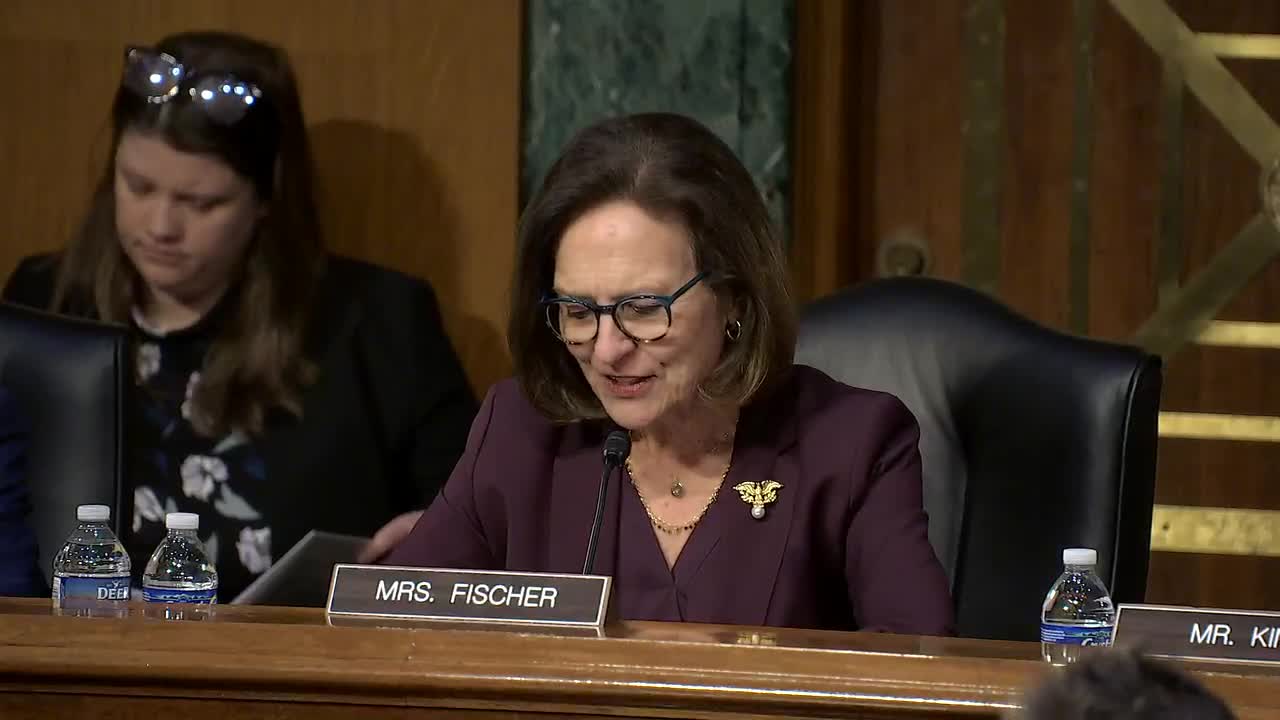
Chairwoman Fisher opened the Strategic Forces Subcommittee hearing by warning that "today, we face a threat environment more dangerous than we've seen since the second World War," and pressed commanders to explain how the United States will sustain nuclear deterrence amid rapid Chinese and Russian modernization.
General Cotton, commander of U.S. Strategic Command (STRATCOM), told the subcommittee that "the nation's nuclear forces ... are safe, secure, effective, and credible," but described a security environment in which China has rapidly expanded its arsenal and Russia has modernized much of its stockpile. Cotton said STRATCOM is focused on completing multi‑generational recapitalization across all three legs of the nuclear triad and on modernizing nuclear command, control, and communications (NC3).
Why it matters: committee members said decisions over the next months on procurement, program pacing and funding will shape U.S. deterrence for decades. Senators repeatedly flagged the Columbia‑class submarine, the B‑21 bomber program, a replacement for the Minuteman III ICBM (referred to in testimony as the Sentinel), and NC3 modernization as the top priorities that must be funded and timed to avoid capability gaps.
Key facts and program status cited in testimony: Cotton said China now fields "more than 600 nuclear warheads and counting." He and other witnesses described active programs to replace aging systems: Columbia‑class submarines to replace the Ohio class; the B‑21 bomber to replace the B‑1 and B‑2; and a new ICBM to replace the Minuteman III. Senators asked for contingency plans should lead platforms slip: on the Columbia program, witnesses acknowledged a Government Accountability Office finding of a 12–16 month delay to the lead Columbia and described a Navy program of pre‑inactivation restricted availabilities (PIRA) to extend service life or modernize up to five Ohio‑class boats to blunt a capability “bathtub.”
Bombers and production: Cotton told the panel he believes the Air Force should procure at least 145 B‑21s, up from earlier department planning of 100, to sustain a two‑platform bomber force (B‑21 plus modified B‑52J) that he estimated would yield roughly 220 total bombers across allied and U.S. inventories. He urged accelerating B‑21 production to avoid a drop in available stealth bomber capacity as legacy platforms retire.
Nuclear‑armed sea‑launched cruise missile (SLCM‑N): Senators on both sides of the aisle pressed Cotton about the congressional requirement in the FY2024 National Defense Authorization Act directing the Navy and the National Nuclear Security Administration to develop a nuclear‑armed SLCM. Cotton said the system "will" address capability and escalation‑management gaps and give presidents a broader set of options; he encouraged acceleration of the Navy's program of record. The committee noted statutory directives for the program but details and operational timelines cited in the hearing were not fully specified in the open record.
NC3 and resiliency: Chairwoman Fisher and other senators emphasized NC3 as a critical enabler of deterrence; Senator Fisher called it “what Senator King and I refer to as the fourth leg of the triad.” Cotton emphasized STRATCOM's work on an NC3 roadmap and said the command is focused on mitigating risk from acquisition or schedule delays.
Costs, industrial base and workforce: Witnesses said modernization requires uninterrupted funding and a stable industrial base capable of continuous production. On the Columbia delays, Cotton said he could provide cost estimates in the classified portion of the hearing.
What was not decided: The open session recorded no formal votes or committee directives; several senators said they expected further classified briefings and follow‑up with the services and the Department of Defense to refine investment and schedule decisions.
Ending: Senators and both generals agreed the nation is in a period of elevated strategic risk and left for a classified session to discuss force posture and operational implications in more detail.