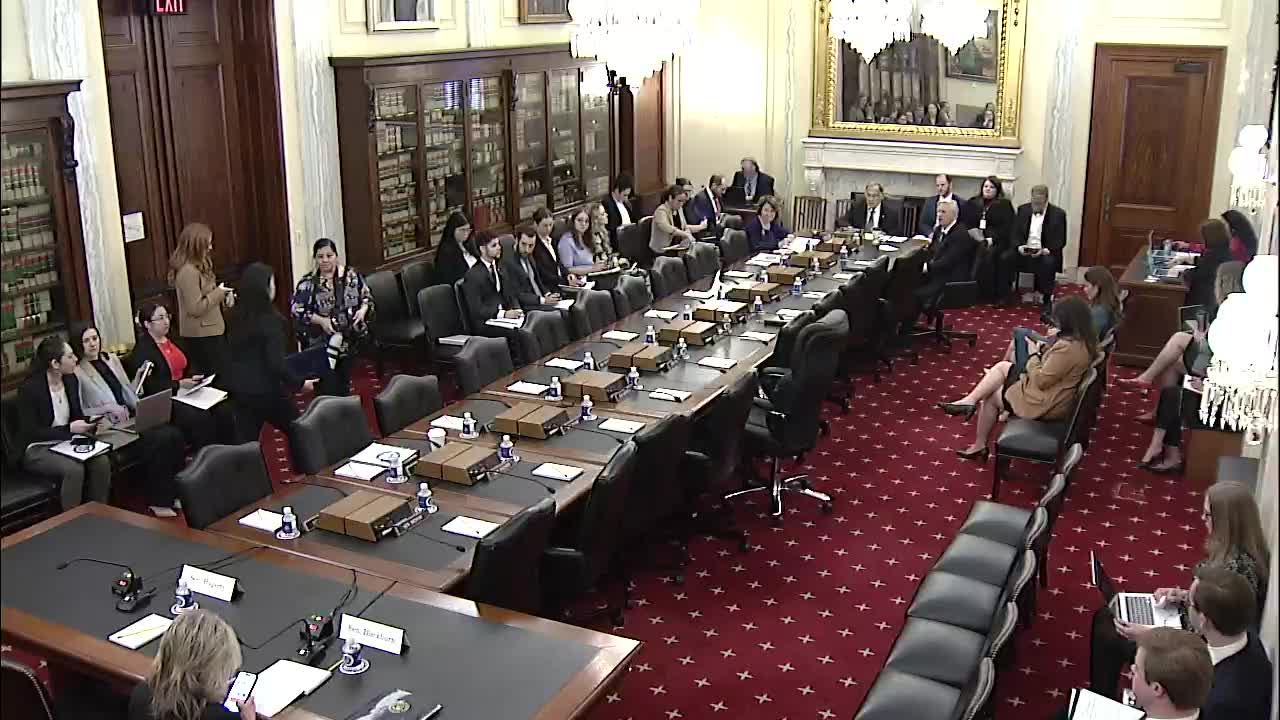
Senate Agriculture Committee questions nominees Steven Vaden and Tyler Clarkson on trade, farm aid and legal role at USDA
Get AI-powered insights, summaries, and transcripts
SubscribeSummary
The Senate Committee on Agriculture, Nutrition, and Forestry on Wednesday heard testimony from Judge Steven Alexander Vaden and Tyler Clarkson, President Trump's nominees to be deputy secretary and general counsel at the U.S. Department of Agriculture, and pressed both on trade policy, program freezes and whether USDA would follow statutes and court decisions.
The Senate Committee on Agriculture, Nutrition, and Forestry on Wednesday heard testimony from Judge Steven Alexander Vaden, nominee for deputy secretary of the U.S. Department of Agriculture, and Tyler Clarkson, nominee for USDA general counsel, and questioned both on trade policy, program implementation and the legal role of the department.
The hearing focused on whether the nominees would support technical assistance to Congress in a farm bill year, protect existing program authorities such as the Commodity Credit Corporation and SNAP, and advise the secretary to follow statutory and judicial requirements. Ranking Member Amy Klobuchar and other senators repeatedly raised farmers' concerns about recent tariff actions and program freezes, seeking commitments about communication with Congress and legal compliance.
Vaden described his agricultural background and legal experience and said he would act as “a voice within the administration” for rural America. He told the committee he had worked in USDA's Office of General Counsel and on the federal bench, and said, “I will follow the law,” when asked by Senator Brian Schatz whether he would implement congressional mandates for programs aimed at addressing historical inequities. Clarkson said, “I pledge to provide prompt TA to the committee in all instances,” promising timely technical assistance to members drafting the farm bill and saying he would “absolutely follow the law” in advising the secretary about contracts and grants.
Senators pressed both nominees about the recent imposition of tariffs and the risk of retaliatory tariffs for commodity exports. Multiple senators described farmers’ reports of lost markets and requests for clarity. Vaden declined to comment on specific tariff actions because of his current role as a judge with jurisdiction over trade matters but told the committee he would press the administration’s trade team to open new markets and to challenge non‑tariff barriers such as “phony phytosanitary concerns.”
Committee members also asked about program implementation after an end‑of‑year emergency assistance appropriation. Senator Klobuchar noted the department had provided an initial list of 15 programs affected by funding freezes and asked for regular updates; Vaden committed to “be in communication with both sides of the aisle” and to provide the requested information. Clarkson said he would advise the secretary to comply with existing contracts and grants and to unfreeze funds owed under existing agreements where the law requires it.
Other topics included rural housing and childcare, specialty crop participation in past trade‑assistance programs, collective bargaining agreements covering USDA attorneys, use and legal limits of the Commodity Credit Corporation (CCC) for emergency aid, and how the Office of General Counsel might interact with unions and program staff. On collective bargaining Clarkson acknowledged a standing OGC agreement and said he “look[ed] forward to working with the union.” On CCC authority both nominees affirmed the tool’s importance and the need to work collaboratively with Congress on substantial CCC actions.
Senators also discussed USDA research and the role of the Agricultural Research Service and REE mission area; Vaden and Clarkson both said research should be focused on producers' needs. Law and precedent were a recurring theme: when asked by Senator Amy Klobuchar whether an executive order contrary to binding Supreme Court precedent could be followed, Clarkson answered that Supreme Court precedent would likely control.
The hearing record was left open for two business days; Chairman Boseman and Ranking Member Klobuchar thanked the witnesses and committee members before adjourning.