Get Full Government Meeting Transcripts, Videos, & Alerts Forever!
Get email alerts on the Whole Milk School Meals topic
No spam. Unsubscribe anytime.
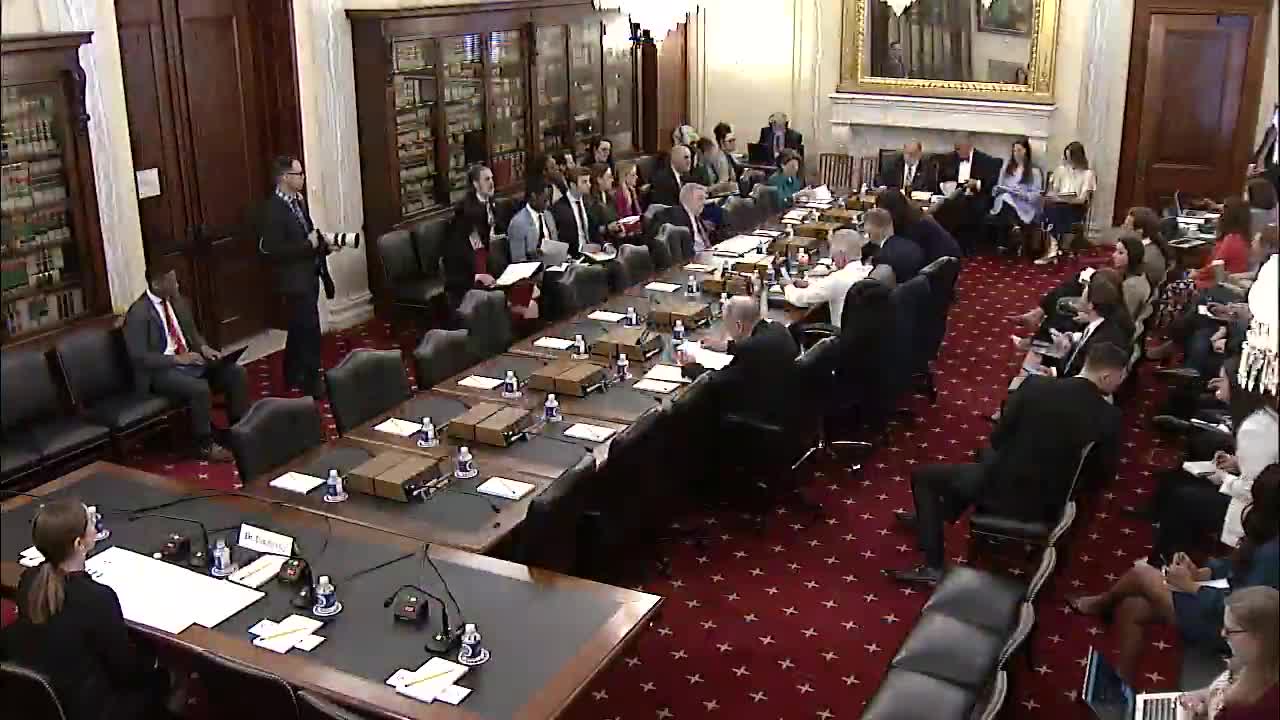
Senate Ag panel hears witnesses on Whole Milk for Healthy Kids Act (S.222)
Summary
The Senate Committee on Agriculture, Nutrition, and Forestry held a hearing on S.222, the Whole Milk for Healthy Kids Act, which would allow schools to offer whole and reduced‑fat milk alongside current low‑fat and fat‑free options.
The Senate Committee on Agriculture, Nutrition, and Forestry heard testimony on the Whole Milk for Healthy Kids Act (S.222) and its potential effects on school meal participation, students' nutrient intakes and dairy farmers.
Chairman John Boozman opened the hearing by introducing S.222 and thanking witnesses, saying, "It's my privilege to call this hearing to order ... the Whole Milk for Healthy Kids Act S.222." The bill would allow schools to offer whole and reduced‑fat milk in addition to current low‑fat, fat‑free and lactose‑free options and would exempt milk fat from the saturated‑fat limits in school meals, proponents said.
Why it matters: supporters said restoring milk‑fat choice could raise milk consumption and reduce waste in school programs, helping address nutrient shortfalls for calcium, vitamin D and potassium. Opponents cited public‑health groups and nutrition guidance that generally recommend most people choose low‑fat or fat‑free dairy to limit saturated fat.
Dr. Eve Studi, director of the Nutrition Guidance and Analysis Division at USDA's Center for Nutrition Policy and Promotion, told the committee that national dietary data show "for about 90 percent of the U.S. population, dairy intakes fall below recommendations." Studi said the Dietary Guidelines for Americans recommend most dairy choices be "fat free or low fat and with no to little added sugars," while acknowledging the guidelines also allow flexibility for individual needs and preferences.
Pediatric nutritionist Dr. Keith Ayoob, who works with low‑income children in the Bronx, said milk provides a package of nutrients not easily replaced by other single foods. "Milk in schools and dairy milk in general has 13 essential nutrients," Ayoob said, adding that systematic reviews have found no association between dairy consumption and higher cardiometabolic risk in children.
School food directors who run local meal programs stressed operational impacts. Krista Byler, district chef and food service director for Union City Area School District in Pennsylvania, described a one‑year trial in which her district offered a full range of milk‑fat choices. "The results are astounding," Byler said. "We saw a 50 percent increase in milk consumption and a 95 percent reduction in waste." Byler said the change benefited students and the local dairy producers who supply schools.
Other committee members raised differing evidence. Senator Dick Durbin noted major health organizations — including the American Academy of Pediatrics, the American Heart Association and the Academy of Nutrition and Dietetics — have expressed concerns about returning to higher‑fat milk in school meals. Studi said the departments will consider the advisory committee's recommendations for the next edition of the Dietary Guidelines for Americans.
Committee members and witnesses repeatedly framed the bill as one piece of larger efforts to improve child nutrition. Studi emphasized that dietary guidance is intended as a flexible framework and said the departments would perform more review before altering school meal standards. Witnesses also stressed that whatever milk is offered is only beneficial if students actually drink it; several speakers cited declines in fluid‑milk consumption among adolescents and linked participation and taste preferences to consumption rates.
No committee vote or formal action on S.222 was recorded during the hearing; senators and witnesses said further review and discussion were expected.
The panel heard additional testimony on school meal program operations and funding that supporters said bear on the bill's effects, including rising food costs, equipment needs, and the role of federal reimbursements in enabling schools to source locally produced foods.
Next steps: committee members said they plan to continue the legislative and administrative review; proponents urged Congress to move quickly to address both milk‑choice policy and broader supports for school nutrition programs.