Get Full Government Meeting Transcripts, Videos, & Alerts Forever!
Get email alerts on the Human Resources topic
No spam. Unsubscribe anytime.
Board approves employee handbook updates after debate over teacher workdays
Summary
The board approved changes to the employee handbook for 2025–26 after questions from teachers and board members about two proposed workdays, a clause limiting principal-directed time to 50% of certain workdays, sick-donation feasibility and other staff concerns; administration said some proposals need further study.
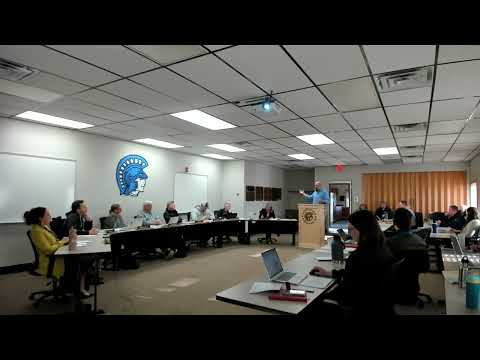
The Board of Education approved proposed changes to the employee handbook for the 2025–26 school year at its April 7 Committee of the Whole meeting after extended discussion about teacher workdays, sick-time donations and other staff requests.
Brooke Taylor, who presented the item as part of the personnel/negotiations committee report, said administration recommended the handbook changes and that the board had received input from staff listening sessions. The board approved the motion to accept the changes.
A central point of discussion was language about two teacher "workdays" and a sentence specifying that no more than 50% of those workdays could be "principal directed." Several board members and staff discussed whether the 50% language created inconsistency between buildings and whether it should be clarified or removed. One board member said the clause was intended to allow principals flexibility to convene shared‑leadership teams for school‑specific work such as continuous improvement plans; another urged staff to return next week with further calendar context and explanations.
Administration staff also addressed items raised in listening sessions that remain under review: whether paid time off (PTO) could replace sick or vacation time, the feasibility of a sick‑time donation bank, and additional pay for long‑service teachers. The administration said a donated sick‑time bank raised legal, tax and confidentiality concerns and was not feasible at this time; it recommended further study on PTO flexibility.
Board members praised the listening sessions as an important venue and asked administration to circulate clarifying details to staff. The board approved the handbook changes by voice vote; no roll‑call tally was provided at the Committee of the Whole meeting.
Ending: Administration will follow up with additional detail on calendar mapping and the rationale for the 50% language and report back at next week’s regular board meeting.