Get Full Government Meeting Transcripts, Videos, & Alerts Forever!
Get email alerts on the School Finance topic
No spam. Unsubscribe anytime.
Superior School District warns taxes could rise as equalization aid drops
Summary
District staff told the board that state equalization aid reductions, rising costs and falling enrollment could force cuts and higher property taxes unless the state changes funding; officials urged residents to contact legislators and noted a presence planned at the Joint Finance Committee hearing in Hayward.
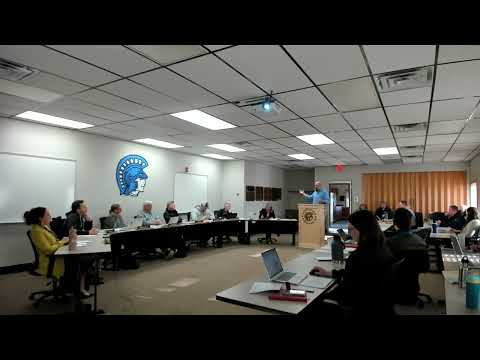
David Seed, a district staff member, told the Board of Education at the Committee of the Whole meeting on April 7 that the district faces a potential reduction in state equalization aid and other funding pressure that could require program cuts or higher local property taxes.
"Your taxes are going to go up," Seed said, repeating the warning he gave during the district's referendum outreach. He told the board the district is facing a projected reduction in equalization aid on the order of "up to $600,000 up to $1,500,000" and that some federal funding streams (which he described collectively) "could just be gone." He said Medicaid funding in particular was at risk and mentioned a separate federal funding pool the district values at roughly $4,000,000.
Why it matters: equalization aid is part of the state funding formula the district uses to balance its general fund. Seed told the board the aid calculation depends on three drivers: cost-shared spending, property values and enrollment. He said Superior has limited control over two of those factors and that, because local property values have risen faster and enrollment is declining, the district is vulnerable to aid reductions tied to those metrics.
Seed described the enrollment trend as a steady loss at each graduating class and said the district is pursuing strategic recruitment to recover open-enrolled students. "If we can pull those kids back, it's not gonna be a huge thing," he said, adding that revenue gains from such recruitment would be modest compared with the potential aid cuts.
Board members pressed for public engagement. One board member noted the district has posted a template residents can use to contact state representatives and said a district delegation will travel to a Joint Finance Committee meeting in Hayward to make the case for maintaining or restoring state support.
Seed also reviewed expense pressures the district cannot control, including utility and health insurance costs. He said the district negotiated health insurance increases down from a higher opening bid to around a 4% projected increase but that insurance, utilities and inflation continue to push costs up. He added the district previously captured roughly $1,000,000 in savings from plan changes but said the budget remains tight.
The board did not take formal action on the equalization update at the Committee of the Whole; Seed and multiple board members encouraged community members to contact legislators and to use materials posted on the district web site.
Ending: Board members suggested additional public education and outreach so residents understand the funding drivers and potential consequences if state funding does not change.