Get Full Government Meeting Transcripts, Videos, & Alerts Forever!
Get email alerts on the Development Finance topic
No spam. Unsubscribe anytime.
Developer outlines financing plan, safety contribution for proposed Barberton subdivision
Summary
Developer representatives described a plan to monetize tax-increment financing (TIF) to pay for public infrastructure for a 179-home development, said the TIF would be revenue-backed with no city recourse, and pledged $150,000 for police and fire before council votes on related documents.
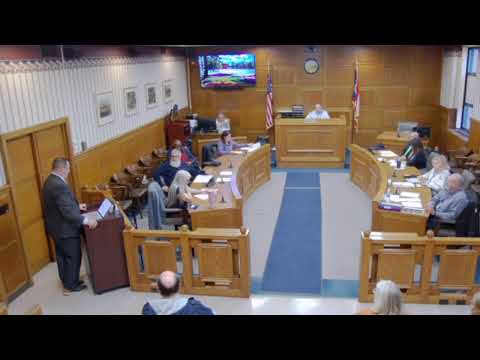
Mr. Ryan Summers, a representative for the development team, told the Barberton City Council committee of the whole on April 7 that construction of a planned subdivision is under way and that the project’s public-financing structure is being finalized.
At issue are three documents the developer and city officials said will come to council later: an amendment to the existing development agreement, a recorded declaration of covenants for property owners, and a cooperative agreement among the city, the developer, and the Summit County Finance Authority that would allow issuance of revenue bonds secured by TIF (tax-increment financing) service payments.
Why it matters: The cooperative agreement would let the Summit County Finance Authority (sometimes discussed as the port authority in the meeting) issue bonds backed by the stream of TIF payments from the development rather than by the city’s general obligation. If approved, the arrangement would shift the developer’s scheduled TIF payments to a bond trustee to make debt-service payments to bondholders. City attorneys and the developer said the structure is customary and that there will be no recourse to the city if TIF revenues fall short.
Chris Conley, the developer’s attorney with Taft Law, said the documents will include a declaration of covenants to record obligations on the chain of title and a cooperative agreement describing the sequence for bond payment. “These would be revenue bonds. They’re not general obligation bonds,” Conley said.
Jason Dodson, a project attorney who said he is working with the city’s interests, said the key negotiation now is a so-called minimum service payment: a floor that guarantees enough annual payment from the development to make the bonds marketable while ensuring homeowners in the development are not charged more than they would otherwise pay in taxes. “We want to make sure that that amount isn’t going to exceed what those folks would otherwise have to pay in taxes,” Dodson said.
The developer said financing is in place and construction is proceeding. “We are under construction and we are full go,” Summers said, and he added the team has closed financing through Erie Bank. The development will be built in three phases, Summers said; the first phase includes 75 lots and the total development is 179 homes.
Developer contribution and timing: The developer told council it will pay some city legal costs and will provide a one-time contribution of $150,000 — $75,000 for fire and $75,000 for police — to offset incremental public-safety costs tied to the new residents. Summers and the team said that amount will be paid “essentially immediately” once the cooperative agreement is executed; one speaker indicated the contribution would be made within 30 days of the agreement’s effective date.
Local impact and questions: Council members asked whether the development will be in Coventry Local School District (confirmed) and how long the TIF would run (the development team described a 30-year, 100% TIF that would sunset earlier if the bonds are paid off early). Dodson said examples of similar financing structures were used in prior local developments and that Huntington Bank and the port authority’s trustee will run calculations that the city can review before legislation is presented.
What’s next: City staff and the developer said they will return to council with the draft cooperative agreement, the amended development agreement, and the recorded declaration of covenants for council review and formal legislative action. The city’s counsel and the developer’s counsel said they will continue negotiating the minimum service payment and will provide the financial calculations used to size the bonds and estimate timing of payback.
Ending: Council members did not take final action on the financing documents at the April 7 meeting; city staff said legislation and supporting exhibits will be presented to council for formal consideration once the documents are finalized.