Get Full Government Meeting Transcripts, Videos, & Alerts Forever!
Get email alerts on the School Transportation topic
No spam. Unsubscribe anytime.
Sweet Home recommends removing 0.25-mile elementary walking radius, shifts start times to address driver shortage
Summary
District administrators recommended eliminating a proposed 0.25-mile elementary walking radius and presented consolidated start times (high school 7:19 a.m., middle school 7:40 a.m., elementary 8:55 a.m.) designed to cope with a persistent bus-driver shortage.
District administrators recommended eliminating a proposed 0.25-mile walking radius for elementary students and outlined new bell times for 2025–26 intended to address a long-running bus-driver shortage.
Transportation staff presented the proposal: high school instruction would begin at 7:19 a.m., middle school at 7:40 a.m. and elementary instruction at 8:55 a.m. The plan consolidates staggered elementary runs and places elementary routes last so the district can use existing contract capacity and reduce duplicated runs. "Our recommendation to the board tonight would be to eliminate the 0.25 walking radius from the new transportation plans," the administration said.
Why it matters: administrators said the district has roughly 60–62 drivers now, down from about 110 pre-pandemic, and that consolidating runs is necessary to fit an additional 15 minutes of instruction required under the teachers' contract. Transportation staff said average ridership per bus is modest (about 17–21 students, depending on level), and that keeping the existing contracted 41-run pricing structure would let the vendor slot additional runs the district currently does not use. That would, they said, free district drivers for other routes.
Mitigation and supports: the district said it will employ a bus aide or monitor on each bus, expand behavioral-management training for bus staff, continue daily camera monitoring on buses and pursue additional bus-aid applicants as a feeder for drivers. Administrators also described partnership discussions with Amherst police and existing contracted transportation staff to address safety concerns around walking routes.
Child care and community supports: district officials said they will survey families to assess demand for before-school childcare and are working with JFK (a community childcare provider) to expand morning programs when demand exists; JFK indicated income-based pricing and some scholarship support may be available. The administration said they will produce estimated bus stop times before the school year, but routing remains fluid until final enrollments are tallied.
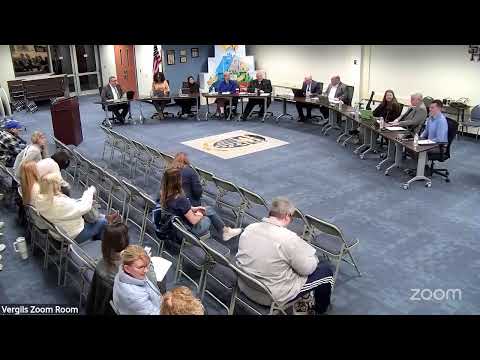
Board and public reaction: parents raised safety concerns about walking to school (ice, crossing-guard availability and unsupervised routes) and about child-care and work-schedule impacts, particularly at Glendale and Heritage elementary schools where start times change the most. Administrators said they will use stop-finder apps and estimated pickup patterns to communicate likely stop windows to families in advance.
Ending: the administration framed the plan as necessary to preserve transportation service levels and restore after-school programming while addressing driver shortages; the recommendation will be presented to the board for final action as part of the consent and budget process.