Get Full Government Meeting Transcripts, Videos, & Alerts Forever!
Get email alerts on the Digital Accessibility Records topic
No spam. Unsubscribe anytime.
Polk County moves to hire web-accessibility and social-media archival service to meet ADA and records requirements
Summary
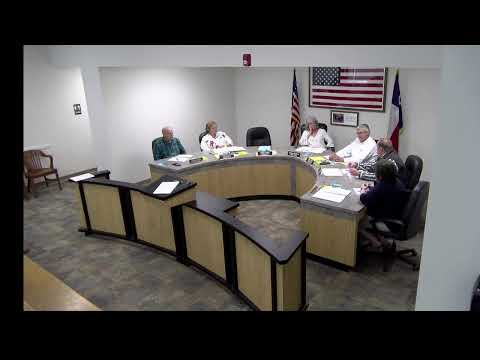
Polk County Commissioner’s Court approved procurement of a web‑accessibility and social‑media archival service April 8 to help the county meet ADA requirements for digital content and to capture public online posts for records requests.
Polk County Commissioner’s Court on April 8 approved hiring a web‑service vendor to improve the county’s digital Americans with Disabilities Act compliance and to archive social media and website content for public‑records requests.
County staff said the county’s current website was not ADA‑compliant under prevailing guidance and that compliance now extends beyond physical facilities to include digital infrastructure. The proposed vendor, CivicPlus (referenced in materials and discussion as Civic Plus), would provide automated accessibility checks and corrections where possible and would capture and archive posts and comments from departmental social media pages in real time.
County officials told the court that the service would reduce the staff time required to gather records in response to open‑records requests. The presentation included a multi‑year cost estimate presented to the court: roughly $15,037.80 for part of FY2026, $15,614.99 for the following period, and an estimated $23,475.99 for FY2027 if the county adopted all three modules discussed; staff said FY2028 costs could rise further under a projected increase. The county also said CivicPlus’s archiving would produce links to publicly available material that could satisfy some records requests directly.
Sheriff Andy, discussing the sheriff’s office records workload, said the office’s records staff were already heavily tasked: "We probably log three weeks' worth of time right now," he told the court, referring to current open‑records requests and redaction work. County staff emphasized that the vendor’s capture applies to publicly posted material and does not automatically release investigative or otherwise nonpublic records; redaction or withholding of nonpublic materials still requires departmental or legal review.
Commissioner Burrows moved to proceed with procurement and social‑media scrutiny services; Commissioner Cassidy seconded. The court voted to approve the contract authorization. The meeting record shows no formal dollar appropriation language attached at the time of the motion; staff said the item included prorated pricing options and would be managed through the IT and purchasing departments.
During discussion, staff noted the county operates at least a dozen departmental Facebook pages and that some elected officials maintain their own pages. County IT reported that in‑house work to correct the existing website had proven time‑consuming and that the vendor model would avoid hiring at least one full‑time employee to maintain compliance.
The court directed staff to finalize the procurement and to proceed with implementation steps, including coordination with departments that maintain web content and social media pages. The timeline for full compliance and archival turn‑up was described as "relatively quick" by staff but no firm completion date was specified at the meeting.