Get Full Government Meeting Transcripts, Videos, & Alerts Forever!
Get email alerts on the Port Operations topic
No spam. Unsubscribe anytime.
Port Hueneme officials tout jobs and emissions grants as residents raise air, noise and truck-safety concerns
Summary
Port leaders told the City Council the Port of Hueneme is expanding its economic output and pursuing large grants for electrification and shore power, while several residents urged tougher steps on air, noise and truck speeds near residential neighborhoods. The council heard competing public comments but took no immediate regulatory action.
Kristin Deakos, CEO and port director of the Oxnard Harbor District, told the Port Hueneme City Council on April 7 that the Port of Hueneme has grown into a multi‑billion‑dollar economic engine while pursuing large environmental grants to cut emissions.
The port presentation — delivered during the council’s regular meeting and followed by public comment — highlighted that port‑related economic activity grew from about $800 million to roughly $2.8 billion over a decade, and that related jobs rose from about 10,000 to 24,000. Deakos said the port has secured state and federal grants for capital work, and described a $43 million U.S. Environmental Protection Agency award to convert most cargo‑handling equipment to battery electric, and an $80 million state grant plus other funding that together support roughly $160 million in capital projects to modernize docks and terminals. “You can’t have commerce without community,” Deakos told the council.
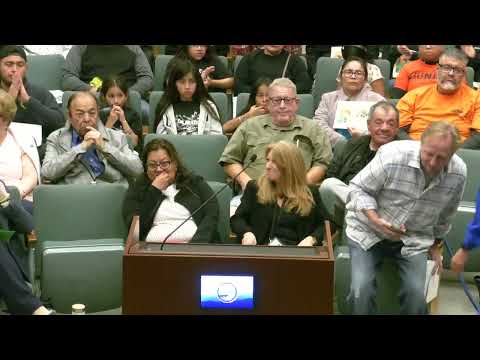
The presentation drew sharply mixed public comment. Josie Gonzalez, who identified herself as a Surfside resident, described being endangered by fast, motorized e‑bikes on the pier and cited an ordinance she read as banning “wheeled vehicles.” “I almost got bowled over twice by these big motor electric bikes that speed down the pier,” Gonzalez said. Greg Ross, a long‑time resident who said he records port activity at night, told the council he receives no responses from port staff and said bluntly, “The Port doesn’t care.”
Other speakers defended the port’s local role. Raul Del Flores and Rick Castaneda described port‑sponsored community programs and job opportunities, and multiple nonprofit leaders and residents praised port support for local education, food distributions and youth internships. Becky Perini of Rokupi Outdoors and Heidi Allison of Nate’s Place thanked the port for grants and paid internships that benefit local youth programming.
Deakos and other port staff addressed concerns about air quality, truck safety and noise. She said the port operates EPA reference‑grade monitors and has committed to environmental certification and improvements. The port is pursuing shore‑power rebuild funding after a 2023 storm damaged the substation; Deakos said the port had $40 million from Cal OES to rebuild shore power and an additional $4 million from the Ventura County Transportation Commission to help shore‑power work at a north terminal berth. The port also reported a goal to electrify most handling equipment by 2030 and said it was fielding a new battery‑electric fleet and a large solar project.
On truck and neighborhood impacts, City Manager James Vega and Deakos said the port will continue signage and outreach to drivers and work with the police department on enforcement. Deakos said the port had conducted noise studies (completed in 2021) that found operations did not violate city noise ordinances and said the port would update its community notifications via an Everbridge alert system: text “PORTINFO” to 888777 to receive real‑time notices, she told the council.
Deakos also reviewed revenue sharing and community funding: she said historical port agreements now deliver about $3 million annually to the city (about 11% of the city budget) and that the port’s community benefit account typically receives $100,000 in years when port net revenue exceeds a specified threshold. Deakos noted broader economic benefits, including payroll and tax revenue increases over the past decade.
City staff and a number of speakers urged continued community engagement. Vega reminded the public that the city had no port business on the council agenda that night and that the council cannot act on or respond to matters not presented as business items. He also said port responses to earlier council questions about revenue‑sharing agreements had been received and would be reviewed and returned to council in a public forum.
Votes at a glance: the council did not take regulatory action on port operations during the meeting. Several consent and procedural items passed earlier in the evening, including the meeting agenda and routine consent calendar items. The council did approve unrelated items later in the meeting, among them the mid‑year budget update and creation of an ad hoc Veterans group; summaries of those votes appear below.
What’s next: council members asked staff to continue outreach, to review the port’s written responses to revenue‑sharing questions in public and to consider whether any city‑level measures are required to address public safety near the pier. The port said it will continue to post air‑monitoring data and pursue grants and infrastructure work to reduce emissions and shore‑power vulnerabilities.
The council did not vote on port policy or operational changes at the April 7 session.
Ending: The Port of Hueneme’s presentation underscored the tension most coastal trade cities face — balancing jobs, tax revenue and community programs with residents’ concerns about air, noise and safety. City and port officials said they will keep working together and offering data and notifications while residents pressed for clearer signs, enforcement and truck‑safety measures near the pier.