Get Full Government Meeting Transcripts, Videos, & Alerts Forever!
Get email alerts on the Homeless Services topic
No spam. Unsubscribe anytime.
Council committees approve temporary shelter staff positions and $65,000 ARPA investment‑income funding for 2025
Summary
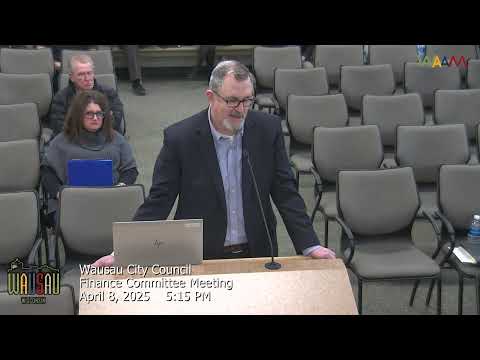
Finance and HR committees approved creating limited-term shelter lead and shelter advocate positions and a related budget modification to cover the city's $65,000 share (half of $130,000 labor cost) for a temporary shelter operation through the end of 2025, funded from ARPA investment income; Marathon County will cover the other half.
The Wausau Finance and Human Resources committees approved creating two limited‑term positions — a shelter lead and shelter advocate — and a corresponding budget modification that will fund the city's share of staffing for a temporary shelter operation through the end of 2025.
Chief Barnes told the committees the city published an RFP seeking a provider for 365‑day emergency shelter for 2025–2026 and received one proposal that was for transitional housing rather than immediate emergency shelter. With Catholic Charities' Warming Center scheduled to close May 1 until Nov. 1, 2025 (a 30‑bed facility), the city faces a gap in shelter capacity. Chief Barnes said the city can operate a temporary shelter on an expedited basis but needs positions and limited‑term staff authority to do so.
Staff proposed two LTE (limited‑term) roles with job descriptions in the packet: a shelter lead (daytime coordinator and volunteer supervisor) and shelter advocates (overnight/overnight-to-morning staff). LTE limits were explained: LTE employees may work up to 1,200 hours in a calendar year unless limited by prior public employment rules. Chief Barnes described a likely facility — the basement at First United Methodist Church — which staff toured and found to include showers, bathrooms, laundry hookups and separated spaces suitable for segregating guests by gender.
Cost estimates in committee materials put total labor at about $130,000 through year end; Marathon County pledged to cover half, leaving a city share of $65,000. Staff proposed using investment income earned on the city's ARPA funds (investment interest generated while ARPA funds are held) to fund the $65,000. Finance director Mary Anne explained the city has ARPA funds invested and earned roughly $55,300 in investment income in the first quarter; federal rules allow using ARPA investment income for general purposes.
Committee members discussed recruitment, volunteer coordination, training (including crisis de-escalation), and that officers are CIT-trained to support shelter staff. Tracy Durante — who has prior experience operating shelters with Catholic Charities — will take a leadership role developing procedures, training, and volunteer coordination. The finance committee voted to approve the budget modification (motion by Alder Tierney, second McElhinney); the HR committee separately approved creation of the job descriptions and pay scales (motion by Alder Martin, second by Alder Killian). Both votes carried unanimously.
Chief Barnes said the city will republish the RFP with extended timelines to allow community providers time to propose a long‑term shelter solution; the city intends not to turn people away and anticipates capacity to serve 50–60 guests nightly in the temporary setup. Staff will report back on implementation details and continue coordination with community providers.