Get Full Government Meeting Transcripts, Videos, & Alerts Forever!
Get email alerts on the Criminal Law Age Of Consent topic
No spam. Unsubscribe anytime.
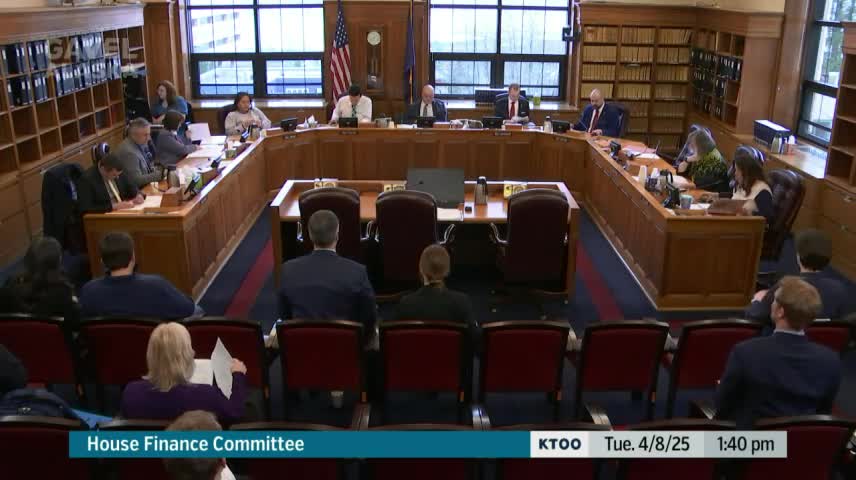
House committee hears bill to raise Alaskas age of consent to 18, sponsors and advocates say change would protect 16- and 17-year-olds
Summary
At a first hearing, sponsor Rep. Andrew Gray and invited witnesses urged the House Finance Committee to back House Bill 101, which would raise the statutory age of consent from 16 to 18 with a four-year close-in-age exemption; state agencies reported 0 fiscal notes but said they would monitor implementation.
Representative Andrew Gray, sponsor of House Bill 101, told the House Finance Committee on April 8 that the bill would raise the legal age for sexual consent in Alaska from 16 to 18 and amend multiple criminal statutes so that a minor is anyone under 18.
Supporters at the hearing said the current statutory framework leaves 16- and 17-year-olds vulnerable to predatory adults and makes prosecution difficult when victims must prove lack of consent. Gray said the bill includes a four-year "close-in-age" exemption often called a "Romeo and Juliet" clause and that he is open to committee amendments to adjust that range.
Advocates including Keely Olsen, executive director of STAR; Randy Breger of AWAKE (Abused Womens Aid in Crisis); and youth advocate Eleanor Dolganos provided invited testimony describing cases they said illustrate gaps in legal protection for older teens. Olsen cited a 2020 UAA Justice Center victimization survey figure cited in testimony that more than 35% of Alaska women reported sexual abuse before age 18 and said local crisis lines receive calls from families whose teens were manipulated by older adults. Olsen and Breger said raising the age would reduce barriers to holding predators accountable. Dolganos described her own experience seeking justice after sexual assault and said being above the current age of consent affected how law enforcement treated her case.
State officials who presented fiscal notes and legal analysis told the committee they could not provide a precise projection of case increases that might follow the change, and most submitted 0 fiscal notes while saying they would monitor impacts. Nancy Mead (Alaska Court System), James Stinson (Office of Public Advocacy), Ariel Toft (Alaska Public Defender Agency), Kevin Worley (Department of Corrections), Diana Thornton (Department of Public Safety), David Blanton (Division of Juvenile Justice), and Deputy Attorney General John Skidmore each said the number of additional prosecutions is unknown; Skidmore noted a 2023 Uniform Crime Report showing a recent decline in reported sexual-assault offenses statewide.
Committee members asked about practical issues raised in testimony, including whether DNA from a pregnancy could be used to identify an alleged perpetrator. Skidmore and several witnesses explained that, where probable cause exists, law enforcement can obtain warrants to collect and test genetic material, but they said testing every pregnancy or fetal tissue without an allegation would not be practicable. Witnesses also raised concerns that mandatory reporting rules and investigative processes could subject 16- and 17-year-olds in otherwise consensual relationships to criminal investigation; Brenda Stanfill of the Alaska Network on Domestic Violence and Sexual Assault told the committee her networks members were not unanimous about the four-year window and recommended further study of the exemptionrange.
No formal vote was taken at the hearing. Representative Gray said he would accept amendments and committee members asked departments to stay available while fiscal impacts are monitored. The bill remains at its initial hearing stage; committee chairs indicated more opportunities to question agencies and invited witnesses at subsequent meetings.
The hearing contained multiple references that committee members said they wanted to reconcile, including department fiscal notes flagged as 0 despite testimony that some jurisdictions might see a small number of additional prosecutions. Skidmore summarized the departmentsposition: changes will likely generate additional cases, but because statewide reports of sexual-assault offenses fell in 2023 and because agencies previously received additional resources for related statutory changes, the departments currently view the fiscal impact as uncertain and will monitor and report back if workloads increase.
Ending: The committee concluded the HB 101 hearing without action, leaving the bill available for amendment and further review of fiscal notes and enforcement questions. Several committee members signaled support for the billin principle while requesting clarification on the close-in-age exemption and operational details of investigations and evidence collection.