Get email alerts on the Transportation Safety topic
No spam. Unsubscribe anytime.
Regional ‘Move Safely’ plan outlines spot and systemic road safety projects for Nelson County
Summary
Thomas Jefferson Planning District Commission presented a draft safety action plan that identifies high-crash segments and potential spot improvements on US 29, Route 151 and other corridors and requests county adoption to qualify for implementation funding.
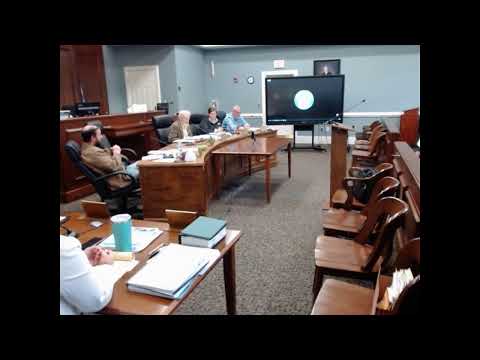
Goran Georgievsky, a regional planner at the Thomas Jefferson Planning District Commission (TJPDC), presented the draft Move Safely Blue Ridge comprehensive safety action plan and asked the Nelson County Board of Supervisors to adopt the plan if it aligns with the board’s priorities.
Georgievsky said the plan, funded by the federal Safe Streets and Roads for All program, is regional but includes county-level project lists tied to a high-injury network analysis. He said region-wide crash data from 2018–2022 showed concentrated harms: roughly three-quarters of fatal, serious and minor injury crashes occurred on about 7% of the county’s roadways.
The draft plan recommends a mix of “spot” and systemic improvements. Spot recommendations cited in the county presentation include restricted crossing U-turns (RCUTs) and vegetation clearing to improve sight distance at Route 151 and Rosewood Road, pavement-marking and turn-lane work on US 29 near Killeen, extending turn lanes and replacing a two-way left-turn lane with a raised median, closing or reconfiguring select crossovers in Lovingston coupled with speed studies, offsetting left-turn lanes at the US 29/Route 6 intersection, and studying Tidbit Trail as an alternate route for some turning movements.
Systemic measures in the draft include center-line rumble strips, improved edge-line treatments, advanced intersection warnings, and targeted signage and pavement markings to deter roadway departure and distracted driving. The plan also proposes non‑engineering measures—public education, enforcement, and event-based outreach for farm vehicles and agricultural users—and identifies potential funding sources including future Safe Streets and Roads for All implementation funding, SmartScale, Highway Safety Equipment Program and revenue-sharing grants.
Board members questioned several proposed spot fixes along the US 29 corridor in Lovingston, including concerns from one supervisor that closing the Main Street crossover could harm local commerce and impede emergency response. Georgievsky and staff said the draft is meant to be edited with local feedback and that jurisdictions must adopt the plan by June 30, 2025 to position projects for future implementation funding. Georgievsky thanked county staff and local partners for input and said the project team is accepting comments and edits before final adoption.
Why this matters: adoption of the plan would make county-identified projects eligible for federal and state implementation funds, and the plan focuses resources on a small portion of roadways that account for most serious crashes.
The board did not vote on adoption at the meeting and directed staff to submit feedback and suggested edits before a future vote.
AI generated
The text on this page is AI generated. Summaries, highlights, analysis, and video transcripts are all produced from the original source material.
AI can make mistakes, so if you spot one, and we will fix it for everyone.
Note: the source content is unaltered by us. Any content source we link to, be it a video, an audio recording, or a document, is presented exactly as its publisher released it. That publisher is usually a government body, sometimes an individual official or another organisation.