Get Full Government Meeting Transcripts, Videos, & Alerts Forever!
Get email alerts on the Nonprofit Interfaith Works topic
No spam. Unsubscribe anytime.
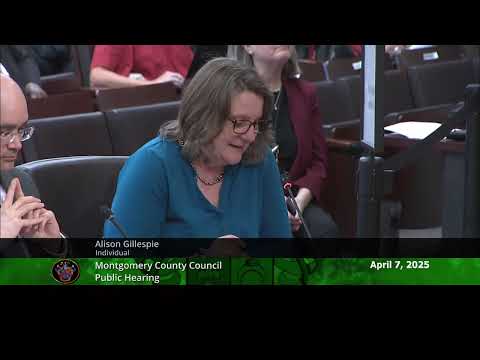
Interfaith Works, board and clients ask council to fund vocational and prevention programs to reduce homelessness
Summary
Interfaith Works representatives and board members urged the County Council to fund the nonprofit’s vocational services and connections prevention programs in the FY26 budget, saying modest county support would expand capacity and reduce shelter demand.
Interfaith Works, which runs shelters, an essential needs center and vocational programs in Montgomery County, asked the County Council for additional operating support during FY26 budget hearings to expand its vocational services program (VSP) and Connections prevention program.
Deborah Monk, chair of Interfaith Works’ board, said the nonprofit’s vocational services (VSP) went from low completion rates to a 94 percent completion rate after adding paid internships; she requested $430,000 to increase VSP capacity by 15 percent in FY26. Susan Fox, who volunteers with refugee and newcomer families, told the council the Connections program provides short‑term financial boosts (rent, utilities or similar) to keep families in their homes and asked for $580,000 so Interfaith Works could serve an additional 1,150 households.
Board members and supporters framed the request as an investment: combined prevention and employment supports reduce shelter demand and return dollars to the county economy when people regain employment. Tracy Washington Craig, a board member and program participant, said the full Interfaith Works FY26 request totals $1,010,000 and emphasized that the organization is a county partner that responds to emergency referrals from county agencies.
Speakers also asked that Interfaith Works staff receive training to support residents with behavioral health needs in shelters and requested predictable grant contracts so nonprofits can plan multi‑year services. No formal council action occurred at the hearing; the testimony will be considered as part of the FY26 appropriations process.
Ending: Interfaith Works asked the council for increased operating support to expand preventive and vocational services that leaders say reduce homelessness and help residents return to stable employment.