Get Full Government Meeting Transcripts, Videos, & Alerts Forever!
Get email alerts on the Medicaid Finance topic
No spam. Unsubscribe anytime.
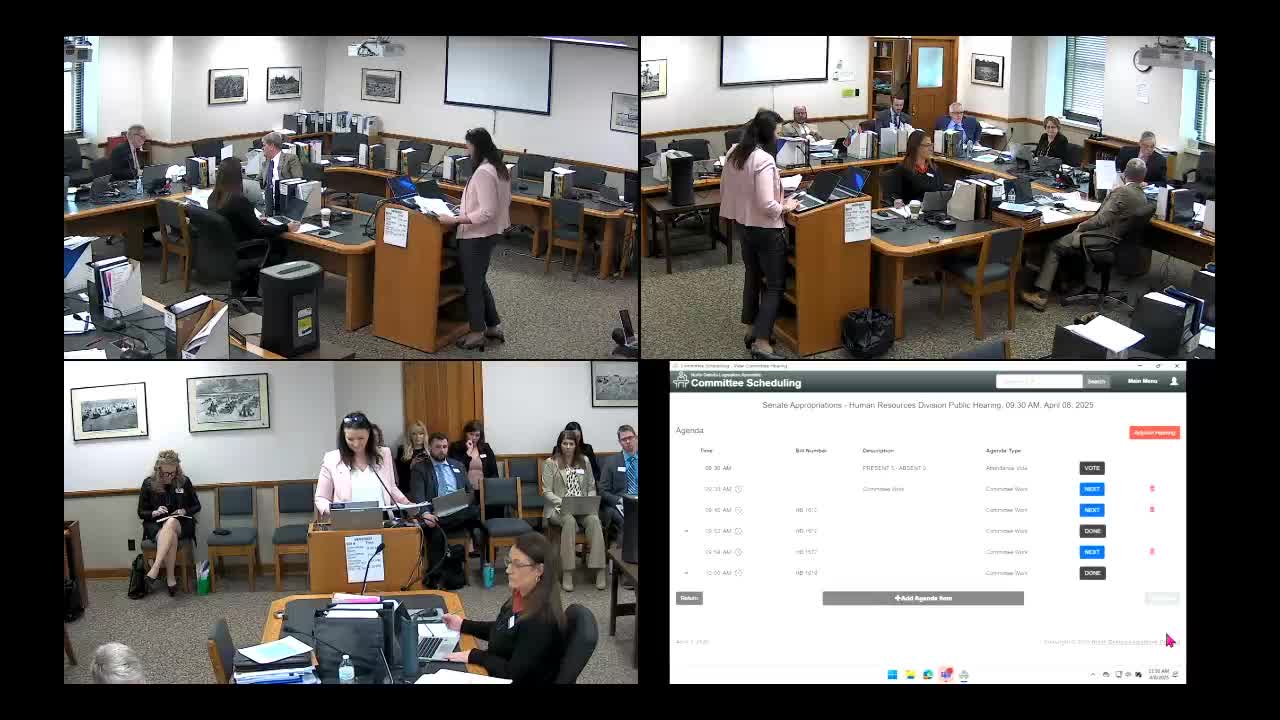
Appropriations division debates Medicaid underfunding, CCBHC staffing and entitlement assumptions
Summary
Committee members reviewed the department’s Medicaid ‘underfunding’ figures and employment needs for certified community behavioral health clinics (CCBHCs), discussed entitlement program projections, and asked staff to pin a set of numbers as a starting point for negotiations.
Division members held an extended, technical discussion about the Medicaid “underfund” and related entitlement program assumptions used in the House version of the budget. Donna Ochlin, the Health and Human Services chief financial officer, briefed members on the department’s cost projections and the additional staff and dollars needed to stand up certified community behavioral health clinics (CCBHCs).
Key points and figures: Ochlin told the committee the department’s January staffing and cost projections imply a roughly $37 million gap between the governor’s recommendation and the department’s estimated cost to maintain current service levels and fully fund planned hires. The House reduced that gap to $30 million. Department materials circulated at the meeting estimated that adding four CCBHCs and related staffing would cost roughly $17 million in the next biennium (the department provided a breakdown showing about 103 FTEs and associated operating costs). Committee members and staff discussed whether that staffing should be a carved‑out line item or folded into the general Medicaid block grant; the department recommended one block grant line with clear documentation of the intended use so the department retains flexibility in hiring and implementation.
Committee approach and next steps: Senator Davison proposed treating $10 million as a starting underfund number and using a trio of offsets—raising revenue projections by $2 million and trimming $4 million from Medicaid grant lines—to make up the balance for conference committee negotiations. Committee members generally endorsed using a concrete “pin” number as a negotiating posture rather than final action. Donna Ochlin agreed to rework the long‑sheet figures to show the impacts and to provide more detailed timelines for hiring and roll‑out of the clinics.
Entitlement programs: The committee also reviewed a department list showing that roughly 62 percent of the department’s budget is tied to entitlement or cost‑to‑continue programs. Ochlin and staff explained that entitlement programs require payment to individuals who meet eligibility rules and that any legislative limits would need changes to eligibility rules or statutory authority; members discussed possible candidates for modest “right‑sizing” and asked the department for program histories and utilization data for items where projections appeared to have large year‑over‑year increases.
Outcome: No final appropriation changes were made during the meeting. Members asked the department to return with updated long‑sheet figures, hiring timelines for the CCBHCs, and program histories for candidate entitlement lines so the division can set a negotiated underfund figure ahead of conference committee work.