Get Full Government Meeting Transcripts, Videos, & Alerts Forever!
Get email alerts on the Emergency Medical Services topic
No spam. Unsubscribe anytime.
House approves distressed ambulance program to guide responses when rural services face closure
Summary
Senate Bill 20-33 establishes a distressed ambulance work‑group process and allows redistribution of tax districts to adjacent services; the House approved the bill 83–10 and carried the emergency clause.
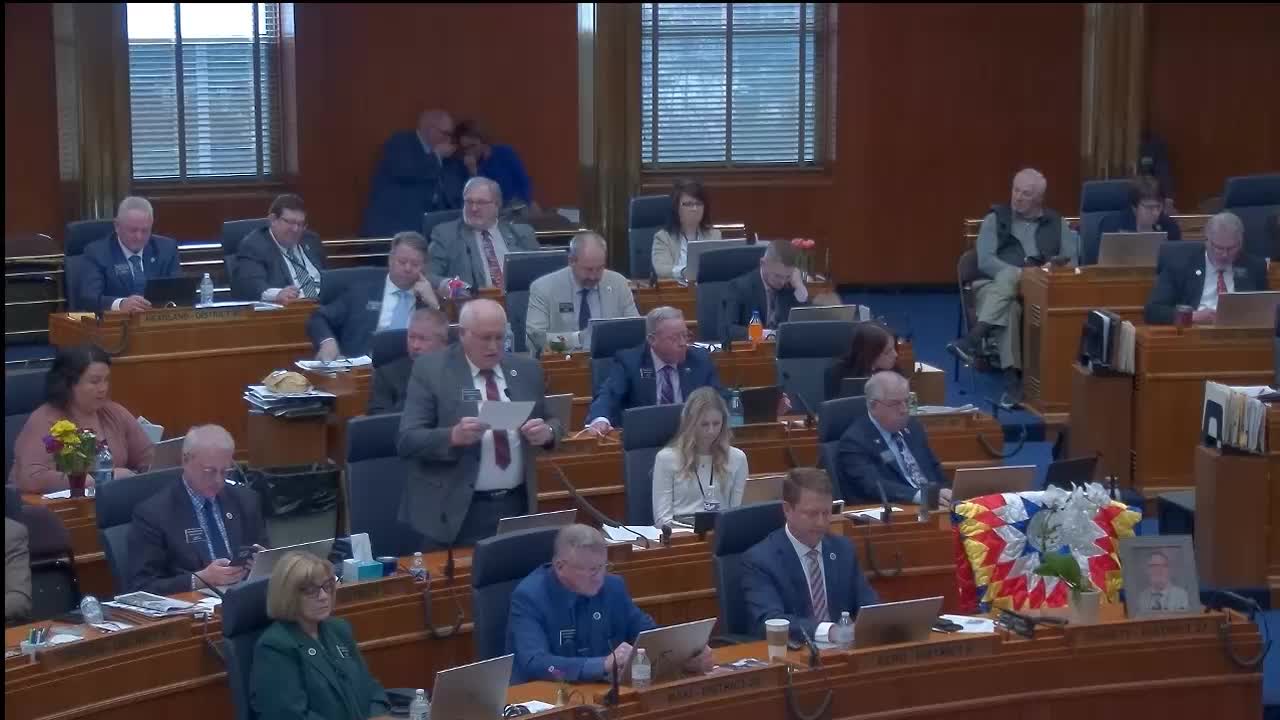
The House passed Senate Bill 20-33 on April 8 to create a distressed ambulance program designed to help ambulance services that may close and to provide a process for stakeholders to develop continuity plans. The final vote was 83–10 and the emergency clause carried.
Representative Fagley, the bill carrier, described a process in which the local ambulance service convenes stakeholders, develops a 60‑day plan to address service continuity, and reports to the Department of Health and Human Services. If a service decides to close, the department would allocate territory and tax districts to adjacent ambulance services under existing rules. The bill also allows an applicable tax district to be divided among adjacent services without a separate vote of the original district's taxpayers.
Representative Neri asked whether rural ambulance districts were included; Fagley confirmed rural districts are the primary focus. Representative Porter expressed concern that the mandated work group did not explicitly require participation by adjacent ambulance services and urged that the surrounding services be included so they can plan for increased territory and response responsibilities. Fagley said that the intent was to allow the distressed service first to try remedies but that surrounding services could be added in conference committee.
Supporters noted the bill will provide a structured process for rural communities and ambulance providers to evaluate options and for the department to implement reallocation when necessary. The bill passed the House 83–10 with an emergency clause attached, making portions effective immediately upon enactment.
Lawmakers flagged the possibility that reallocation without local vote could be controversial and asked for clarifications in conference committee about required stakeholders and how tax district changes will be handled when a district was originally formed by a voter petition.