Get Full Government Meeting Transcripts, Videos, & Alerts Forever!
Get email alerts on the K 5 Literacy Training Science Of Reading topic
No spam. Unsubscribe anytime.
Committee deadlocks on K–5 'science of reading' training requirement after implementation concerns
Summary
House Bill 21-43 would require K–5 literacy teachers to complete approved multi-year professional learning in the science of reading and seek a Science and Reading endorsement. The committee considered a phased-in amendment but ultimately rejected reporting the bill to the full Senate after a roll-call division.
House Bill 21-43, a measure to require K–5 public-school teachers who provide literacy instruction to complete high‑quality professional learning in the science of reading and to apply for a Science and Reading endorsement, failed to clear committee after a contentious debate over implementation, timing and legal consequences.
Committee counsel explained the bill and a proposed committee amendment that phases in enrollment: teachers of grades K–3 would enroll no later than the 2026–27 school year; grades 4–5 would enroll no later than the 2028–29 school year. Counsel said educators who complete the approved training must submit an application for the Science and Reading endorsement free of charge and that the State Board may provide accommodations for counties with educators still completing the program.
Deputy Superintendent Sonia White described the current rollout and delivery: the State Board is already providing training free to teachers, with a January cohort of about 400 teachers and more than 800 signed up for the next cohort. She said the vendor's program is a hybrid model with online coursework, synchronous sessions spanning multiple years, and that completion can take "about a year and a half to two years." White said many counties offer stipends using local funds ("step 7D money") to compensate teachers for time spent outside the regular workday and that the training can be used for up to 12 hours of graduate credit toward a reading-specialist degree or a master's degree.
Jim Brown, representing the State School Boards Association, expressed concerns about implementation and the statute's use of mandatory language. Brown told the committee that the program requires about "130 hours" for each teacher and warned that making the training mandatory could prompt grievances arguing the work must fall within the teacher's contracted workday; he also raised questions about whether federal funds could be used to pay stipends for a statutorily mandated program.
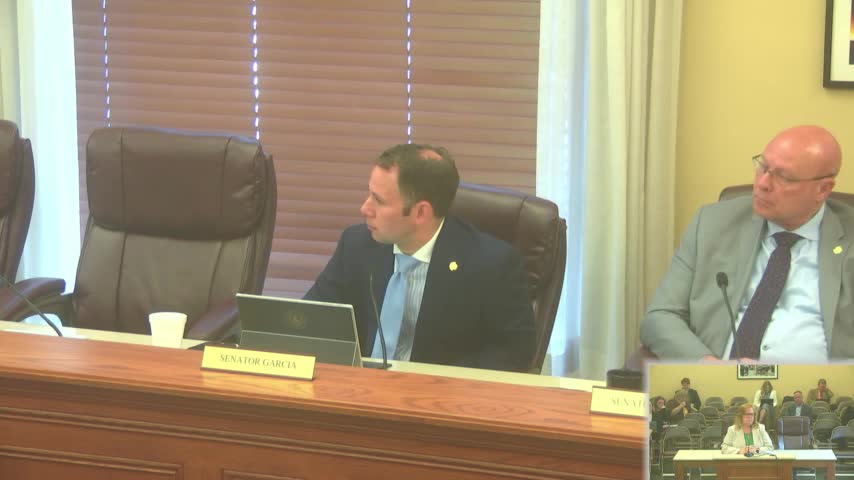
Senators debated whether to delay implementation or remove the statutory mandate; Senator Vermillion said the board's current voluntary rollout and incentives made mandating the program premature and indicated they would oppose the bill as written. The committee voted on a motion to report the measure as amended; after a division, the chair declared the "no" votes had it and the motion was rejected.
The committee's record shows a mix of support for the program's instructional aims and strong concerns about implementation logistics, potential collective-bargaining grievances, funding for stipends, and statutory consequences for teachers who do not complete the endorsement.