Get Full Government Meeting Transcripts, Videos, & Alerts Forever!
Get email alerts on the Special Education topic
No spam. Unsubscribe anytime.
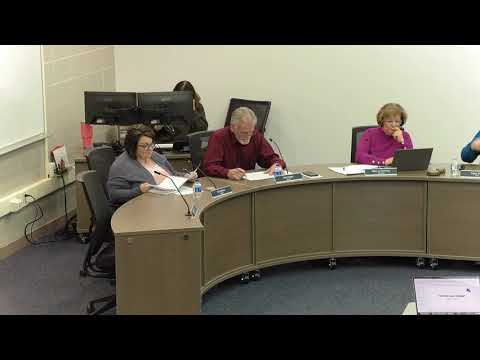
District staff report on use of augmentative and alternative communication (AAC) devices for students
Summary
Albert Lea Public School District staff described assistive communication devices in district classrooms, estimated 35–40 district-provided AAC users, and showed classroom videos demonstrating student outcomes and reduced frustration.
District special-education staff on Monday described the Albert Lea Public School District's use of augmentative and alternative communication (AAC) devices, said roughly 35 to 40 students currently use district-provided devices, and showed classroom videos illustrating student progress.
Sheila (district special-education staff) introduced Anna Anderson, a speech-language pathologist who serves as the district's assistive-technology coordinator. Anderson described AAC as tools that "supplement or compensate for the impairment and disability patterns of individuals with severe expressive communication disorders" and said the devices support a student's right to communicate. "The right to communication is being able to say what you want to who you want and how you want and when you want," Anderson said.
Anderson said the district provides a range of AAC options from low-tech supports through dedicated high-tech devices, and explained the district offers two primary software languages on iPad devices: LAMP (Language Acquisition through Motor Planning), which is motor-pattern based, and TouchChat, which is symbol based and more customizable for family preferences. "Within our district we have roughly 35 to 40 AAC users that are using devices provided by our district," Anderson said.
Staff showed several classroom videos demonstrating different stages of communication development: early babbling-like exchanges, core-word instruction used by older students, and direct teaching that helps students locate buttons and use devices independently. Anderson described measurable classroom benefits including reduced frustration and behavioral improvements when nonverbal students obtain clearer ways to express needs and choices.
Board member Neil observed that recorded device interactions help with progress tracking and Individualized Education Program (IEP) documentation. Parents and staff in the audience described home use in some cases when families obtain devices through insurance or when the district provides devices to transition students. Anderson said devices remain at school in most cases but can be billed to insurance and provided to students outside school once sufficient progress and documentation are in place.
The board praised staff professional development efforts to train special-education licensed staff, general-education teachers and paraprofessionals to support AAC users across settings.