Get Full Government Meeting Transcripts, Videos, & Alerts Forever!
Get email alerts on the Public Health Vaping Moratorium topic
No spam. Unsubscribe anytime.
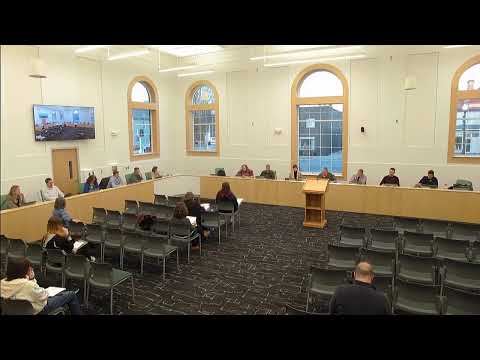
Bowling Green council approves six-month moratorium on new vape and smoke shops after health briefing
Summary
After a presentation from the Wood County Health Commissioner on nicotine delivery and youth use, Bowling Green City Council amended and adopted a six-month moratorium on new vape and smoke establishments, citing concern about proliferation and underage use.
Bowling Green City Council on third reading adopted a resolution imposing a six-month moratorium on the establishment of new vape and smoke shops in the city.
The measure, Resolution 3,879, was amended on the council floor from a proposed 12-month moratorium to six months and passed after council debate. Miss Phipps moved to adopt the resolution as amended; the motion carried. The council recorded yes votes from O'Dorisio, Phipps, Harold, Hollenbaugh and Musgrave and no votes from Robinette and Dennis; the resolution passed as amended.
The moratorium followed a presentation to council by Ben Robinson, Wood County Health Commissioner. Robinson described the department's tobacco compliance work and local audits of retail outlets. He said the department found, among the 53 audited locations across the county, examples of nicotine products placed near items or at heights that could increase visibility to children. Robinson said research shows many e-cigarette products deliver far larger nicotine doses than single cigarettes and told council that "nicotine is a very addictive substance," stressing youth prevention and quit support as public-health priorities.
Mayor (name not specified) framed the resolution as a temporary "time out" to study public-health implications and zoning or policy options, saying the city had seen rapid growth in specialty vape shops. The mayor said about a dozen specialty vape shops existed when the legislation was introduced and that two more had opened since then, bringing a cited total of about 14 specialty shops and roughly 30 retail outlets overall selling nicotine products when gas stations and convenience stores are included.
Council members argued both for and against a moratorium. Supporters said six months would give staff and public-health officials time to gather updated data and consider zoning or code changes; opponents urged a zoning-based approach rather than a moratorium and warned a ban could advantage one retail class over others. Council members also discussed ongoing state litigation over local authority in this area; the mayor said a court decision could affect local enforcement.
Robinson told council the Wood County Health Department is updating its community health assessment and expects county-level survey data by summer and a final plan by year-end. He said county 2021 survey data showed about 9 percent of youth reported vaping nicotine in the previous 30 days, and that Ohio youth rates (about 15 percent) are higher than national averages. Robinson also described the department's compliance audits: 5 of 53 audited stores placed nicotine products within 1 foot of products marketed to children, and 29 stores placed products within 3 feet of the floor; 39 stores displayed outdoor ads for tobacco or nicotine products and 39 posted age-restriction signage (14 did not).
The resolution as adopted prevents new specialty vape and smoke establishments from opening in Bowling Green for six months while staff and elected officials study policy options and gather updated data. It does not affect existing businesses’ ability to continue operating.
Council members and staff said the moratorium is intended to buy time to explore zoning changes, signage or enforcement adjustments and to review updated public-health data before pursuing longer-term restrictions.