Get Full Government Meeting Transcripts, Videos, & Alerts Forever!
Get email alerts on the Judicial Process topic
No spam. Unsubscribe anytime.
Senate advances changes to judicial nominating commissions to expand candidate pools and permit electronic voting
Summary
A bill from Sen. DeBoer updates statutes for judicial nominating commissions, extending nomination deadlines, permitting members to serve on more than one commission and allowing electronic balloting for lawyer-member elections; the measure advanced from general file.
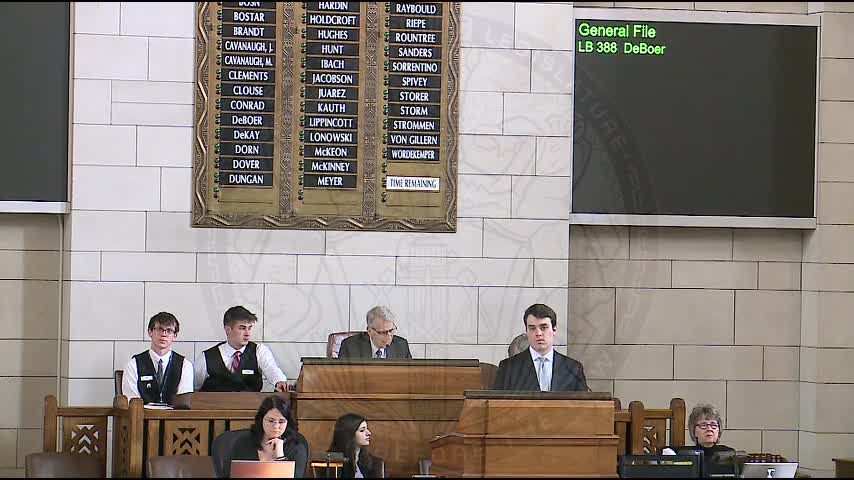
Senator Suzanne DeBoer opened debate on LB 388, a bill that changes the operation of Nebraska’s judicial nominating commissions. Lawmakers heard that the bill was requested by the Nebraska State Bar Association and the Supreme Court and aims to address member recruitment and administrative procedures in nominating commissions.
What the bill would change: LB 388 extends the time for the Bar Association’s executive council to nominate attorney candidates (moving the deadline to Nov. 1), increases allowable consecutive service on a commission to 12 years and lengthens the period a former member must wait before reappointment (from 6 to 10 years). The bill also permits both lay and lawyer members to serve on more than one commission, so long as they reside in the judicial district, and authorizes the clerk of the Supreme Court to use electronic voting for lawyer-member elections.
Sponsor remarks: Sen. DeBoer said the changes are intended to "ensure these critical commissions function effectively and efficiently for our judicial selection process" and noted the bill had a Judiciary Committee 8-0 recommendation.
Support and debate: Sen. John Kavanaugh described the practical limits that smaller or rural districts face and noted concerns about people serving on multiple commissions, especially where commissions meet frequently. The floor speakers generally framed the bill as operational improvements to make nomination processes more workable, particularly in rural districts that struggle to find lawyer candidates.
Floor action: With no further questions in the queue, DeBoer waived closing and the body advanced LB 388 to E & R initial.
Ending: Supporters said the technical changes will broaden candidate pools and modernize election procedures while preserving residence requirements for commission members.