Get Full Government Meeting Transcripts, Videos, & Alerts Forever!
Get email alerts on the Immigration Enforcement topic
No spam. Unsubscribe anytime.
Arizona House advances bill requiring local cooperation with federal immigration enforcement after heated debate
Summary
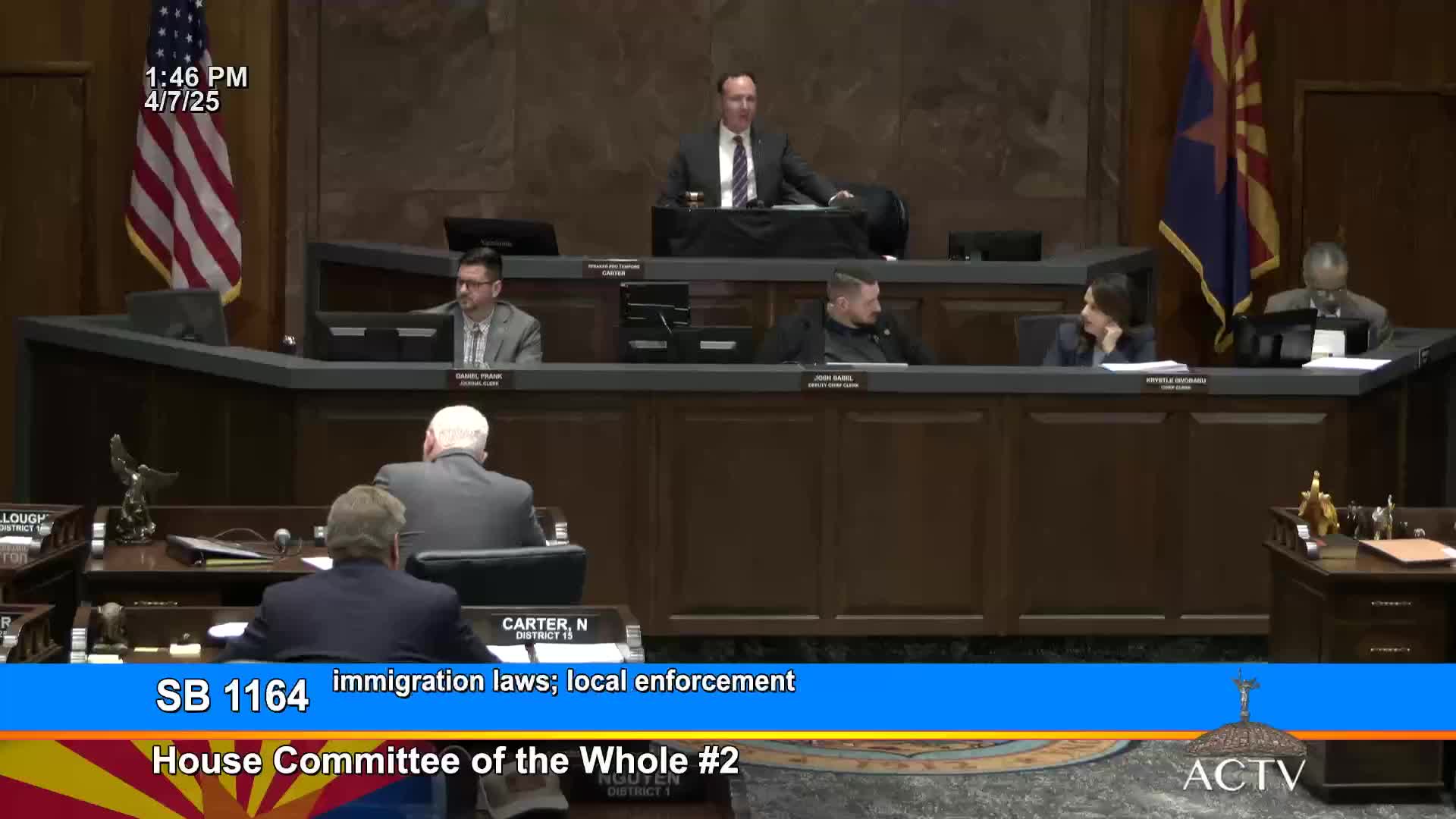
The Arizona House’s committee of the whole recommended that Senate Bill 11-64 — a measure to expand local cooperation with federal immigration enforcement and clarify access to schools and other sites — receive a do-pass recommendation after extended floor debate that split lawmakers along partisan and philosophical lines.
The Arizona House’s committee of the whole recommended a do-pass recommendation for Senate Bill 11-64 after more than an hour of floor debate in which members sharply disagreed over the bill’s likely effects on schools, families and public safety.
Supporters said the bill restores cooperation between state and federal authorities and protects public safety; opponents said it would intimidate immigrant families, disrupt children’s education and invite racial profiling.
Representative Tim Dunn (note: transcript identification of the mover is Chairman Blackman; comments and questions were offered by members from both parties) moved the committee report and the measure was returned with a do-pass recommendation and then placed on the calendar for further action. The transcript records a voice vote on the committee recommendation; no roll-call tally was recorded in the floor transcript.
Representative Jill Connolly (Representative, Government) opened floor commentary by reading constituent emails opposing the bill, quoting one message: “Please vote no.” Several Democratic members elaborated on that view. Representative Adrian Gutierrez (Representative) said, “SB 11-64 will force immigrants into hiding, preventing them from accessing education, health care, and stable employment,” and urged a no vote, saying the bill would “drain critical resources from public services and community infrastructure.”
The House minority leader (title reported in the transcript as “Minority Leader”) framed the bill as ineffective on drug and violent-crime priorities, saying many federal immigration detainers are issued for low-level offenses. The leader cited the SAFE initiative — a state anti-fentanyl effort begun by the governor — and said targeted investments had seized “more than 6,000,000 pills of fentanyl and more than 1,400 pounds of meth and heroin,” arguing that SB 11-64 would not produce equivalent public-safety results.
Representative Alejandro Garcia (Representative) described a personal family encounter with border agents, saying an agent removed him from a car as a child and that he fears SB 11-64 would make similar incidents routine. Representative Villegas (Representative) argued the measure revives “harmful Trump-era immigration tactics,” saying it would shift local police functions toward immigration enforcement and impose unfunded mandates on local governments.
Supporters included the Speaker of the House and several Republican members who described the bill as a public-safety and rule-of-law measure. The Speaker said the state should cooperate with federal immigration enforcement and that the bill was intended to “protect the public safety of our state.” On the floor the motion to report the bill as do-pass carried on voice vote and the committee of the whole report listing SB 11-64 as do-pass was adopted and placed on the calendar for third reading.
The transcript does not record a roll-call vote on final passage during the floor time captured here. The action recorded in the committee-of-the-whole report and later read into the journal shows SB 11-64 received a do-pass recommendation and was placed on third reading. The debate included repeated warnings from opponents that the bill could intimidate students and families, and repeated assertions from supporters that it restores cooperation with federal law enforcement.
The bill will proceed to the next step in the House process; the transcript documents the committee report and the floor debate that accompanied it.