Get Full Government Meeting Transcripts, Videos, & Alerts Forever!
Get email alerts on the Criminal Justice Juror Discharge Evidence topic
No spam. Unsubscribe anytime.
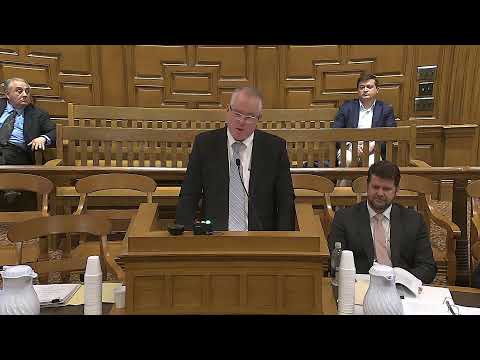
Appeals court hears challenge to juror discharge, evidence and verdict form in Colombo case
Summary
In oral argument, defense counsel for Dominic Colombo said the trial judge erred by discharging a deliberating juror without a hearing and by admitting and failing to authenticate blood-vial evidence; the Commonwealth responded that counsel’s objections were not specific and that the record shows no prejudice.
A three-justice panel of the Massachusetts Appeals Court heard argument in the appeal of Dominic Colombo, where defense attorney Keith Garland told the court that Judge Krepp erred by discharging a deliberating juror without the required on-the-record hearing and by admitting blood-vial evidence without adequate authentication.
Garland said the record shows two objections by defense counsel to the juror’s discharge and argued the judge should have contacted the juror (he suggested a phone or Zoom hearing) to determine whether the juror’s absence was for a personal medical reason rather than related to deliberations. “During deliberations, a juror may only be properly discharged for reasons personal to that juror,” Garland said, and he invoked case law he said requires a juror hearing.
Special Assistant District Attorney Marina Moriarty told the panel that the defense did not make a sufficiently specific objection at trial and that, given the COVID-era context and the judge’s description of the juror’s message (fever, severe GI symptoms), the judge’s handling did not create a substantial risk of a miscarriage of justice. Moriarty said it was “best practice” to call the juror in the parties’ presence but argued that the record contains no indication the juror was a holdout.
The defense also argued the verdict slip was defective because the jury returned a general verdict on multiple theories of culpability (per se OUI and reckless negligence), and Colombo’s counsel said the evidence supported conviction on only the per se OUI theory. Garland urged the court to require separate verdicts on distinct theories so juror unanimity on each theory can be confirmed.
On evidentiary issues, Garland argued the Commonwealth failed to authenticate vials of blood admitted at trial because no witness identified who drew the blood, who labeled it, or where it was stored. He also argued that portions of medical records describing “daily alcohol consumption” and alcohol-withdrawal symptoms were improperly admitted as impermissible propensity evidence.
Moriarty told the panel the Commonwealth relied on recent precedent (counsel cited Commonwealth v. Barrowby) allowing circumstantial authentication and argued the defense’s prejudice claims are speculative; she asked the court to defer to the trial judge’s credibility and harm assessments.
The panel took the case under advisement.