Get Full Government Meeting Transcripts, Videos, & Alerts Forever!
Get email alerts on the Sober Houses Lodging Enforcement topic
No spam. Unsubscribe anytime.
Council hears staff on sober homes, lodging and enforcement after court guidance
Summary
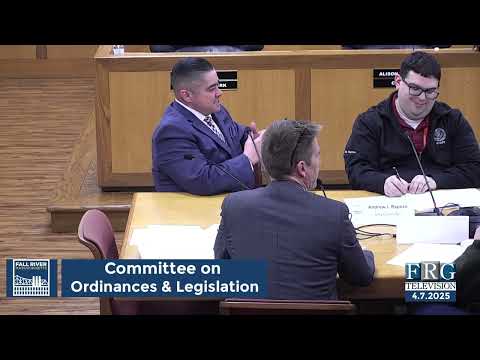
Fall River City Council received an extended briefing from Corporation Counsel Alan Rumsey and Building Commissioner Glenn Hathaway on lodging houses, sober homes and enforcement challenges following recent court guidance.
Fall River City Council received an extended briefing from Corporation Counsel Alan Rumsey and Building Commissioner Glenn Hathaway on lodging houses, sober homes and enforcement challenges following recent court guidance.
Rumsey told the council the case BAK Realty v. City of Pittsburgh (described in the meeting as a recent decision) clarifies municipalities may define "family" for zoning and that sober homes that meet the municipal family definition must be treated the same as any other family residence. "If they fit the definition of family, then you can't discriminate them," he said. Conversely, houses that do not meet the local definition of family would be treated as boarding or lodging houses and be subject to the city's lodging-house rules.
Hathaway explained local practice and code distinctions: sober homes typically limit occupancy to five or fewer residents and often include a house monitor or 24-hour supervision; that threshold generally avoids the sprinkler requirement that applies under the building code to larger lodging houses or group residences. "The code has relinquished the sprinkler system for the sober home community, with 5 and under," Hathaway said. For properties with more than five unrelated occupants, building-code requirements (sprinklers, inspections, certification and quarterly fire inspections for sprinkler systems) apply.
Councilors and staff discussed enforcement and practical problems. Hathaway and other staff recounted several enforcement cases in Fall River where managers or out-of-town investors converted multi-family properties into higher-occupancy residences without appropriate permits or code compliance; the city closed some problem properties after fire-safety or complaints revealed unsafe or illegal conversions. Staff also described cases where out-of-town providers placed people in Fall River but continued to provide services from their originating city, creating coordination problems for case management and oversight.
Several councilors asked whether the city should adopt a specific local ordinance for sober homes or include sober-home rules in zoning. Rumsey and Hathaway cautioned that sober homes may be protected by state law and related legal doctrines (the transcript referenced the "Dover amendment" and state disability protections), and that many enforcement tools already exist through the building code. Hathaway said he did not think a new ordinance was strictly necessary for lodging houses because building-code tools were sufficient, but council members signaled interest in studying whether zoning or targeted rules could improve proactive oversight without running afoul of state protections.
Why it matters: councilors said they want to avoid both unsafe overcrowding and the displacement of legitimate supportive housing. Staff emphasized the focus of enforcement should be on noncompliant operators rather than certified sober providers. Hathaway and other staff urged residents and service providers to report suspicious activity so inspections and enforcement can act quickly.
Next steps: staff will continue to use building-code enforcement and work with the city's homeless-service partners to identify noncompliant facilities; council members asked for follow-up analysis about whether any locally tailored zoning language would be legally defensible and useful in enforcement.